In the intricate world of industrial automation and machine control, proximity sensors stand as silent, vigilant sentinels. Among the various types, inductive proximity sensors are particularly indispensable for their robustness and reliability in detecting metallic objects without physical contact. This article delves into the core principles, key characteristics, and critical applications of these fundamental sensing devices.
At its heart, an inductive proximity sensor operates on the principle of electromagnetic induction. The sensor's active face contains a coil that is part of an oscillating circuit. When an electrically conductive object, typically metal, enters the sensor's electromagnetic field, eddy currents are induced on the surface of that object. These eddy currents draw energy from the sensor's oscillating circuit, causing a measurable change in its amplitude. An integrated evaluation circuit detects this damping of oscillation and triggers a solid-state output switch, signaling the presence of the target.
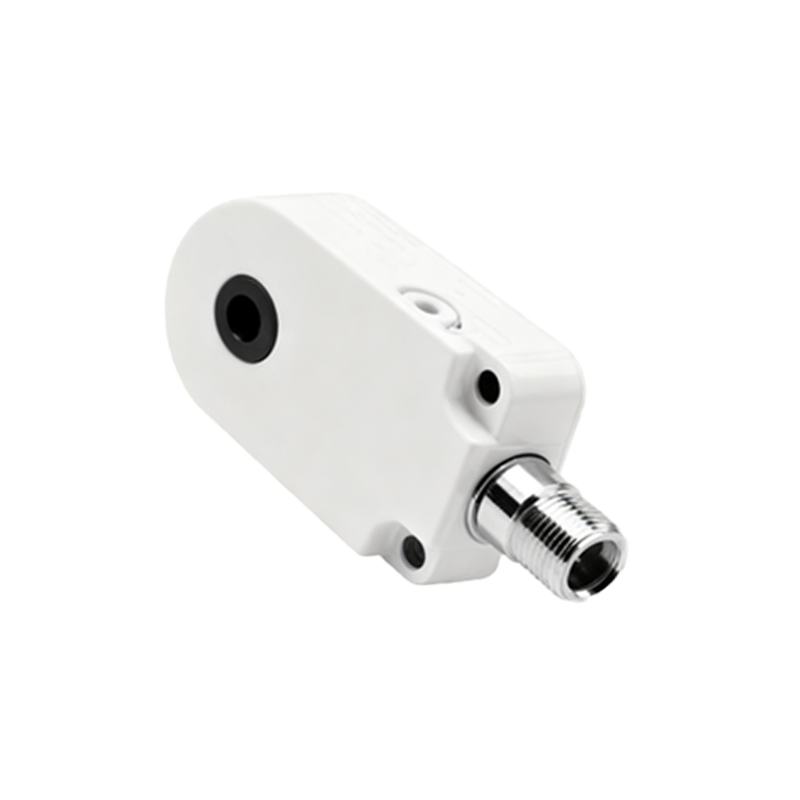
This non-contact detection method offers profound advantages. First and foremost, it eliminates mechanical wear and tear, granting the sensor an exceptionally long operational life compared to mechanical limit switches. The absence of physical contact also allows for high-speed detection and counting applications, where targets may be moving rapidly on a conveyor line. Furthermore, inductive sensors are celebrated for their resilience. They are typically housed in robust, sealed casings made of materials like nickel-plated brass, stainless steel, or PBT plastic, making them resistant to dust, dirt, oils, coolants, and even high-pressure washdowns—a common requirement in harsh industrial environments like automotive manufacturing or food processing.
Several key specifications define an inductive sensor's performance. The most critical is the nominal sensing distance (Sn), a theoretical value under standardized conditions. In practice, the effective operating distance (Sr) is used, which accounts for a tolerance, typically ±10%. It is crucial to note that the sensing distance can be influenced by the target material. Standard sensors are calibrated for mild steel. For other metals, a correction factor must be applied; for instance, stainless steel may reduce the sensing range by 20-30%, while copper or aluminum can reduce it by 40-60% or more. Another vital specification is the switching frequency, which defines how many on/off cycles the sensor can handle per second, directly impacting its suitability for high-speed applications.
The output configuration is another major differentiator. Sensors can provide a digital PNP (sourcing) or NPN (sinking) output, compatible with programmable logic controllers (PLCs). Some advanced models offer analog outputs (current or voltage) proportional to the distance to the target, enabling precise positioning tasks. Additionally, sensors are classified by their housing style (e.g., cylindrical barrel, rectangular block, ring-shaped) and mounting method (flush or non-flush). Flush-mounted sensors can be installed embedded in metal without affecting their sensing range, whereas non-flush sensors offer a longer range but require a clear area around the sensing face.
The applications for inductive proximity sensors are vast and varied. They are ubiquitous in position verification—confirming a cylinder is fully extended or retracted, or a part is correctly seated in a fixture. They are the workhorse of object counting on production lines, from bottles to automotive components. In speed monitoring, they detect gear teeth or holes on a rotating disk. Safety interlifts often employ them to confirm guard doors are securely closed before machinery can operate. More sophisticated uses include end-of-travel detection in linear actuators, presence checking in assembly robots, and jam detection in material handling systems.
When selecting an inductive sensor, engineers must consider a checklist: the target material and size, the required sensing distance, the environmental conditions (IP rating, temperature), the electrical requirements (voltage, output type), and the necessary response speed. Proper installation is equally important; ensuring correct alignment, maintaining the specified mounting distances, and protecting the cable from excessive stress or abrasion are all essential for reliable operation.
In conclusion, inductive proximity sensors are a cornerstone of modern electromechanical systems. Their simple yet elegant operating principle translates into extraordinary reliability and versatility. As Industry 4.0 and smart manufacturing evolve, these sensors continue to adapt, with newer models offering IO-Link communication for digital parameter setting and diagnostic data, seamlessly integrating into the Industrial Internet of Things (IIoT). Understanding their fundamentals is not just an academic exercise but a practical necessity for designing, maintaining, and optimizing efficient, safe, and productive automated systems.