In the realm of industrial automation and machine safety, proximity sensors are indispensable components. Their primary function is to detect the presence or absence of an object without physical contact. A critical performance parameter that often dictates sensor selection and system design is the maximum sensing distance. This article delves into the technical factors influencing this distance, explores the limitations of different sensor technologies, and provides practical guidance for optimal application.
Defining Maximum Sensing Distance
The maximum sensing distance, often denoted as Sn in datasheets, is the theoretical limit at which a sensor can reliably detect a standard target under ideal conditions. It is crucial to understand that this is a nominal value. Real-world operational sensing distance is typically 70-90% of Sn, accounting for factors like temperature fluctuations, voltage variations, and target material characteristics. Exceeding the nominal Sn often leads to unreliable operation and false triggers.
Key Factors Influencing Sensing Range
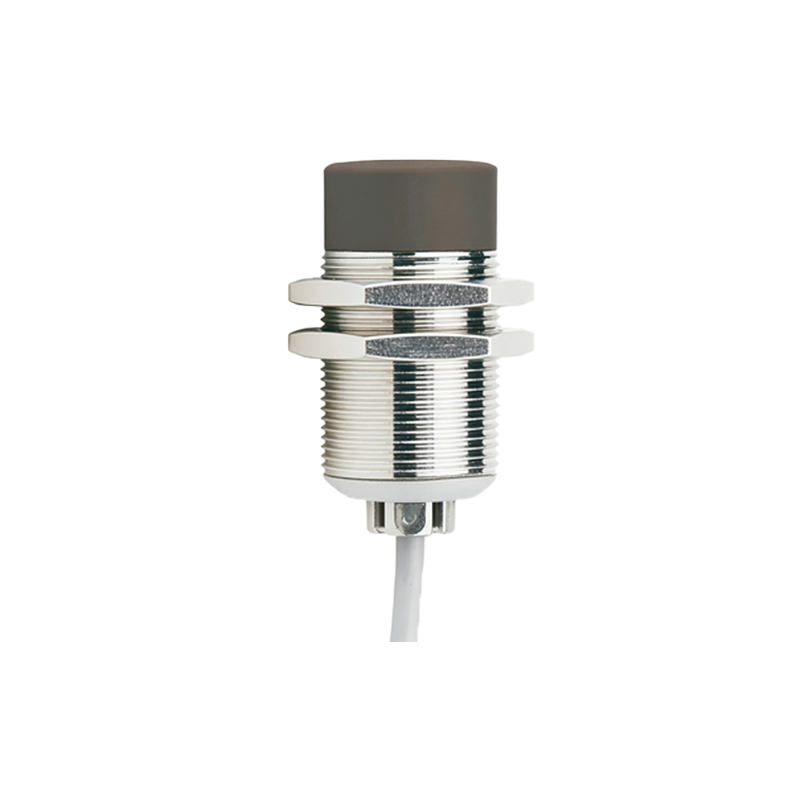
The achievable sensing distance is not a fixed number but a variable dependent on several interconnected factors:
1. Sensor Technology: The underlying technology fundamentally sets the range baseline.
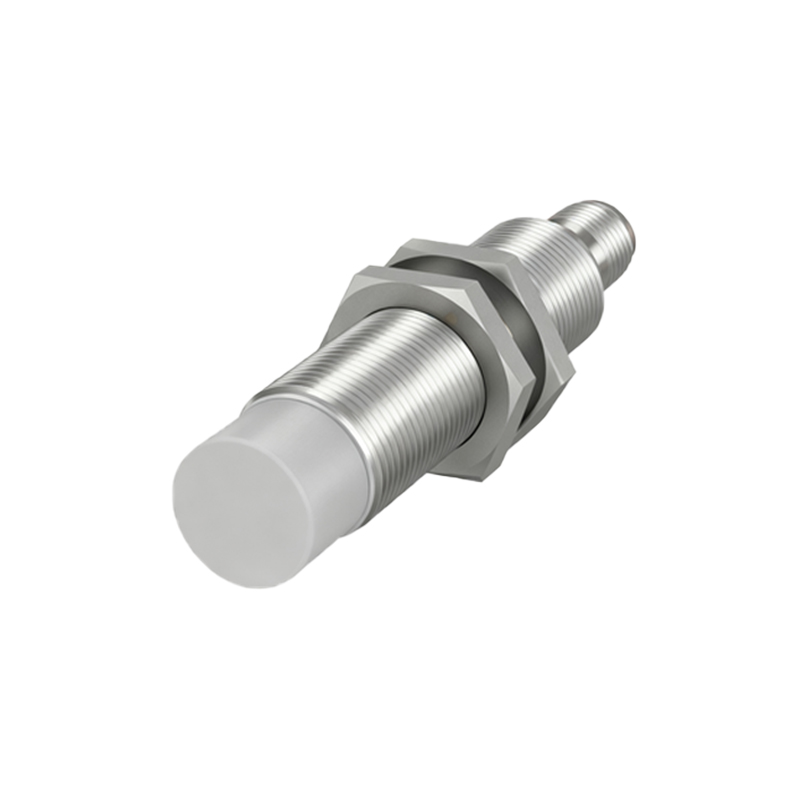
Inductive Sensors: Detect metallic objects (primarily ferrous metals like steel). Their range is relatively short, typically from 1mm to 60mm, limited by the rapid decay of the electromagnetic field. Ferrous metals are detected at the full nominal range, while non-ferrous metals like aluminum or copper reduce the effective range significantly (often by 30-60%).
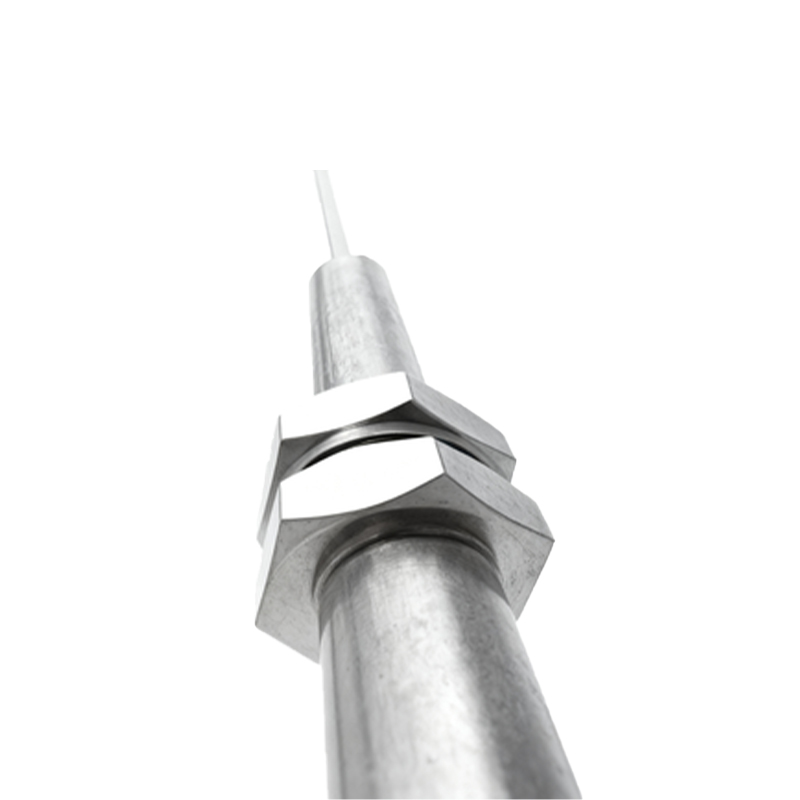
Capacitive Sensors: Detect both metallic and non-metallic materials (liquids, plastics, wood) by sensing changes in capacitance. Their range is similar to or slightly less than inductive sensors but is highly sensitive to the target material's dielectric constant. Materials with high dielectric constants (e.g., water) are detected at longer ranges than those with low constants (e.g., dry wood).
Ultrasonic Sensors: Use sound waves to measure distance to objects of virtually any material. They offer the longest ranges among common proximity sensors, from a few centimeters up to several meters (e.g., 8m). Range is affected by the target's sound absorption and surface angle.
Photoelectric Sensors: Utilize light beams (visible, infrared, laser). Their range is highly variable. Diffuse reflective models may sense up to 2-3m, while through-beam and retro-reflective models can achieve ranges of tens or even hundreds of meters under controlled conditions. Target color, surface finish, and ambient light are critical influencers.
2. Target Characteristics: The standard target defined in datasheets (usually a square of mild steel for inductive sensors) is a reference. Deviations impact range.
Size: A target smaller than the sensor's active face diameter reduces the effective range.
Material: As noted, material composition (metal type, dielectric constant, color, transparency) drastically alters performance.
Orientation and Surface: A flat, perpendicular surface provides maximum range. Angled, curved, or rough surfaces can scatter signals and reduce range.
3. Environmental Conditions: The operating environment is a major constraint.
Temperature: Extreme temperatures can affect oscillator stability in inductive/capacitive sensors and sound speed in ultrasonic sensors, leading to range drift.
Contaminants: Dust, oil, ice, or condensation buildup on the sensor face can attenuate or block signals, especially for optical and ultrasonic types.
Electrical Noise: Strong electromagnetic interference (EMI) can disrupt sensor electronics, causing erratic behavior at maximum ranges.
Pushing the Limits: Can You Extend the Range?
While a sensor's nominal Sn is a design constant, certain practices can help achieve consistent performance near that limit:
Select the Right Technology: Match the sensor to the application. For long-range detection of non-metals, photoelectric or ultrasonic sensors are the only viable choice.
Optimize Target and Alignment: Use a target that is large, flat, and made of the most favorable material. Ensure precise alignment perpendicular to the sensor face.
Mitigate Environmental Effects: Employ sensors with appropriate IP ratings, use air purge units to keep faces clean, and install shields or filters for electrical noise.
Utilize Sensitivity Adjustment: Many sensors feature a potentiometer or teach-in function. Fine-tuning can maximize range for a specific target but may increase susceptibility to background interference.
Consider Specialized Models: Manufacturers offer "long-range" variants within a technology family, often with more powerful emitters or more sensitive receivers.
The Trade-off: Range vs. Stability
A fundamental engineering trade-off exists between maximum range and operational stability. Operating consistently at the absolute edge of a sensor's capability leaves no margin for