Laser line tracking sensors represent a pivotal technology in modern industrial automation, enabling precise detection, positioning, and guidance for a wide range of applications. These sensors operate by projecting a visible or infrared laser line onto a target surface and using a high-resolution camera or photodetector array to capture the line's profile. Any deviation, interruption, or deformation in the line—caused by surface height variations, edges, gaps, or object presence—is analyzed in real-time by integrated processors. This allows for accurate measurement of dimensions, alignment, and contour tracking without physical contact.
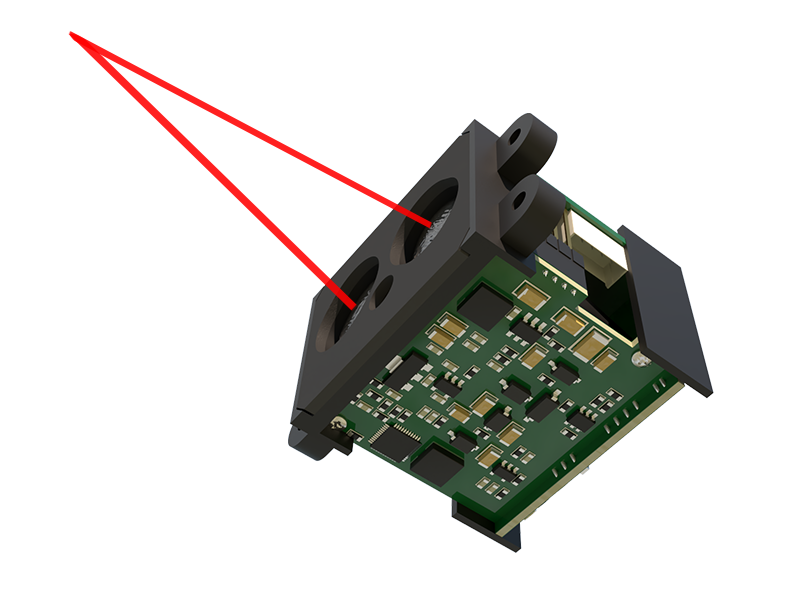
The core working principle involves triangulation. The laser emitter projects a thin, focused line at a known angle relative to the sensor's optical axis. The reflected light from the surface is captured by a receiver positioned at a different angle. By calculating the displacement or distortion of the laser line in the receiver's field of view, the sensor determines precise distance, height, or profile data. Advanced models incorporate CMOS or CCD imaging chips with high frame rates, allowing dynamic tracking even on fast-moving production lines. Key performance parameters include measurement range (typically from a few millimeters to several meters), resolution (often down to micron levels), scanning frequency, and environmental resistance to factors like ambient light, dust, or vibration.
In practical industrial settings, laser line trackers are indispensable. In robotics, they guide robotic arms for precise pick-and-place operations, welding seam tracking, and assembly verification. In automotive manufacturing, sensors ensure panel gap consistency, inspect paint thickness, and align components. The packaging industry relies on them for label placement control, box sealing inspection, and fill-level monitoring. Additionally, they are used in lumber processing for warp detection, electronics for solder paste inspection, and logistics for parcel dimensioning. Compared to traditional mechanical probes or 2D vision systems, laser line sensors offer superior speed, accuracy, and adaptability to complex surfaces.
Selecting the appropriate laser line sensor requires careful consideration. Factors include the required measurement accuracy, working distance, surface material (reflective, matte, or transparent), line length, and environmental conditions. For instance, blue laser models perform better on shiny metals by reducing specular reflection, while infrared variants suit low-light environments. Integration with PLCs, industrial PCs, or IoT platforms via standard interfaces like Ethernet/IP, PROFINET, or analog outputs is also crucial for system compatibility. Modern sensors often feature embedded software with intuitive configuration tools, enabling users to set tolerances, output triggers, and data logging without extensive programming.
Despite their robustness, challenges such as optical interference, extreme surface angles, or highly transparent materials may require supplementary lighting or sensor fusion techniques. Ongoing advancements in miniaturization, multi-line projection, and AI-enhanced image processing are expanding their capabilities. Future trends point toward smarter, networked sensors that provide predictive analytics for preventive maintenance and deeper integration into Industry 4.0 ecosystems. As automation demands higher precision and flexibility, laser line tracking sensors will continue to be a cornerstone technology, driving efficiency and quality across manufacturing and beyond.