In the realm of industrial automation and electrical engineering, the terms "proximity switch" and "speed sensor" are frequently encountered, often leading to confusion regarding their functions and applications. A common question arises: Is a proximity switch a speed sensor? To address this, it is essential to delve into the fundamental principles, operational mechanisms, and typical use cases of both devices, clarifying their distinctions and potential overlaps.
A proximity switch, also known as a proximity sensor, is a non-contact electronic device designed to detect the presence or absence of an object within a specified range without physical contact. It operates based on various principles, such as inductive, capacitive, ultrasonic, or magnetic effects. Inductive proximity switches, for instance, generate an electromagnetic field and detect changes caused by metallic objects, making them ideal for harsh industrial environments. These switches are primarily used for position detection, object counting, limit switching, and safety applications. Their output is typically a digital signal (ON/OFF) that indicates whether an object is within the detection zone.
On the other hand, a speed sensor is specifically engineered to measure the rotational or linear speed of a moving object. Common types include tachometers, encoders, Hall-effect sensors, and magnetic pickups. These sensors convert mechanical motion into electrical signals, often providing analog or digital outputs proportional to speed. For example, an incremental encoder generates pulses as a shaft rotates, with the pulse frequency directly correlating to rotational speed. Speed sensors are critical in applications like motor control, conveyor belt monitoring, automotive systems, and machinery where precise speed measurement is necessary for performance optimization and safety.
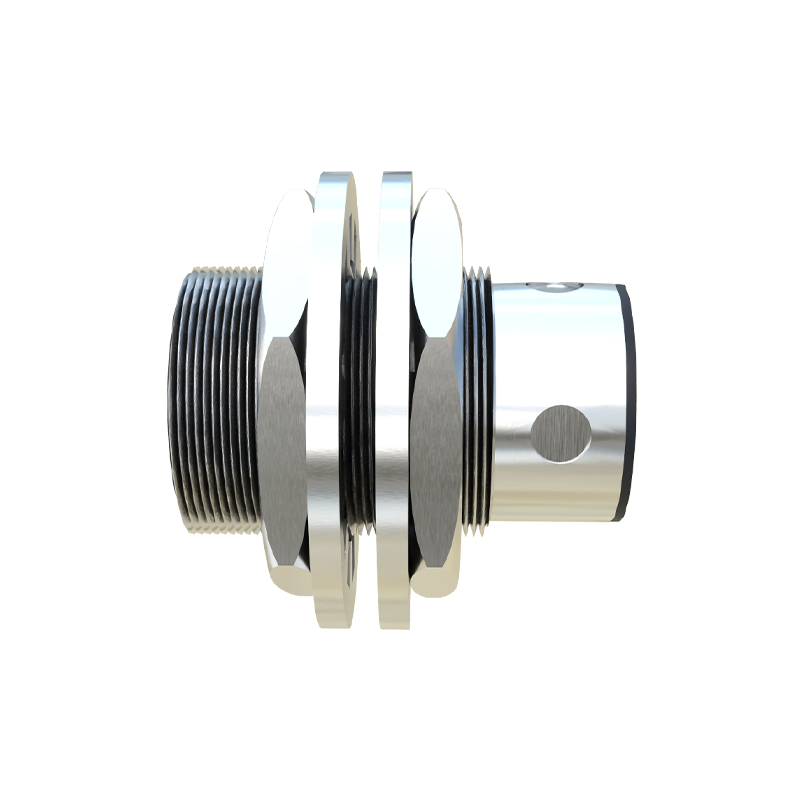
While both devices involve detection and signal generation, their core purposes differ significantly. A proximity switch focuses on presence detection, acting as a binary switch to confirm an object's location. In contrast, a speed sensor quantifies motion, delivering continuous or periodic data about velocity. However, in certain scenarios, a proximity switch can be utilized to infer speed information indirectly. For instance, if a proximity switch is positioned to detect teeth on a gear or slots on a rotating disk, the frequency of the output pulses can be calculated to determine rotational speed. This configuration effectively transforms the proximity switch into a rudimentary speed sensor, often referred to as a "proximity speed sensor" or "pulse-generating sensor." Yet, this is an application-specific adaptation rather than an inherent function.
Key factors differentiate their design and performance. Proximity switches are optimized for reliability in detection, with considerations for sensing distance, material compatibility, and environmental resistance (e.g., dust, moisture). Speed sensors prioritize accuracy, resolution, and response time to capture dynamic motion. Misapplying a standard proximity switch for speed measurement may lead to inaccuracies due to factors like object shape variations or signal latency, whereas dedicated speed sensors incorporate features like signal conditioning for precise readings.
In practice, engineers must select the appropriate device based on system requirements. If the goal is simply to detect whether a rotating shaft has stopped or to count revolutions, a proximity switch might suffice. For real-time speed monitoring or closed-loop control, a dedicated speed sensor is advisable. Industry standards, such as those from IEC or ISO, often provide guidelines for sensor selection in automation systems.
In summary, a proximity switch is not inherently a speed sensor. It is primarily a presence detector, but it can be employed in speed-sensing applications through creative implementation. Understanding this distinction ensures proper integration in electrical systems, enhancing efficiency and reliability. As technology advances, hybrid sensors merging both functionalities are emerging, yet the fundamental roles remain distinct in most industrial contexts.