Capacitive sensors and proximity switches are fundamental components in modern industrial automation, offering non-contact detection capabilities for a wide range of materials. Unlike inductive sensors, which primarily detect metals, capacitive sensors can detect virtually any material by measuring changes in capacitance. This includes liquids, plastics, wood, glass, and granular substances, making them exceptionally versatile. The core principle involves an electrode forming one plate of a capacitor, with the target object acting as the other plate. As the object approaches, the dielectric constant of the space between them changes, altering the capacitance. An internal oscillator circuit detects this change, triggering a switching output when a preset threshold is reached. This allows for precise level detection in tanks, presence sensing of non-metallic objects on conveyor belts, and even touch-sensitive control interfaces.
Proximity switches, a broader category, encompass various technologies including capacitive, inductive, ultrasonic, and photoelectric types. The capacitive proximity switch is specifically valued for its material-agnostic detection. Key design considerations involve the sensor's sensing distance, which is influenced by the target material's size, dielectric constant, and the installed environment. Factors like ambient humidity, temperature fluctuations, and the presence of contaminants (e.g., dust, oil) can affect performance, necessitating proper shielding and housing selection (e.g., PTFE-faced sensors for adhesive materials). Modern capacitive sensors often feature adjustable sensitivity potentiometers or teach-in functions, allowing fine-tuning on-site to ignore interfering backgrounds like container walls.
In practical applications, capacitive sensors excel in liquid level control for both conductive and non-conductive fluids. They are indispensable in packaging industries for detecting film, paper, or plastic bottles. In wood processing, they reliably sense lumber regardless of wood type or surface moisture. Another critical use is in granulate and powder level monitoring in silos, where they provide a reliable point-level switch to prevent overfilling or run-dry conditions. When integrated with PLCs (Programmable Logic Controllers), their digital or analog outputs form a vital part of feedback control loops.
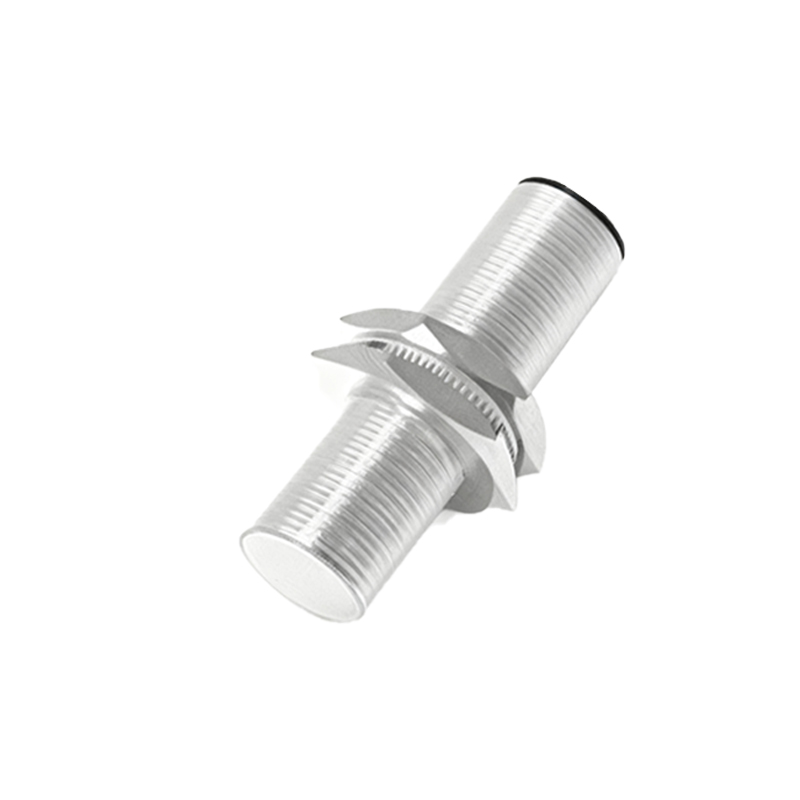
Selecting between a capacitive sensor and other proximity switches depends on the application's specific demands. For instance, an inductive sensor is superior for high-speed, precise metal detection, while a capacitive sensor is the clear choice for detecting insulating materials or through non-metallic barriers. Engineers must also consider output type (PNP/NPN, NO/NC), supply voltage, housing material (e.g., stainless steel for corrosive environments), and protection ratings (IP67, IP69K). Proper installation is crucial; maintaining the correct clearance from surrounding metal and ensuring a stable mounting can prevent false triggering. Regular maintenance, including cleaning the active surface from buildup, ensures long-term reliability and accuracy. As Industry 4.0 advances, smart capacitive sensors with IO-Link communication are becoming prevalent, offering diagnostic data, parameterization, and seamless integration into digital networks for predictive maintenance and enhanced process transparency.