In the rapidly evolving landscape of industrial automation, laser sensor monitoring has emerged as a cornerstone technology, driving unprecedented levels of precision, efficiency, and safety. Unlike traditional contact-based or simpler photoelectric sensors, laser sensors utilize focused coherent light to perform non-contact measurement and detection with micron-level accuracy. Their applications span from quality control on assembly lines to safeguarding personnel in hazardous environments.
The core principle involves emitting a laser beam towards a target. The sensor then analyzes the reflected light, measuring parameters such as distance, displacement, height, or presence based on time-of-flight, triangulation, or interferometry methods. This data is processed in real-time by integrated controllers or programmable logic controllers (PLCs), enabling instantaneous feedback and corrective actions within automated systems. For instance, in automotive manufacturing, laser sensors meticulously scan vehicle body panels to detect sub-millimeter dimensional deviations, ensuring consistent build quality. In logistics, they facilitate high-speed parcel dimensioning and robotic guidance for precise picking and placement.
A critical advantage is their robustness in challenging conditions. Modern industrial-grade laser sensors are designed with IP67 or higher ingress protection ratings, allowing reliable operation amidst dust, moisture, and temperature fluctuations common in factories and outdoor installations. Furthermore, advanced models incorporate features like background suppression, which ignores reflections from surfaces beyond the set target range, and teach-in functions for easy configuration via push-button or software interfaces.
Safety monitoring represents another vital domain. Safety laser scanners are deployed to create invisible protective fields around dangerous machinery, such as robotic arms or press brakes. If the beam is interrupted by an intrusion, the system triggers an immediate machine halt or reduced operating speed, adhering to stringent international standards like ISO 13849. This proactive hazard prevention is superior to reactive physical barriers, maintaining productivity without compromising worker safety.
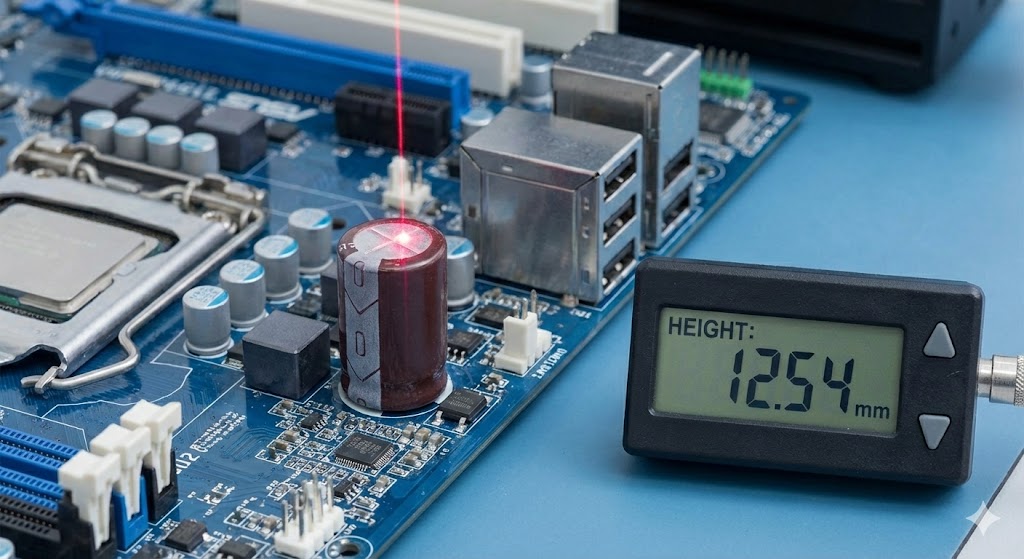
The integration of Industrial Internet of Things (IIoT) capabilities is pushing boundaries further. Network-enabled laser sensors can transmit performance data and health diagnostics to centralized monitoring platforms. This facilitates predictive maintenance, where trends in signal strength or calibration drift can alert engineers to potential sensor degradation before a failure causes downtime. Coupled with data analytics, this continuous stream of measurement information also optimizes overall process efficiency and product yield.
Despite their benefits, successful implementation requires careful consideration. Factors such as the target material's color, reflectivity, and surface texture can influence measurement accuracy. Environmental interferences from ambient light or vibrations must be mitigated through proper sensor selection, mounting, and shielding. Regular calibration against known standards is essential to maintain long-term precision.
In conclusion, laser sensor monitoring is an indispensable tool for modern industry. Its ability to deliver high-accuracy, non-contact measurements in real-time underpins automation, quality assurance, and workplace safety. As technology advances towards smarter, more interconnected systems, the role of laser sensors will only expand, solidifying their position as a key enabler of the Fourth Industrial Revolution. Engineers and system integrators must stay abreast of these developments to fully leverage their potential for operational excellence.