In the realm of industrial automation and machine safety, proximity sensors are indispensable components, providing non-contact detection of objects. Among the diverse offerings in the market, the TP-SM5N1 stands out as a robust and reliable inductive proximity sensor designed for demanding applications. This article delves into the technical specifications, operational principles, typical use cases, and key considerations for integrating the TP-SM5N1 into various systems.
The TP-SM5N1 is typically an inductive-type proximity sensor. Inductive sensors generate an electromagnetic field from a coil energized by an oscillator. When a metallic object enters this detection field, eddy currents are induced in the target, causing a change in the oscillation amplitude. This change is detected by the sensor's circuitry, which subsequently triggers a solid-state output switch. The "TP" designation often relates to the housing shape and size, while "SM5N1" indicates specific electrical characteristics, likely a 5mm diameter cylindrical housing with a normally open (NO) or specific output configuration. It is crucial to consult the official datasheet from the manufacturer for precise model specifications, as naming conventions can vary.
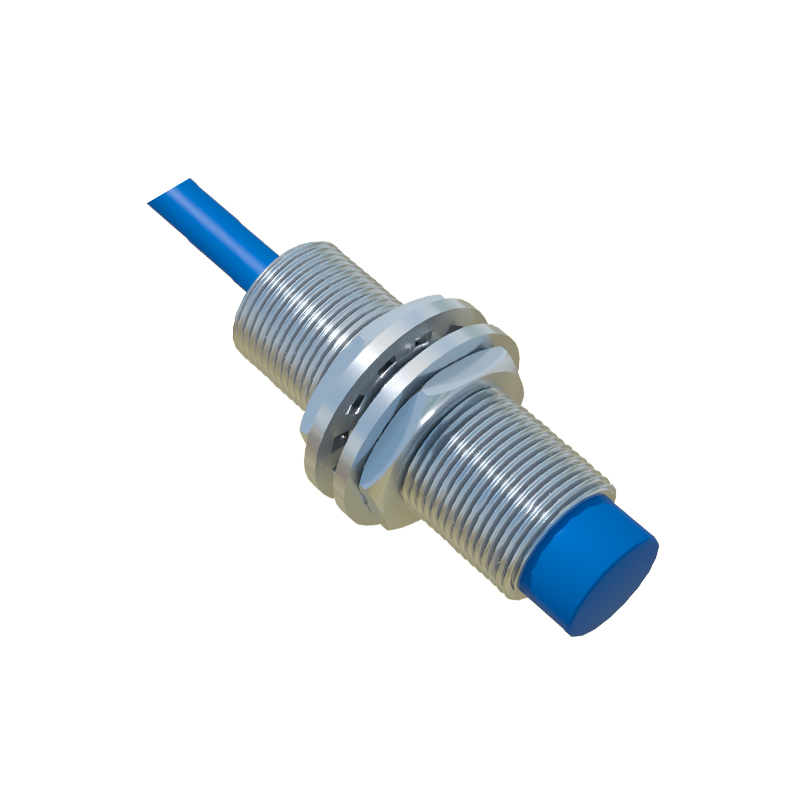
Key features of the TP-SM5N1 series commonly include a compact M5 threaded barrel design, enabling installation in space-constrained environments. The sensing distance, while dependent on the specific target material (standardized for mild steel), is typically short-range, often around 1-2mm, which is ideal for precise positioning tasks. These sensors usually operate on a wide range of DC voltages (e.g., 10-30V DC) and provide a stable PNP or NPN transistor output, compatible with standard programmable logic controllers (PLCs) and counters. A significant advantage is their high switching frequency, allowing for the detection of rapidly moving objects on production lines. Furthermore, they are often built with materials offering high resistance to environmental factors such as coolant, oil, and dust, conforming to IP67 or similar ingress protection ratings.
The applications for the TP-SM5N1 are vast across factory automation. A primary use is in machine tools for tool positioning and breakage detection. By monitoring the presence or absence of a drill bit or cutting tool, the sensor can halt the machine to prevent damage. They are also extensively used in material handling systems for part counting on conveyor belts, detecting the passage of metal components. In assembly lines, these sensors verify the presence of metal parts before a robotic arm performs an operation, ensuring process integrity. Additionally, they serve as end-position detectors in pneumatic or hydraulic cylinders, confirming whether the piston has fully extended or retracted.
Selecting and installing the TP-SM5N1 requires attention to several factors. First, the target material is critical; inductive sensors only detect metals, with different detection factors for steel, aluminum, and copper. The sensing distance specified is for mild steel, and it reduces for non-ferrous metals. Second, the electrical characteristics must match the control system: choosing between PNP (sourcing) and NPN (sinking) outputs is essential to ensure proper interface with the PLC input module. The operating voltage range must be adhered to strictly. During installation, maintaining the proper mounting distance from surrounding metal (the flush-mountable or non-flush-mountable characteristic) is necessary to avoid false triggering. For non-flush models, a lateral clearance from adjacent metal is required. Regular maintenance involves checking for physical damage, buildup of metallic debris on the sensing face, and ensuring stable electrical connections.
In conclusion, the TP-SM5N1 proximity sensor exemplifies the precision and durability required in modern industrial settings. Its compact size, reliable metal detection, and robust construction make it a versatile solution for countless automation and safety functions. Understanding its operating principle, carefully reviewing its datasheet parameters, and following proper installation guidelines are fundamental steps to leveraging its full potential, thereby enhancing machine efficiency, ensuring operational safety, and minimizing downtime in automated processes.