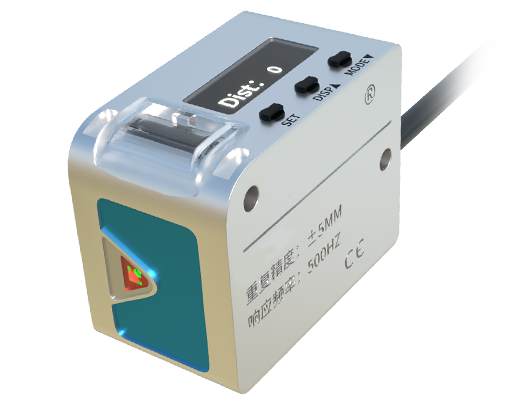
In the realm of industrial automation, precision measurement is not merely a convenience but a fundamental necessity. Among the array of sophisticated sensing technologies available, the XS Line Laser Sensor stands out as a pivotal tool for applications demanding high accuracy, reliability, and speed. This article delves into the operational principles, key features, and diverse applications of XS line laser sensors, providing a comprehensive overview for engineers and system integrators.
At its core, an XS line laser sensor operates on the principle of triangulation. The sensor projects a thin, focused line of laser light onto a target surface. A high-resolution CMOS (Complementary Metal-Oxide-Semiconductor) or CCD (Charge-Coupled Device) camera, positioned at a known angle relative to the laser emitter, captures the profile of this laser line. When the target surface's height or contour changes, the position of the laser line in the camera's field of view shifts accordingly. Sophisticated onboard processors then analyze this deformation in real-time, calculating precise 2D or 3D profile data, including height, width, and position. This non-contact method ensures no physical wear on the sensor or the target, making it ideal for delicate or high-speed production lines.
The "XS" designation often signifies a compact, robust design tailored for challenging industrial environments. Key technical features define their performance. First is resolution, which can reach micron-level accuracy, enabling the detection of minute surface defects, warp, or thickness variations. Measurement speed is another critical parameter, with many models capable of thousands of profiles per second, keeping pace with fast-moving conveyor belts. The laser line's length and working distance are configurable, allowing adaptation to different part sizes and installation constraints. Furthermore, these sensors are typically built with IP67 or higher ingress protection ratings, ensuring reliable operation despite exposure to dust, moisture, and oil. Advanced models incorporate intelligent functions like automatic exposure control, multi-peak detection for translucent or shiny objects, and integrated data communication via Ethernet/IP, PROFINET, or EtherCAT for seamless integration into Industry 4.0 networks.
The application spectrum for XS line laser sensors is remarkably broad. In automotive manufacturing, they are indispensable for gap and flush measurement on car body assemblies, ensuring panel alignment meets stringent quality standards. In electronics, they verify the coplanarity of Ball Grid Array (BGA) solder balls and inspect component placement on PCBs. The packaging industry utilizes them for real-time monitoring of fill levels, seal integrity checks, and label positioning. In metal processing, they perform precise dimensional inspection of extruded profiles, weld seam tracking, and surface defect detection. Their ability to generate full cross-sectional profiles also makes them perfect for robotic guidance, allowing robots to accurately pick and place randomly oriented parts from bins.
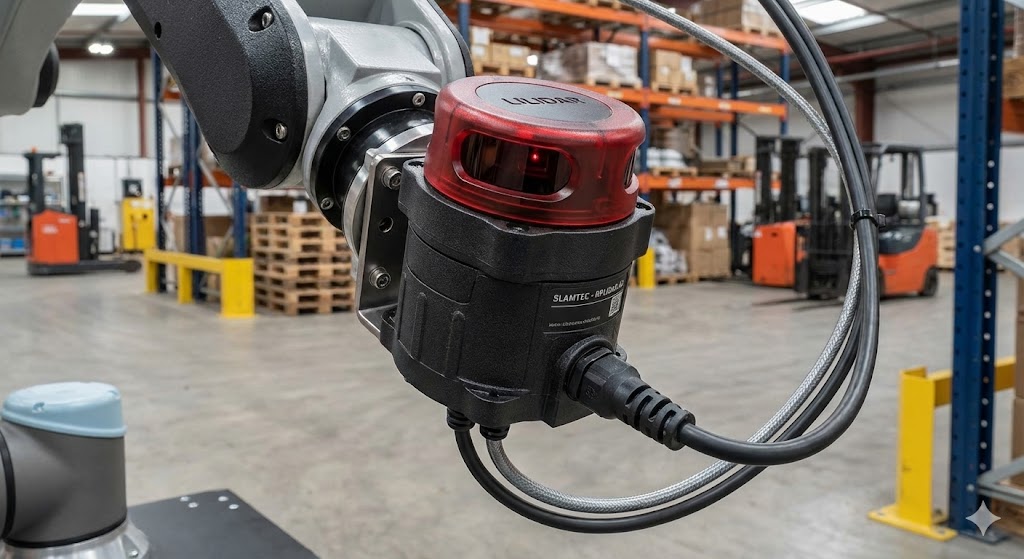
Selecting the right XS line laser sensor requires careful consideration of several factors. The required measurement range and resolution are paramount. The environmental conditions—such as ambient light interference, temperature fluctuations, and potential mechanical vibrations—must be matched with the sensor's specifications. The material and surface properties of the target (e.g., color, reflectivity, transparency) significantly influence performance and may necessitate sensors with specific laser wavelengths or advanced filtering algorithms. Finally, the choice of interface and software tools for data analysis and system integration is crucial for maximizing operational efficiency.
In conclusion, XS line laser sensors represent a mature yet continuously evolving technology that bridges the gap between physical objects and digital control systems. Their unparalleled precision in capturing detailed profile data empowers manufacturers to achieve higher levels of quality control, process optimization, and automation intelligence. As industries push towards smarter, more flexible production, the role of these sensors will only become more central, driving innovations in measurement and inspection across the global industrial landscape.