In the realm of industrial automation and control systems, proximity sensors are indispensable components. They detect the presence or absence of an object without any physical contact, enabling precise, reliable, and wear-free operation in countless applications. Understanding the different types of proximity sensors is crucial for selecting the right technology for a specific task. This guide delves into the primary categories, their operating principles, advantages, and typical use cases.
The most fundamental classification of proximity sensors is based on their underlying detection technology. The four main types are Inductive, Capacitive, Ultrasonic, and Photoelectric sensors.
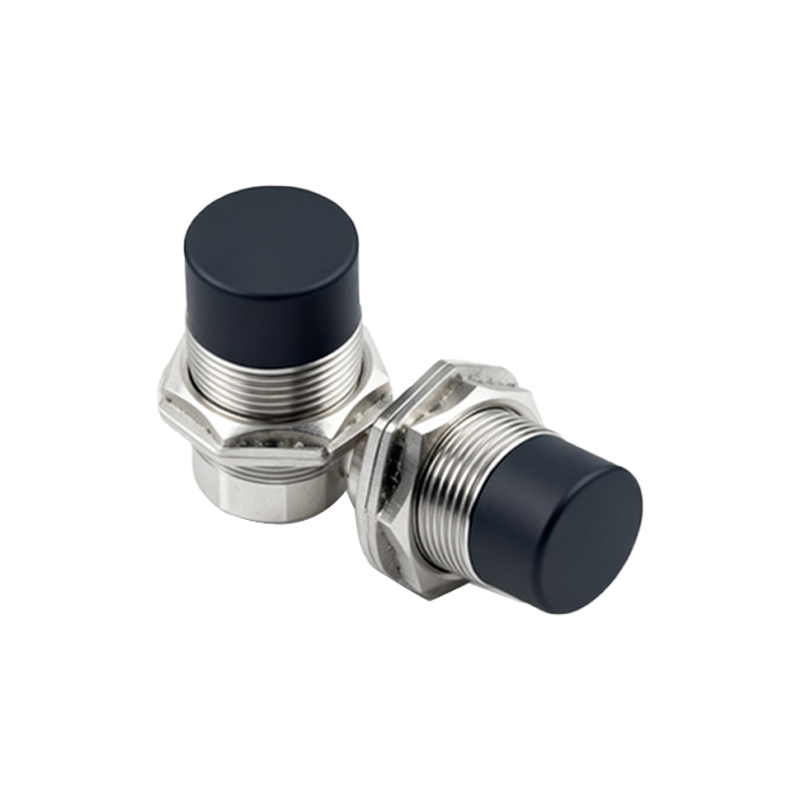
Inductive Proximity Sensors
Inductive proximity sensors are designed to detect metallic objects, primarily ferrous metals like iron and steel, though some models can also sense non-ferrous metals. Their operation relies on electromagnetic induction. The sensor generates an oscillating electromagnetic field from its face. When a conductive metal object enters this field, eddy currents are induced on the object's surface. This causes a change in the oscillation amplitude within the sensor's coil, which is detected by the internal circuitry, triggering a solid-state output switch.
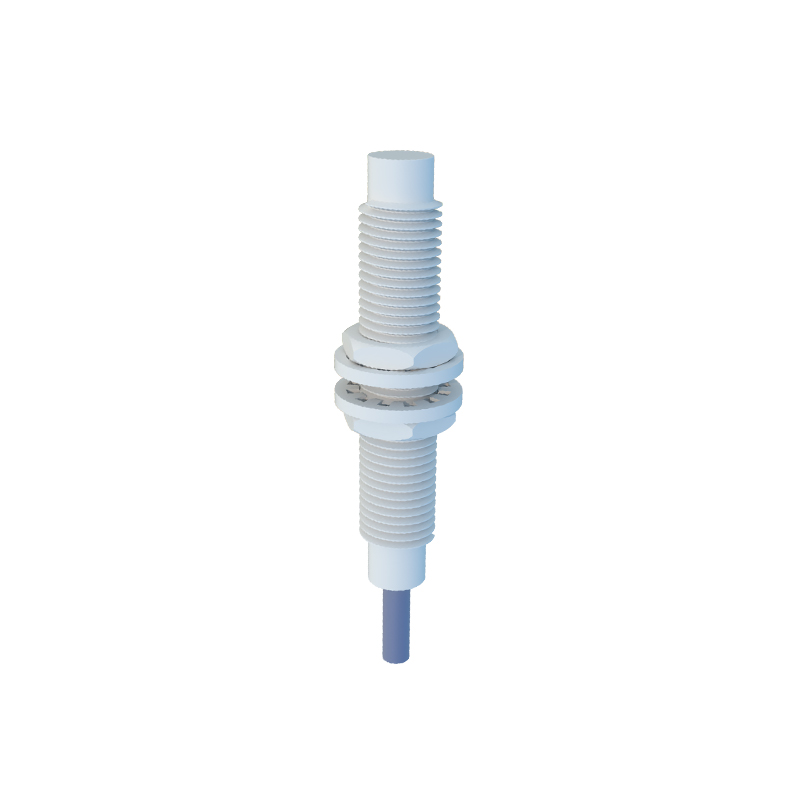
Key advantages include high switching frequency, exceptional reliability, resistance to environmental factors like dust, oil, and moisture, and insensitivity to non-metallic materials. They are the go-to choice in metalworking, machine tools, automotive assembly lines, and robotics for tasks like part counting, position verification, and limit switching.
Capacitive Proximity Sensors
Capacitive sensors can detect both metallic and non-metallic materials, including liquids, powders, plastics, glass, and wood. They function by measuring changes in capacitance. The sensor's active face forms one plate of a capacitor, with the target object acting as the other plate. As an object approaches, it alters the dielectric constant of the space between them, changing the capacitance. The sensor's circuit monitors this change and switches its output when a preset threshold is reached.
Their ability to sense through non-metallic containers makes them ideal for level detection of liquids, granules, or powders. Other applications include material presence detection on conveyor belts, touch-sensitive controls, and detecting filled vs. empty bottles or packages. They are generally less accurate than inductive sensors for metal detection and can be influenced by environmental humidity.
Ultrasonic Proximity Sensors
These sensors use sound waves beyond the human hearing range (typically above 20 kHz). They operate on the time-of-flight principle: the sensor emits an ultrasonic pulse and then listens for the echo reflected from a target object. By calculating the time interval between emission and reception, the sensor can determine the distance to the object. They are available in both through-beam (separate emitter and receiver) and diffuse-reflective (single unit) models.
Ultrasonic sensors excel at detecting objects regardless of their material, color, or transparency. They are perfect for applications requiring precise distance measurement, bulk level sensing in silos, and detecting clear objects like glass bottles. However, their performance can be affected by temperature variations, air turbulence, and highly absorbent or angled surfaces.
Photoelectric Sensors
Photoelectric sensors utilize light, typically infrared, visible red, or laser, to detect objects. They are categorized by their operating mode:
1. Through-beam: Consists of separate emitter and receiver units. Detection occurs when the target object interrupts the light beam. This type offers the longest sensing range and highest reliability.
2. Retro-reflective: Uses a single unit and a reflector. The sensor detects an object when it blocks the light beam reflected back from the reflector.
3. Diffuse-reflective: The most common type, where the sensor's emitter and receiver are in one housing. It detects an object when the emitted light is reflected directly off the target's surface back to the receiver.
Photoelectric sensors offer very long sensing ranges, fast response times, and the ability to detect tiny objects. They are versatile and can sense almost any material. Applications are vast, including packaging machinery, material handling, semiconductor manufacturing, and security systems. Their main limitation is susceptibility to interference from ambient light, dust, fog, or dirt on the lens.
Selection Considerations
Choosing the correct proximity sensor involves analyzing several factors:
Target Material: Metal (inductive), any material (capacitive, ultrasonic, photoelectric).
Sensing Distance: Required range from the sensor to the target.
Environmental Conditions: Exposure to dust, moisture, chemicals, temperature extremes, or electrical noise.
Output Type: Digital (PNP/NPN) or analog (4-20mA, 0-10V).
Response Speed: How quickly the sensor must react to a target's presence.
Mounting Constraints: Physical size and installation requirements.
In conclusion, no single type of proximity sensor is universally superior