In the rapidly evolving landscape of industrial automation and smart electronics, the demand for smaller, more efficient, and highly reliable sensing solutions has never been greater. Among the various sensing technologies, capacitive proximity sensors, particularly in their ultra-compact form factors, have emerged as critical components. This article explores the fundamental principles, design considerations, and diverse applications of these miniature marvels.
At its core, a capacitive proximity sensor operates by detecting changes in capacitance. The sensor forms one plate of a capacitor, with the target object acting as the other plate, and the intervening space as the dielectric. When an object enters the sensor's electrostatic field, it alters the dielectric constant and thus the capacitance of the system. The sensor's internal oscillator circuit detects this change, triggering an output signal. Unlike inductive sensors that only detect metals, capacitive sensors can detect a wide range of materials, including liquids, plastics, wood, and granular substances, provided they have a sufficient dielectric constant.
The journey toward ultra-miniaturization is driven by several key engineering challenges and innovations. First is the design of the sensing face and electrode. In a sub-miniature housing (e.g., M5, M8, or even smaller cylindrical formats or thin rectangular chips), the active sensing area is extremely limited. Engineers employ sophisticated electrode geometries and shielding techniques to create a focused, directional field, minimizing unwanted side-sensitivity and ensuring stable detection. The oscillator circuit must be exceptionally stable and immune to environmental noise such as temperature fluctuations, humidity, and electromagnetic interference (EMI). This often involves the use of advanced application-specific integrated circuits (ASICs) that integrate the oscillator, signal conditioning, and output switching into a single, tiny chip.
Material selection for the housing and sensing face is paramount. Engineers typically use high-grade plastics like PBT or PPS for the housing, offering excellent chemical resistance and dimensional stability. The sensing face itself is often a specialized ceramic or a high-quality polymer that allows the electrostatic field to penetrate while protecting the internal electronics from harsh environments, including washdowns in food and beverage applications.
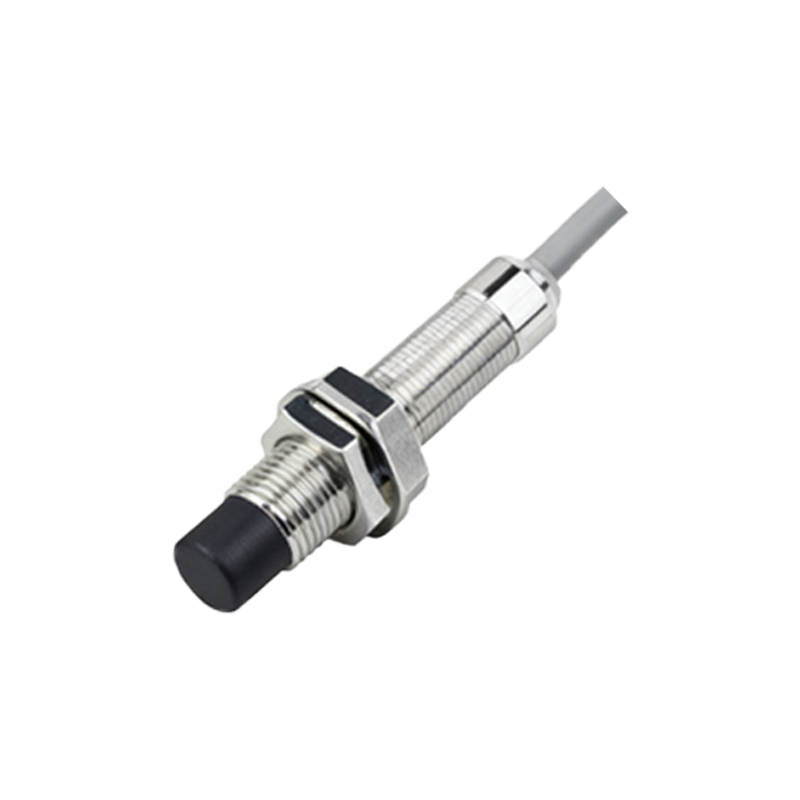
The output stage is another critical area. Modern ultra-compact capacitive sensors commonly feature solid-state switching outputs (PNP or NPN). Some advanced models integrate analog outputs (0-10V or 4-20mA) or IO-Link digital communication into the same tiny package. IO-Link, in particular, is revolutionizing sensor integration by enabling parameter setting, real-time diagnostics, and process data exchange, transforming a simple proximity switch into a smart data point on the network.
Applications for these tiny sensors are vast and growing. In consumer electronics, they are embedded in smartphones and tablets for touchless gesture control or detecting the presence of a user's ear during a call. In semiconductor manufacturing, they are used for precise wafer positioning and detecting the presence of non-metallic materials inside equipment. The packaging industry relies on them to detect transparent films, glass bottles, or low-fill levels in non-metallic containers. In medical devices, their ability to detect liquids and plastics makes them ideal for fluid level sensing in diagnostic equipment or ensuring proper placement of disposable components.
When integrating ultra-compact capacitive sensors, several best practices must be followed. Mounting is crucial; flush mounting is generally preferred to achieve the rated sensing distance, as non-flush mounting can significantly reduce it. The influence of the surrounding material must be considered—conductive materials like metal can increase the nominal sensing range, while installation in insulating materials may require a sensitivity adjustment. Regular maintenance involves keeping the sensing face clean from adhesives, dust, or moisture films that could cause false triggering.
Looking ahead, the trend is toward even greater integration, intelligence, and robustness. We are seeing the convergence of sensing, processing, and wireless communication in package sizes smaller than a grain of rice. Furthermore, developments in materials science may lead to sensors that are not just small, but also flexible, conformable, and embeddable into composite structures.
In conclusion, ultra-compact capacitive proximity sensors represent a pinnacle of precision engineering. Their ability to provide reliable, material-independent detection in the most space-constrained applications makes them indispensable in the push toward more automated, efficient, and intelligent systems across all industries. Understanding their operating principles and application nuances is key to leveraging their full potential in modern design.