In the realm of industrial automation and machine safety, proximity switches are indispensable components for non-contact detection. Among these, sensors with a 10cm (approximately 4 inches) sensing range represent a highly versatile and widely utilized category. This article delves into the technical principles, selection criteria, and practical applications of 10cm proximity switches, providing essential insights for engineers and system integrators.
Proximity switches operating at a 10cm range typically utilize inductive, capacitive, or ultrasonic sensing technologies. Inductive sensors are the most common for this range when detecting metallic objects. They generate an electromagnetic field; when a metal target enters this field within the 10cm nominal sensing distance, it induces eddy currents, causing a change in the sensor's oscillation amplitude, which triggers the output switch. Capacitive sensors can detect both metallic and non-metallic materials (like plastics, liquids, or wood) at similar distances by sensing changes in capacitance. Ultrasonic sensors achieve this range by emitting sound waves and measuring the time for the echo to return.
The specified "10cm" is a nominal value, defined under standardized conditions (usually a standard target of mild steel for inductive types). Critical technical parameters include the rated operating distance (Sn), which is the 10cm specification. Engineers must also consider the assurance factor, which accounts for voltage fluctuations, temperature changes, and manufacturing tolerances. A typical assurance factor reduces the effective reliable sensing distance to 80-90% of the nominal value in real-world applications. Repeat accuracy, hysteresis, and response frequency are other vital specs. Hysteresis prevents output chattering when an object is at the sensing edge.
Selecting the right 10cm proximity switch requires a detailed analysis of the application. For metallic object detection in harsh environments—such as on conveyor lines, machine tooling, or robotic arm end-effectors—a robust, shielded inductive sensor is often preferred. Its 10cm range allows for flexible mounting and helps maintain a safe distance from moving parts. If the application involves detecting non-metallic materials, such as monitoring fluid levels in a tank or the presence of cardboard boxes, a capacitive sensor with a 10cm range is necessary. Environmental factors are paramount: sensors must have appropriate Ingress Protection (IP) ratings (e.g., IP67 for dust and temporary immersion), withstand temperature ranges, and be resistant to chemicals or welding spatter if present.
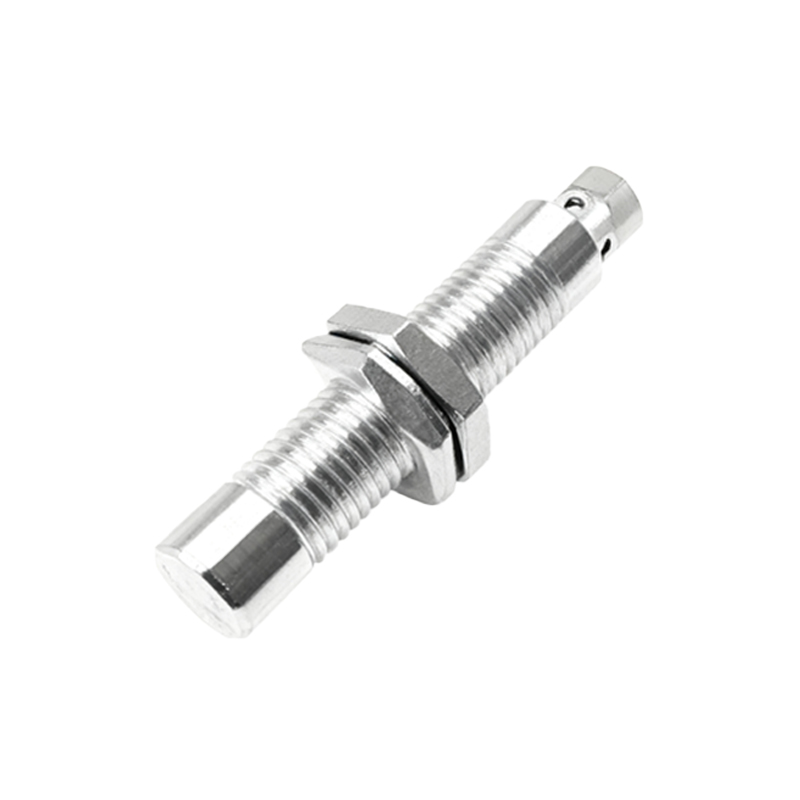
Installation and configuration are crucial for reliable performance. The sensing range can be influenced by the surrounding metal (mounting in a metal bracket may reduce the effective range for inductive types), the target material's size and shape (which should ideally match or exceed the sensor's face), and the presence of other sensors causing interference. Maintaining a clean sensing face is essential, as buildup of dirt or debris, especially on capacitive sensors, can cause false triggering. Many modern 10cm proximity switches feature LED status indicators for diagnostics and offer various output types (PNP/NPN, NO/NC, analog, or IO-Link) for seamless integration into PLC-controlled systems.
In practice, 10cm proximity switches enable numerous advanced functions. They are extensively used for position verification in automated guided vehicles (AGVs), pallet detection in warehouse systems, and as safety presence checks at machine access gates. Their range is sufficient to provide an adequate safety buffer while being precise enough for many positioning tasks. The evolution towards smart sensors with IO-Link communication further enhances their value, enabling remote parameter setting, condition monitoring, and predictive maintenance data from the same compact device.
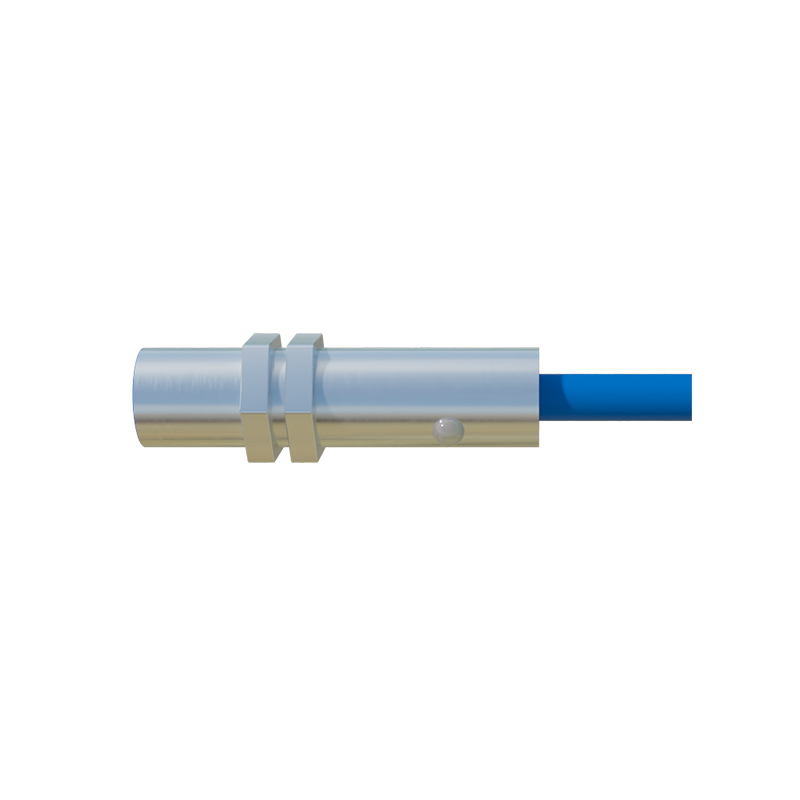
In conclusion, the 10cm proximity switch is a workhorse of industrial sensing, offering an optimal balance of range, reliability, and flexibility. Successful deployment hinges on a thorough understanding of the sensing technology, a precise match to the application's material and environmental demands, and correct installation practices. By specifying and applying these sensors correctly, engineers can build more robust, efficient, and intelligent automated systems.