In the intricate world of industrial automation, where precision, reliability, and safety are paramount, proximity sensors operate as the silent, vigilant sentinels. These non-contact detection devices are fundamental to countless applications, from simple object presence verification to complex robotic guidance systems. Unlike traditional mechanical limit switches, proximity sensors detect the presence or absence of a target object without any physical contact, thereby eliminating mechanical wear and tear and significantly enhancing system longevity and reliability.
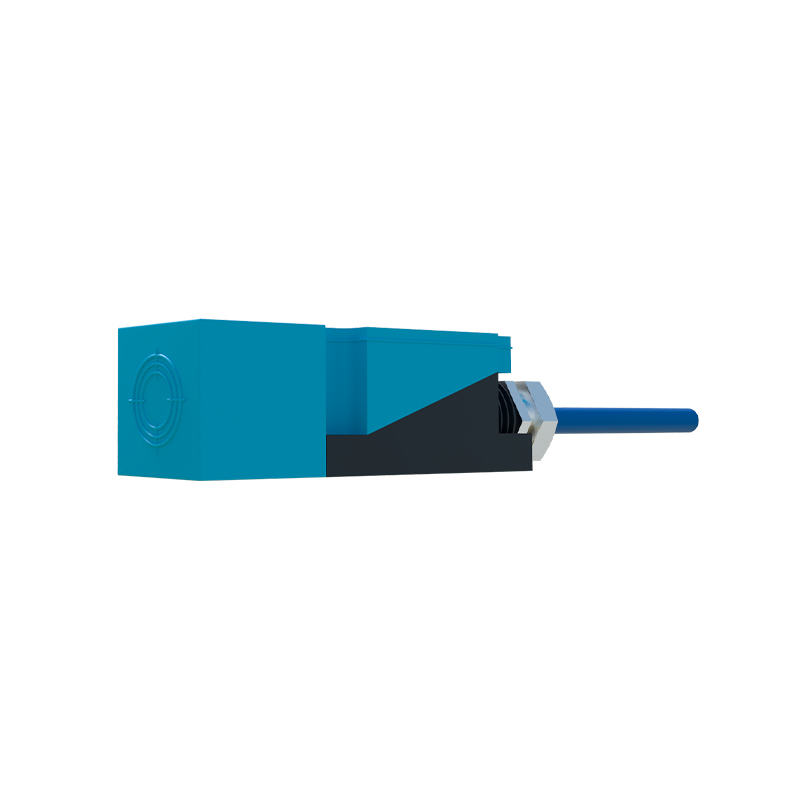
The operational principle of a proximity sensor is elegantly based on the disturbance of an electromagnetic field, acoustic wave, or light beam. The most prevalent types include inductive, capacitive, ultrasonic, and photoelectric sensors. Inductive proximity sensors, for instance, generate an oscillating electromagnetic field. When a metallic target enters this field, it induces eddy currents within the target, causing a change in the oscillation amplitude. This change is detected by the sensor's circuitry, which then triggers a solid-state output switch. These sensors are exceptionally robust and ideal for harsh industrial environments involving dust, oil, or moisture, making them perfect for detecting metal parts on assembly lines or monitoring machine tool positions.
Capacitive proximity sensors, on the other hand, can detect both metallic and non-metallic targets—liquids, plastics, wood, and granular materials. They function by generating an electrostatic field. Any object with a dielectric constant different from air will alter the capacitance of the sensing field, prompting the sensor to switch. This versatility makes them indispensable in industries like food and beverage for level detection in tanks or packaging lines for detecting glass or plastic containers.
Photoelectric sensors utilize a light beam, typically infrared or laser, emitted from a transmitter. A receiver detects the beam. The presence of an object is sensed either by the interruption of the beam (through-beam), by its reflection from the target (retro-reflective), or by the diffusion of light (diffuse reflective). They offer long sensing ranges and high speed, crucial for conveyor belt sorting, object counting, and precise positioning.
Ultrasonic sensors measure the time interval between emitting a high-frequency sound wave and receiving its echo after reflection from a target. They excel in applications requiring precise distance measurement or level sensing of liquids and bulk solids, even in environments with airborne contaminants like dust or fog that would obscure photoelectric sensors.
The selection of the appropriate proximity sensor is a critical engineering decision. Key parameters include sensing distance, target material, size, and shape, environmental conditions (temperature, pressure, contaminants), required output type (PNP/NPN, analog, IO-Link), and response speed. For example, in a high-speed bottling plant, a fast-response diffuse photoelectric sensor might be chosen for label detection, while an inductive sensor would monitor the metallic capping mechanism.
Modern advancements are pushing the boundaries further. The integration of IO-Link communication transforms standard sensors into intelligent devices capable of transmitting detailed diagnostic data—such as operating temperature, signal strength, and device health—to the control system. This facilitates predictive maintenance, reducing unplanned downtime. Furthermore, miniaturization allows these sensors to fit into increasingly compact machinery, and enhanced sealing techniques (up to IP69K) enable reliable operation under high-pressure washdowns in pharmaceutical or food processing plants.
In conclusion, proximity sensors are far more than simple switches. They are sophisticated, application-specific components that form the sensory backbone of modern automated systems. Their ability to provide reliable, non-contact detection under challenging conditions directly contributes to increased productivity, improved product quality, and enhanced operational safety. As Industry 4.0 and smart manufacturing evolve, the role of these "unsung heroes" will only grow in significance, becoming more connected, intelligent, and integral to the factories of the future.