In the realm of industrial automation and precision marking, the integration of advanced sensing technology is paramount. Laser displacement sensors have emerged as a critical component in modern marking machines, enabling unparalleled accuracy, speed, and reliability. This article delves into the principles, applications, and selection criteria for these sensors within the marking industry.
At its core, a laser displacement sensor operates on the principle of triangulation or time-of-flight measurement. In the context of marking machines—such as those used for laser engraving, dot peen marking, or inkjet printing—the sensor projects a focused laser beam onto the target surface. The reflected light is captured by a receiving element, typically a CMOS or CCD array. By analyzing the position of the reflected spot, the sensor calculates the precise distance to the object with micron-level resolution. This non-contact measurement is crucial as it avoids any physical interference with the workpiece, preserving surface integrity and ensuring consistent mark quality.
The primary function of a laser displacement sensor in a marking system is to compensate for surface height variations. In many industrial settings, workpieces are not perfectly flat or uniformly positioned. Even minor deviations can lead to out-of-focus laser beams or inconsistent dot peen depth, resulting in poor mark legibility or compromised aesthetics. By continuously monitoring the distance to the surface, the sensor provides real-time feedback to the marking machine's controller. This allows for dynamic Z-axis adjustment, ensuring the marking head maintains an optimal focal distance or impact force throughout the operation. Consequently, marks remain sharp, deep, and uniform across irregular contours or on inclined surfaces.

Key performance parameters for these sensors include measuring range, resolution, sampling rate, and linearity. For high-speed production lines, a fast sampling rate (often exceeding 10 kHz) is essential to keep pace with conveyor movements without sacrificing accuracy. Resolution, which can be as fine as 0.1 µm, determines the sensor's ability to detect minute height changes. Additionally, environmental robustness is a critical consideration. Industrial marking environments often involve dust, coolant mist, vibrations, and fluctuating temperatures. Therefore, sensors with IP67 ratings, robust housings, and resistance to optical interference (e.g., ambient light or surface reflectivity variations) are preferred. Many modern models incorporate algorithms to filter noise and adapt to different material finishes, from highly reflective metals to dark, absorbent plastics.
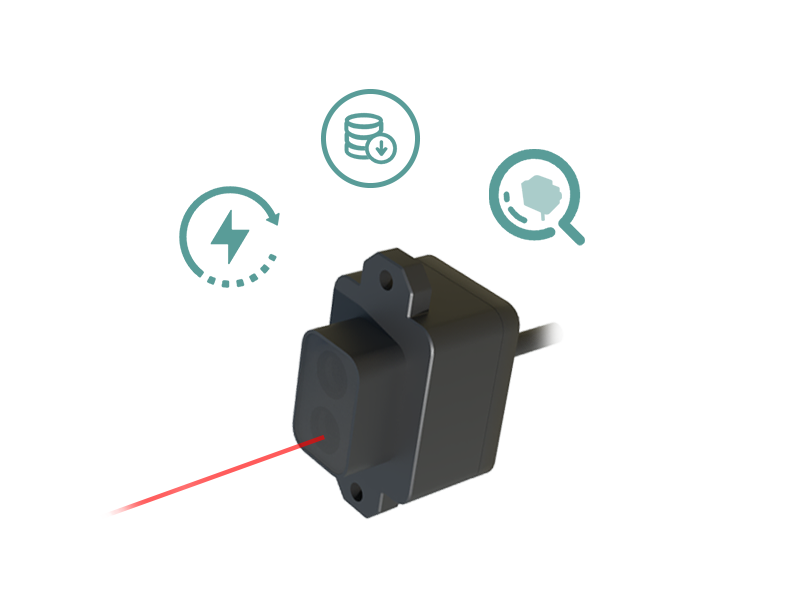
Application scenarios are diverse. In automotive part marking, sensors ensure clear VIN engravings on curved engine blocks. In electronics, they guarantee precise QR code laser etching on miniature components without thermal damage. For deep engraving on tools or surgical instruments, displacement control prevents over-penetration. Furthermore, these sensors facilitate automation by enabling batch processing of mixed-height objects without manual recalibration, significantly boosting throughput and reducing setup downtime.
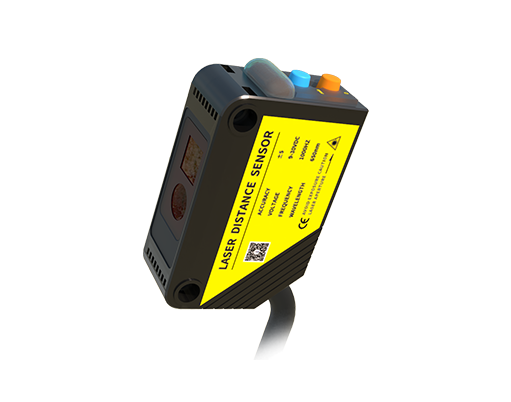
When selecting a laser displacement sensor for a marking machine, engineers must evaluate the specific requirements of their process. Factors such as the expected surface reflectivity range, required stand-off distance, available mounting space, and communication interface (e.g., analog voltage, Ethernet/IP, or RS-232) must align with the sensor's specifications. Integration with the marking software is also vital; seamless data exchange allows for adaptive marking parameters based on real-time height data.
In conclusion, laser displacement sensors are indispensable for achieving high-precision, reliable marking in today's demanding manufacturing landscape. Their ability to provide non-contact, real-time distance measurements empowers marking systems to deliver consistent quality across variable production conditions. As marking technologies evolve towards greater miniaturization and speed, the role of these sophisticated sensors will only become more pronounced, driving advancements in traceability, customization, and overall process efficiency.