In the realm of industrial automation, robotics, and smart systems, precise distance measurement is a cornerstone of functionality and safety. Among the various technologies available, PMD (Photonic Mixer Device) laser distance sensors have emerged as a sophisticated and reliable solution. This article delves into the operational principles, key advantages, diverse applications, and critical selection criteria for PMD laser sensors, providing a comprehensive overview for engineers and system integrators.
At its core, a PMD laser distance sensor operates on the Time-of-Flight (ToF) principle. Unlike simple triangulation methods, ToF measures the time it takes for a modulated light signal, typically from a laser diode, to travel to a target object and back to the sensor. The Photonic Mixer Device is the specialized CMOS chip that enables this precise measurement. It doesn't just capture light intensity; it demodulates the phase shift of the reflected, modulated light signal. By comparing the phase of the emitted and received signals, the sensor calculates the time delay with extreme accuracy, which is then directly converted into a distance value. This method allows for measurements independent of the target's surface color or texture to a large degree, a significant advantage over other optical techniques.
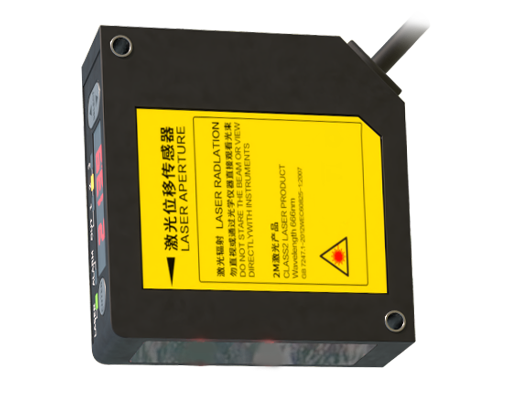
The advantages of PMD-based sensors are numerous. First and foremost is their high accuracy and resolution, capable of sub-millimeter precision even at several meters of range. They offer true distance measurement, not just a position, which is crucial for 3D imaging and volume calculations. Secondly, their measurement speed is exceptionally high, enabling real-time data acquisition for dynamic processes or fast-moving objects. Thirdly, as mentioned, they are largely insensitive to ambient light and varying surface properties, ensuring stable performance in challenging industrial environments. Furthermore, PMD sensors can be designed into compact, robust housings suitable for integration into machinery, AGVs (Automated Guided Vehicles), or consumer devices. Many modern PMD chips integrate the processing electronics on the same die, leading to simpler system design and lower power consumption.
The applications for PMD laser distance sensors are vast and growing. In industrial automation, they are used for precise positioning of robotic arms, bin-picking guidance, and conveyor belt monitoring. In logistics, they enable pallet dimensioning, forklift assistance systems, and warehouse inventory management through volume scanning. The automotive sector employs them in driver assistance systems for parking aids, blind-spot detection, and interior occupancy monitoring. In consumer electronics, they are the enabling technology for gesture control in devices and for facial recognition's depth-sensing capabilities. Additionally, they are found in drones for terrain following, in agriculture for crop monitoring, and in building automation for people counting and space utilization analytics.
Selecting the right PMD laser sensor for a specific application requires careful consideration of several parameters. The primary specification is the measurement range, which must cover the minimum and maximum distances expected in the application. Closely related is the accuracy and repeatability specification, which defines the sensor's precision. The measurement rate or frequency determines how quickly the sensor can update its output, critical for high-speed applications. The field of view (FoV) is important; a narrow FoV is good for precise point measurement, while a wide FoV is necessary for area scanning or presence detection. Environmental robustness is key; factors like IP rating for dust and water ingress, operating temperature range, and resistance to vibrations must match the installation conditions. Finally, the output interface (e.g., analog voltage, digital UART, Ethernet, IO-Link) must be compatible with the host controller or PLC.
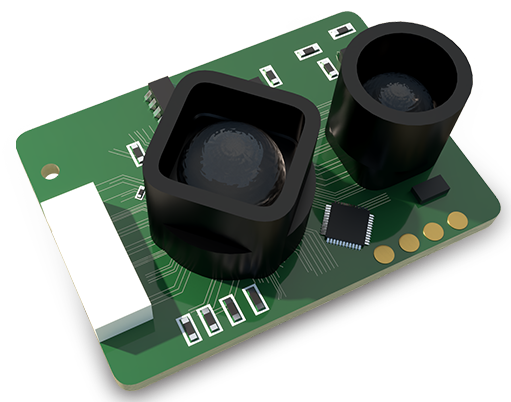
In conclusion, PMD laser distance sensors represent a powerful fusion of optical and semiconductor technology, delivering fast, accurate, and robust distance data. Their ability to perform reliably under diverse conditions makes them an indispensable tool for engineers designing the next generation of intelligent systems. As PMD technology continues to evolve, offering higher resolutions, smaller form factors, and lower costs, its adoption is set to expand further, solidifying its role as a fundamental sensing modality in an increasingly automated world. Understanding their principles and specifications is the first step toward leveraging their full potential in any project.