In the rapidly evolving landscape of smartphone technology, front-facing laser sensors have emerged as a critical component, enhancing both functionality and user experience. These sensors, often integrated into the device's front panel alongside cameras and speakers, utilize laser technology to perform a variety of tasks with high precision and speed. Unlike traditional sensors that rely on ambient light or capacitive touch, laser sensors emit focused light beams to measure distance, detect objects, and enable advanced features.
The core technology behind front-facing laser sensors is typically based on Time-of-Flight (ToF) principles. A laser diode emits short pulses of infrared light, which reflect off objects in front of the smartphone. A sensor then measures the time it takes for the light to return, calculating the distance to the object with millimeter-level accuracy. This allows for precise depth mapping and spatial awareness, which is essential for applications such as facial recognition, augmented reality (AR), and gesture control. For instance, in facial unlock systems, the laser sensor quickly scans the user's face to create a detailed 3D map, ensuring secure and fast authentication even in low-light conditions.
Moreover, front-facing laser sensors contribute significantly to camera performance. By providing accurate depth information, they enable portrait mode effects with refined background blur (bokeh) and improve autofocus speed in selfie cameras. In AR applications, these sensors help overlay digital objects onto the real world seamlessly, enhancing gaming, shopping, and navigation experiences. The integration of laser sensors also supports gesture-based controls, allowing users to interact with their devices without physical touch—a feature increasingly valuable in hygiene-conscious environments.
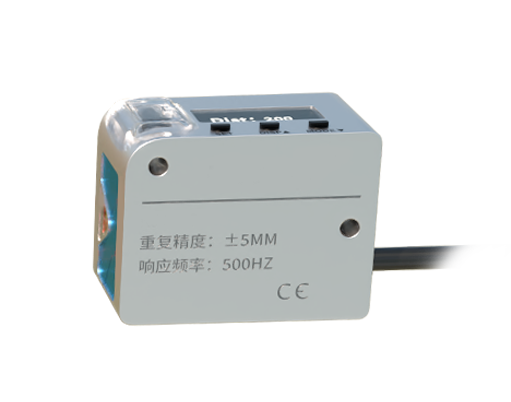
From an engineering perspective, designing front-facing laser sensors involves challenges such as miniaturization, power efficiency, and interference mitigation. Engineers must ensure that the sensor operates within safe power limits to avoid eye damage, as lasers are classified based on their emission levels. Additionally, these sensors need to be calibrated to work alongside other components like proximity sensors and ambient light sensors without causing signal disruption. Advances in semiconductor technology have led to smaller, more energy-efficient laser modules, making them feasible for slim smartphone designs.
The adoption of front-facing laser sensors is driven by consumer demand for smarter, more intuitive devices. As 5G networks and IoT ecosystems expand, these sensors will play a pivotal role in enabling new interactive experiences, from virtual meetings with depth-aware effects to health monitoring through facial analysis. However, concerns around privacy and data security arise, as laser sensors collect detailed biometric and spatial data. Manufacturers must implement robust encryption and user consent protocols to address these issues.
In summary, front-facing laser sensors represent a convergence of optics, electronics, and software engineering, pushing the boundaries of what smartphones can achieve. Their ability to deliver precise, real-time data opens up possibilities for innovation across multiple domains, including security, photography, and immersive technology. As research continues, we can expect further enhancements in accuracy, speed, and integration, solidifying their status as a key enabler of next-generation mobile devices. For industry professionals, staying updated on these developments is crucial for driving future designs and applications.