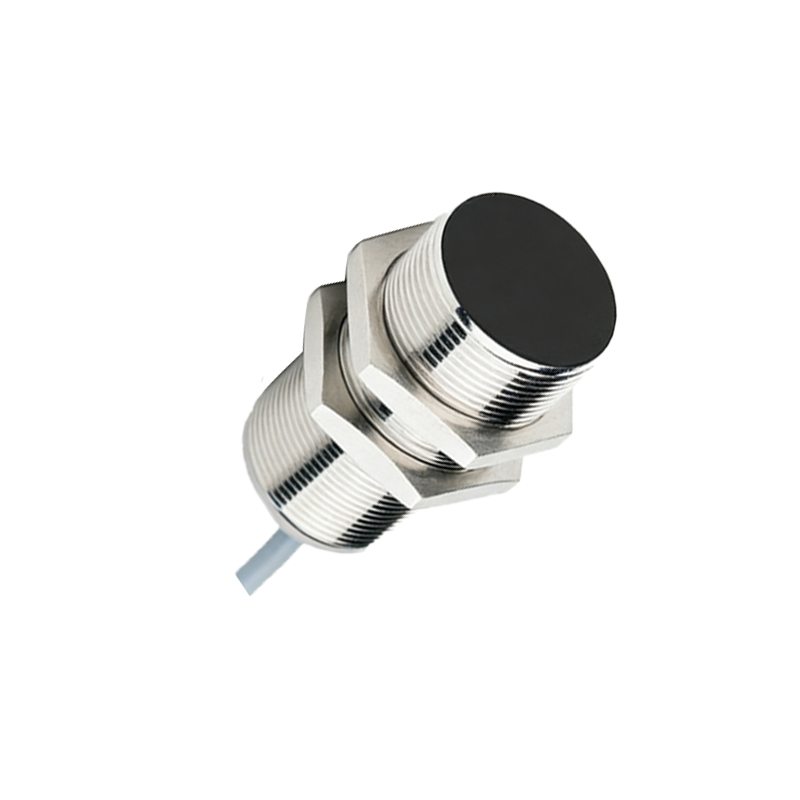
In the realm of industrial automation and control systems, proximity sensors are indispensable components for non-contact object detection. Among the various configurations available, the DC 5-wire proximity sensor switch stands out for its unique functionality and reliability in demanding applications. This article delves into the operational principles, key advantages, typical applications, and critical selection criteria for these sophisticated sensors.
At its core, a DC 5-wire proximity sensor is a solid-state electronic device designed to detect the presence or absence of a metallic target without physical contact. It operates on a Direct Current (DC) power supply, typically ranging from 10 to 30 VDC. The "5-wire" designation refers to its wiring configuration: two wires for power supply (V+ and Common/GND), and three output wires. This trio of outputs usually consists of one Normally Open (NO) signal, one Normally Closed (NC) signal, and a separate diagnostic or shield wire. This configuration provides exceptional flexibility and diagnostic capability compared to simpler 3-wire or 4-wire versions. The sensor generates an oscillating electromagnetic field from its sensing face. When a ferrous or non-ferrous metal target enters this field, it induces eddy currents, causing a change in the oscillation amplitude. This change is detected by the sensor's internal circuitry, which subsequently triggers a change in the state of its solid-state output switches.
The primary advantage of the 5-wire system lies in its independent, complementary outputs. The simultaneous availability of both NO and NC contacts allows for more complex and fail-safe circuit designs. Control systems can be configured to monitor both signals for consistency, enabling immediate detection of sensor or wiring faults—a critical feature for safety-related applications. The dedicated shield wire, often connected to the metal housing, provides enhanced protection against electromagnetic interference (EMI) and radio frequency interference (RFI), ensuring stable operation in electrically noisy industrial environments like welding shops or near large motors. Furthermore, these sensors often boast high switching frequencies, excellent repeat accuracy, and remarkable longevity due to the absence of mechanical moving parts subject to wear.
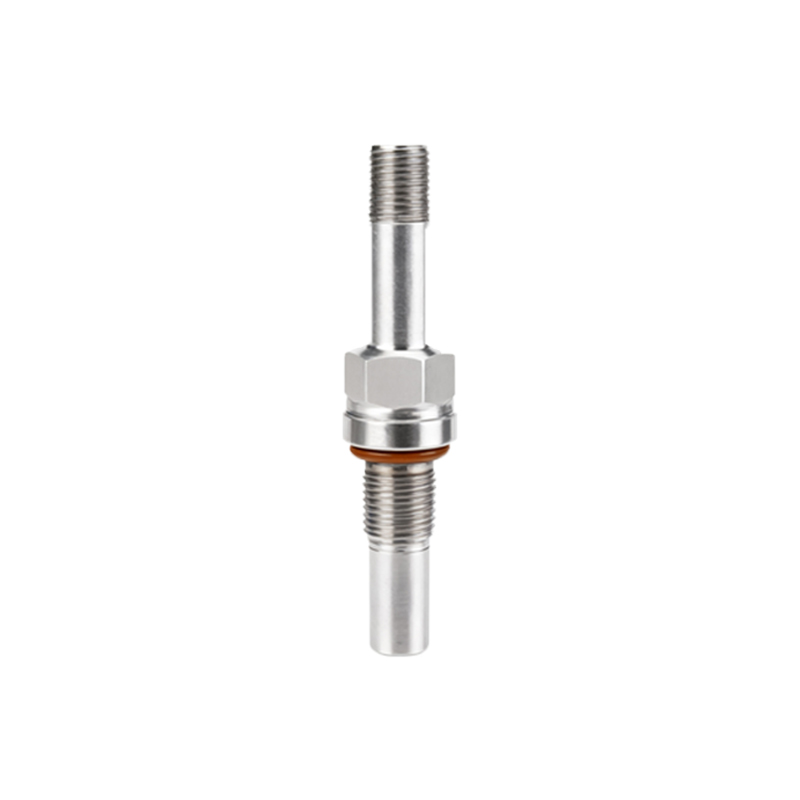
DC 5-wire proximity sensors find extensive use across numerous industries. In automotive manufacturing, they are deployed on robotic assembly lines for precise part positioning and tool verification. Within the packaging industry, they count products, control filling levels, and detect missing caps on bottles. In material handling and logistics, they monitor the position of pallets on conveyors, control automated storage and retrieval systems (AS/RS), and provide end-of-travel detection for actuators and slides. Their robustness also makes them ideal for harsh environments, such as metal stamping, machining centers, and heavy machinery, where they are used for tool breakage detection, spindle orientation, and monitoring hydraulic cylinder positions.
Selecting the appropriate DC 5-wire proximity sensor requires careful consideration of several parameters. First, the sensing distance, or nominal range, must be chosen with a safety margin to account for target material, size, and installation tolerances. The target material itself is crucial; sensors are often tuned for ferrous metals (iron, steel) or offer reduced sensing distances for non-ferrous metals like aluminum, brass, or copper. The housing material and style (cylindrical, rectangular, slot-type) must suit the mechanical and environmental constraints, with options like nickel-plated brass, stainless steel, or PBT plastic for chemical resistance. Key electrical specifications include the operating voltage range, output current capacity (often 100-200mA), and the output type (typically PNP or NPN transistor-based, though 5-wire sensors are commonly PNP sourcing). Environmental ratings, particularly the Ingress Protection (IP) code (e.g., IP67 for dust-tight and immersion protection) and temperature range, are vital for reliability. Finally, connection method—pre-wired cable or quick-disconnect connector—impacts installation and maintenance ease.
In conclusion, the DC 5-wire proximity sensor switch is a versatile and robust solution for advanced sensing tasks where reliability, diagnostic capability, and noise immunity are paramount. Its design offers a superior level of control and safety monitoring not easily achieved with fewer wires. By understanding its operating principles and meticulously matching its specifications to the application's requirements, engineers can ensure optimal performance, enhanced system uptime, and improved safety in automated processes. As Industry 4.0 and smart manufacturing evolve, the role of such intelligent, communicative sensors will only become more central to efficient and reliable industrial operations.