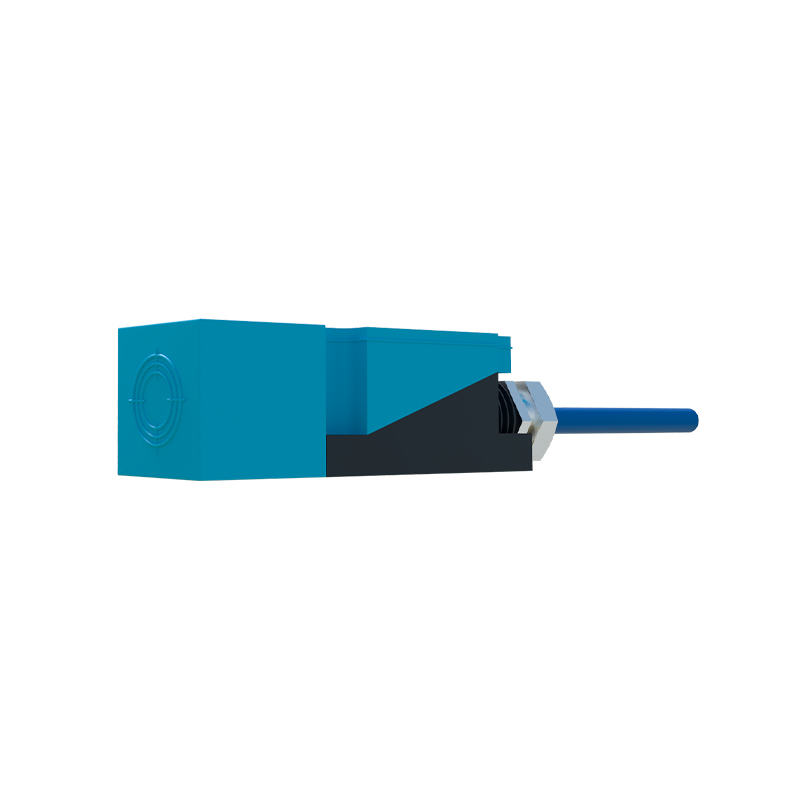
Proximity sensors are fundamental components in modern industrial automation, serving as the critical "eyes" of machinery by detecting the presence or absence of objects without physical contact. A common and crucial technical specification that engineers and maintenance personnel must consider is the sensor's current rating. This parameter is not a single, fixed value but is intrinsically linked to the sensor's design, output type, and operational load. Primarily, we discuss the load current, which is the maximum continuous current the sensor's output switching element can safely handle when controlling an external device like a relay, solenoid, or PLC input.
The current rating varies significantly between the two main output types. Two-wire DC sensors are wired in series with the load. Their key limitation is a leakage current (typically 1-2 mA) when in the "OFF" state, which must be considered to avoid inadvertently powering a sensitive load. Their load current rating when "ON" is often moderate, commonly ranging from 100 mA to 500 mA. Three-wire DC sensors (NPN or PNP) have separate power, ground, and output wires. This design allows for much lower leakage currents (microamps) and generally higher, more robust load current ratings. Standard models frequently offer a switching capacity of 200 mA to 500 mA, with heavy-duty versions capable of handling 1 A to 2 A or more directly. AC-powered proximity sensors typically use a solid-state triac or relay output and are rated for higher currents, commonly 200 mA to 1 A, suitable for controlling AC coils directly.
It is paramount to never exceed the sensor's specified maximum load current. Doing so will cause excessive internal heating, leading to premature failure of the output transistor or triac. Always consult the manufacturer's datasheet for the absolute maximum ratings. Equally important is the inrush current of the load. Inductive loads like solenoid coils can draw a current surge 5-10 times higher than their steady-state value when first energized. A sensor with a 300 mA rating might be damaged by a solenoid with a 100 mA holding current but a 1 A inrush. Using an external protective device, such as a snubber circuit for AC loads or a freewheeling diode for DC inductive loads, is a standard engineering practice to suppress voltage spikes and protect the sensor's sensitive output.
For very high-current loads, the proximity sensor should never switch the load directly. Instead, it should act as a low-current command signal for an intermediate device. The standard practice is to connect the sensor output to the coil of a relay or contactor. The relay, rated for the high current (e.g., 10A, 20A), then handles the power switching for the main load (e.g., a large motor, heater). This setup isolates the sensitive sensor electronics from high-power circuits, enhancing system reliability and safety. PLC input modules are another common load; their input current is usually low (5-10 mA), well within the capability of any standard proximity sensor.
In summary, there is no universal "proximity sensor current." The operative current is defined by the connected load and must be carefully matched to the sensor's output specifications. Key steps for proper selection include: 1) Identifying the load type (resistive, inductive) and its steady-state and inrush current demands; 2) Choosing an output type (2-wire, 3-wire NPN/PNP, AC) compatible with the control system voltage; 3) Selecting a sensor with a load current rating that exceeds the load's steady-state requirement with a safety margin (e.g., 20-30%) and can withstand the inrush; and 4) Implementing protective circuits for inductive loads and using relays for high-current applications. Adhering to these principles ensures robust, fail-safe operation, maximizing the longevity of both the sensor and the controlled equipment in demanding industrial environments.