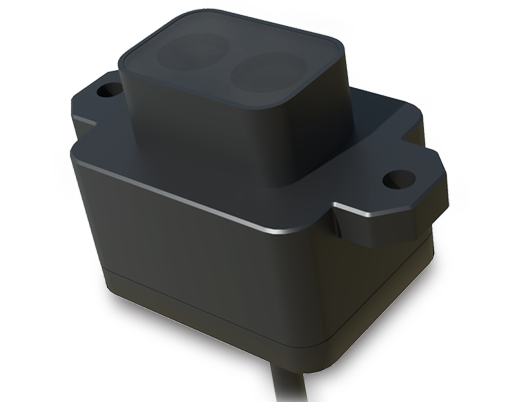
In modern industrial operations, the reliable detection of water shortages or low-level conditions in tanks, reservoirs, and cooling systems is critical for preventing equipment damage, ensuring process continuity, and maintaining safety. Traditional float switches or conductive probes, while functional, often suffer from limitations such as mechanical wear, fouling, and the need for direct contact with the medium. The water shortage alarm laser sensor emerges as a superior, non-contact solution, leveraging advanced photoelectric principles for precise and reliable level monitoring in demanding environments.
Operating on the time-of-flight (ToF) or triangulation principle, these laser sensors emit a focused beam of coherent light toward the target water surface. The sensor's receiver detects the reflected signal. In a ToF system, the precise time delay between emission and reception is calculated to determine the distance to the surface with high accuracy, often within millimeter ranges. When the measured distance exceeds a pre-set threshold—indicating the water level has dropped below a critical point—the sensor triggers a dry-run or low-level alarm. This non-contact methodology eliminates issues related to sensor corrosion, scaling, or adhesion, which are common pitfalls for submerged probes, thereby significantly reducing maintenance needs and enhancing long-term reliability.
The core advantages of laser-based sensors for water shortage alarms are manifold. First, their high precision and resolution allow for the detection of minute level changes, enabling early warning before a critical shortage occurs. Second, the focused laser beam is minimally affected by ambient light, steam, foam, or vapor, ensuring stable performance even in visually obstructed or harsh industrial atmospheres. Third, with no moving parts and a robust housing typically rated IP67 or higher, these sensors excel in environments with vibration, temperature fluctuations, and exposure to dust or moisture. Installation is straightforward, requiring only a mounting point with a clear line of sight to the target measurement area, simplifying integration into existing control panels and SCADA systems.
Typical applications span numerous sectors. In power generation, they monitor water levels in boiler feed tanks and cooling tower basins to prevent turbine damage. Within chemical and pharmaceutical manufacturing, they ensure precise fluid levels in reaction vessels and purification systems, safeguarding batch processes. Water and wastewater treatment plants utilize them for pump protection in clear wells and storage tanks. Furthermore, in HVAC and industrial cooling systems, laser sensors prevent compressor failure by ensuring adequate coolant circulation. Their versatility also extends to agricultural irrigation control and fire suppression system reservoirs.

When selecting a water shortage alarm laser sensor, key specifications must be evaluated. Measurement range, typically from 0.1 to several tens of meters, should suit the tank geometry. Response time, often in the millisecond range, is crucial for fast-acting control loops. Output options, including analog (4-20mA, 0-10V), discrete (PNP/NPN relay alarms), and digital (IO-Link, Modbus), determine compatibility with PLCs and alarm units. Environmental ratings for temperature, pressure, and ingress protection must match the operating conditions. Modern units often feature programmable setpoints, temperature compensation, and diagnostic LEDs for operational status.
Integration into a supervisory system involves connecting the sensor's output to a control logic unit or a dedicated alarm module. The setpoint is calibrated to the exact low-level threshold. Upon detecting a water shortage, the sensor activates the alarm output, which can trigger an audible/visual alert, automatically shut down dependent equipment, or initiate a backup water supply. Regular maintenance is minimal but should include periodic lens cleaning to ensure optimal beam transmission and verification of calibration against a known reference.
In conclusion, the adoption of laser sensor technology for water shortage alarms represents a significant advancement in industrial asset protection and process automation. By providing accurate, non-contact, and maintenance-free level monitoring, these sensors enhance operational safety, reduce downtime, and contribute to more efficient resource management. As industries continue to prioritize smart monitoring and predictive maintenance, the role of reliable laser-based detection systems in critical water-level applications will only become more indispensable.