In the demanding and often hazardous environment of modern mining operations, precision, safety, and reliability are non-negotiable. Among the suite of advanced technologies enabling these standards, laser displacement sensors have emerged as a critical tool for non-contact measurement and monitoring. This article delves into the operational principles, key applications, and essential selection criteria for these sophisticated devices within the mining sector.
At its core, a laser displacement sensor operates on the principle of optical triangulation or time-of-flight measurement. In the more common triangulation method, a focused laser beam is projected onto the target surface. The reflected light is then captured by a receiving lens at a specific angle and focused onto a position-sensitive detector, such as a CCD or CMOS array. Any change in the distance to the target causes a shift in the position of the reflected light spot on the detector. This shift is calculated with high precision by the sensor's internal processor to determine the exact displacement or distance. Time-of-flight sensors, often used for longer ranges, measure the phase shift or the direct time delay between the emitted and reflected laser pulses. For mining applications, triangulation sensors are typically favored for their high accuracy at shorter to medium ranges, which suits many industrial monitoring tasks.

The harsh conditions of mining—characterized by dust, vibration, moisture, and potential explosive atmospheres—demand sensors built to exceptional standards. Modern mining-grade laser sensors are housed in robust, often stainless steel or similarly rugged enclosures with high IP (Ingress Protection) ratings, such as IP67 or IP69K, ensuring resistance to dust and water jets. They are designed to withstand significant shock and vibration, common on heavy machinery. Furthermore, sensors intended for use in underground coal mines or areas with combustible dust must carry intrinsic safety (IS) or explosion-proof (Ex) certifications, such as ATEX or IECEx, to prevent ignition of hazardous atmospheres.
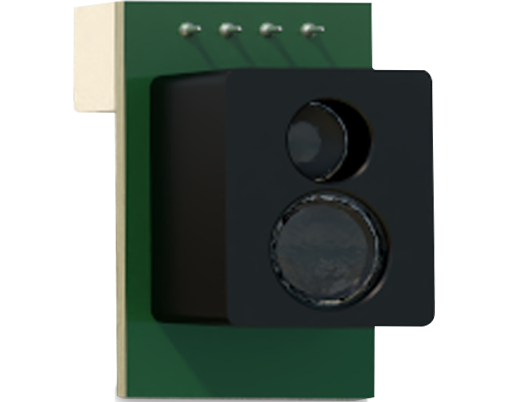
The applications for laser displacement sensors in mining are vast and impactful. One primary use is in conveyor belt monitoring. Sensors can continuously measure the profile of bulk material on a belt to calculate volume and mass flow rates, enabling precise inventory management and process optimization. They also monitor belt alignment and splice integrity, detecting misalignment or damage before it leads to a catastrophic failure and costly downtime. In crushing and grinding circuits, these sensors are indispensable for monitoring liner wear in crushers and mills. By precisely measuring the remaining thickness of wear liners, maintenance can be scheduled proactively, maximizing equipment utilization and preventing unplanned outages. Another critical application is in roof and wall convergence monitoring in underground mines. Sensors installed in tunnels and stopes provide continuous, remote data on ground movement, offering early warning of potential rock falls or strata instability, thereby directly enhancing worker safety. Additionally, they are used for precise positioning of drilling rigs, monitoring the fill level in silos and hoppers, and ensuring the geometric accuracy of rail systems for mine carts.
Selecting the right laser displacement sensor for a mining application requires careful consideration of several technical parameters. Measuring Range: This defines the minimum and maximum distances over which the sensor can operate accurately. It must be chosen to accommodate the expected variation in target position. Accuracy and Resolution: Stated in micrometers or millimeters, accuracy is the deviation from the true value, while resolution is the smallest detectable change. High-precision tasks like liner wear measurement demand superior specifications. Laser Spot Size: A smaller spot allows for measurement on uneven or textured surfaces, but can be affected by dirt. A larger spot offers an averaged measurement, which can be beneficial for rough surfaces like raw ore. Response Speed/Sampling Rate: Measured in Hertz (Hz), this determines how quickly the sensor can take measurements. High-speed processes, such as monitoring fast-moving conveyor belts, require high sampling rates. Environmental Ratings: As discussed, the IP rating for dust/water resistance and appropriate safety certifications (ATEX, IECEx) for the specific hazardous zone are mandatory. Output Interface: Common outputs include analog (4-20mA, 0-10V), digital (RS-485, Ethernet/IP, PROFIBUS), and switching signals, which must be compatible with the existing control and data acquisition systems.
In conclusion, laser displacement sensors represent a paradigm shift in mining measurement technology. Their ability to deliver precise, non-contact data in real-time from the heart of harsh operational environments transforms how mines approach safety, maintenance, and efficiency. From safeguarding personnel through ground stability monitoring to optimizing process flows and protecting capital-intensive machinery from failure, these sensors are a cornerstone of the intelligent, data-driven mine. When selected and deployed with a clear understanding of their principles and the specific application demands, they provide an unparalleled return on investment through enhanced operational control and risk mitigation.