In the competitive landscape of industrial automation and precision measurement, laser sensors have become indispensable tools. For engineers, procurement specialists, and project managers, the perennial question is not just about performance but crucially about cost-effectiveness: which laser sensor brands offer the best value for money? Striking the right balance between price, reliability, and functionality is paramount. This guide delves into the market to identify brands that deliver robust performance without breaking the bank, focusing on key application areas like displacement measurement, edge detection, and profile scanning.
The term "cheap" can be misleading in industrial contexts. A truly cost-effective solution considers the total cost of ownership, which includes the initial purchase price, installation, maintenance, downtime costs, and sensor longevity. Several brands have carved out strong reputations for providing excellent value within specific performance tiers.
In the entry-level and mid-range performance segment, brands like Keyence and Omron often present compelling packages. While not the absolute lowest in initial price, their sensors are renowned for exceptional out-of-the-box performance, user-friendly setup, and extensive support networks. This reduces engineering time and potential integration headaches, offering significant hidden savings. For instance, a Keyence IL series or an Omron ZX-L laser displacement sensor might have a higher sticker price than a generic alternative, but their reliability and easy calibration can prevent costly production line stoppages.
For applications demanding good performance on a tighter budget, SICK and Banner Engineering are frequently top contenders. SICK, a stalwart in sensor technology, offers a vast range of laser sensors where their mid-tier products provide an outstanding balance. Banner Engineering is particularly noted for providing robust, no-frills laser measurement sensors and safety laser scanners at competitive price points. Their products are often praised for durability in harsh environments, translating to lower long-term replacement costs.

The landscape of value is also being reshaped by strong Asian manufacturers. Brands like Panasonic (with their industrial automation divisions) and Turck offer highly competitive laser sensors that challenge the traditional price structures. Turck, for example, provides compact laser sensors with impressive specs for distance measurement, often at a lower cost-per-unit than some premium European brands. Similarly, several reputable Taiwanese and Korean manufacturers supply OEMs with reliable laser sensor modules that find their way into various integrated systems, offering a budget route for volume purchases.
When evaluating "cheap," consider open-protocol sensors versus proprietary systems. Some budget-friendly brands might use standard analog outputs or IO-Link, reducing integration cost and vendor lock-in. Conversely, a seemingly inexpensive sensor from a niche brand might require expensive proprietary cabling or software, negating the initial savings.
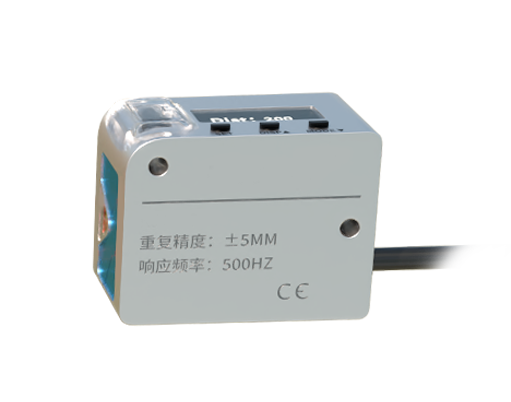
For non-safety-critical, low-speed applications or educational purposes, a burgeoning market of economical laser sensors exists on platforms like Amazon or specialized electronics distributors. Brands like Benewake (for LiDAR) or generic TOF (Time-of-Flight) laser distance sensors can cost a fraction of industrial-grade units. However, engineers must meticulously vet specifications for accuracy, repeatability, environmental ratings (IP codes), temperature drift, and long-term stability. These sensors may suffice for prototyping, basic robotics, or simple presence detection but are generally unsuitable for high-speed production lines or precision metrology.
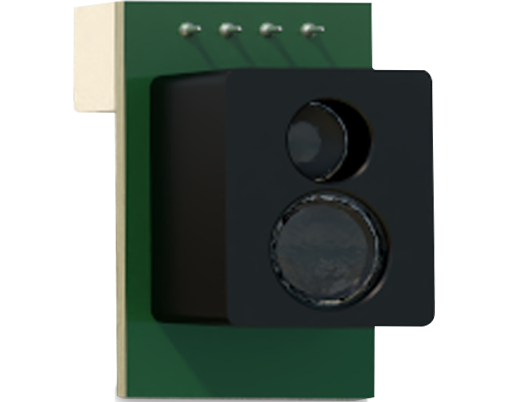
The most cost-effective choice is inherently application-dependent. For high-volume, low-tolerance inspection, investing in a sensor with superior repeatability (like from Keyence or Micro-Epsilon) saves money by reducing scrap. For simple object detection on a conveyor, a Banner or SICK sensor might be the perfect, affordable workhorse. Always request samples for real-world testing under your specific conditions—ambient light, target material, surface finish, and required speed. This empirical test is the ultimate value assessment.
In conclusion, identifying the "cheapest" laser sensor brand is less fruitful than identifying the "best value" brand for your specific need. Brands like Banner, SICK (select series), Turck, and the value lines from Omron and Keyence consistently rank high in cost-benefit analyses for industrial use. For less demanding tasks, exploring economical modules from global electronics suppliers can yield savings. Prioritize clear specifications, reliable support, and proven durability over the lowest ticket price to ensure genuine long-term economy and project success.