In industrial automation and control systems, proximity sensors are indispensable components for detecting the presence or absence of objects without physical contact. Among the various output configurations available, the NPN open collector output is a widely adopted design due to its simplicity, reliability, and compatibility with many control circuits. This article delves into the operational principles, wiring methods, advantages, and typical applications of NPN open collector outputs in proximity sensors, providing a comprehensive guide for engineers and technicians.
An NPN open collector output refers to a transistor-based switching circuit where the output terminal is connected to the collector of an NPN bipolar junction transistor (BJT). In this configuration, the emitter is typically grounded, and the collector is left "open" or unconnected to any internal pull-up resistor. When the sensor detects a target, the transistor switches on, allowing current to flow from the output terminal through the transistor to ground. This effectively pulls the output voltage low, signaling a logic "0" or active state. Conversely, when no target is detected, the transistor remains off, and the output floats in a high-impedance state. To establish a defined high voltage level (logic "1"), an external pull-up resistor must be connected between the output and a positive supply voltage, such as +12V or +24V DC, which is common in industrial settings.
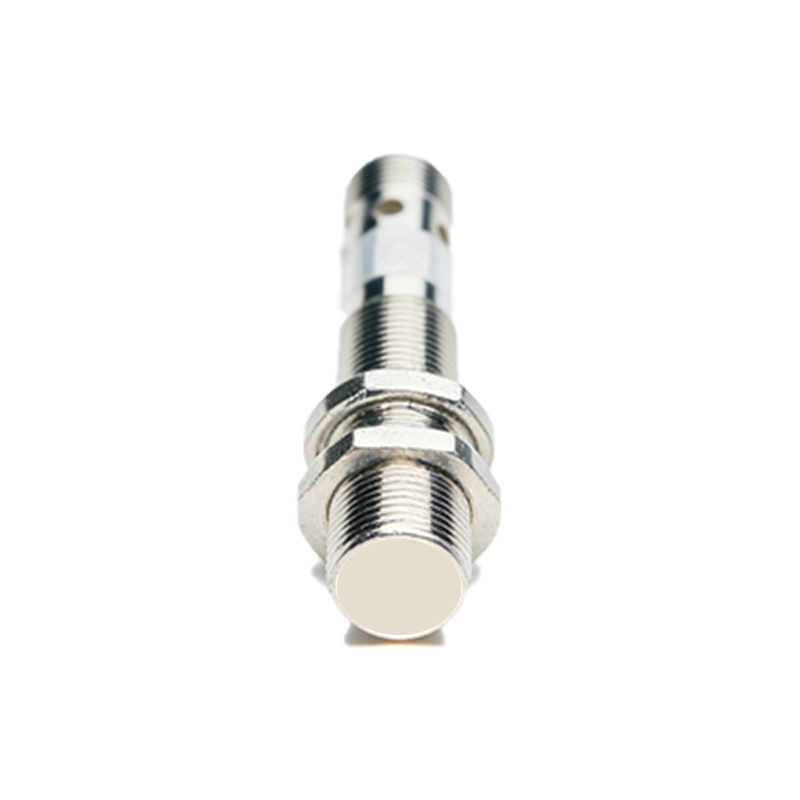
Wiring an NPN open collector proximity sensor correctly is crucial for proper operation. Typically, the sensor has three wires: a brown wire for the positive supply voltage (V+), a blue wire for ground (0V), and a black wire for the output signal. The brown wire connects to the positive terminal of the power source, while the blue wire connects to the negative terminal. The black output wire is linked to the load—often a programmable logic controller (PLC) input, relay, or indicator lamp. The external pull-up resistor is then connected between the black wire and the positive supply. When the sensor activates, the transistor sinks current through the load to ground, completing the circuit. This sinking behavior is why NPN outputs are sometimes called "sinking outputs." It is essential to ensure the power supply voltage matches the sensor's specifications and that the load current does not exceed the transistor's maximum rating, typically around 200 mA, to prevent damage.
The advantages of NPN open collector outputs are numerous. First, they offer excellent noise immunity because the low-state output is firmly grounded, reducing susceptibility to electrical interference in industrial environments. Second, the open collector design allows flexibility in interfacing with different voltage levels; by selecting an appropriate pull-up resistor and supply voltage, the output can be adapted to various logic families, such as TTL or CMOS. Third, multiple NPN outputs can be wired together in a wired-AND configuration, enabling simple logic functions without additional components. Additionally, NPN transistors are generally more cost-effective and readily available than PNP counterparts, making NPN sensors a popular choice in many regions, particularly in Asia and Europe. However, it is important to note that in some areas, like North America, PNP sourcing outputs are also common, so selection should align with local standards and controller compatibility.
In practice, NPN open collector proximity sensors are extensively used in applications requiring precise object detection. For instance, in conveyor systems, they monitor the position of items to trigger sorting mechanisms or count products. In machine safety, they serve as part of interlock systems to ensure guards are closed before operation. They are also employed in robotic arms for end-effector positioning and in automotive assembly lines for part verification. The robust nature of NPN outputs makes them suitable for harsh conditions, including environments with dust, moisture, or vibration, provided the sensor housing is appropriately rated (e.g., IP67).
When integrating these sensors, engineers must consider factors like sensing range, response time, and environmental resistance. Inductive proximity sensors with NPN outputs, for example, are ideal for detecting metals, while capacitive versions can handle non-metallic materials. Regular maintenance, such as checking connections and cleaning sensing faces, ensures long-term reliability. Troubleshooting common issues—like false triggers or no output—often involves verifying wiring, power supply stability, and target alignment.
In summary, the NPN open collector output is a fundamental and versatile interface in proximity sensing technology. Its design promotes ease of use, adaptability, and durability, making it a cornerstone in modern industrial automation. By understanding its mechanics and applications, professionals can optimize system performance and enhance operational efficiency across diverse sectors.