In the realm of precision measurement and industrial automation, cylindrical laser displacement sensors have emerged as indispensable tools. These compact, robust devices offer non-contact, high-accuracy measurement capabilities, making them ideal for a wide array of demanding applications. Unlike traditional contact probes or other optical sensors, their cylindrical form factor and advanced laser triangulation principles provide unique advantages in challenging environments.
At the core of a cylindrical laser displacement sensor lies the principle of laser triangulation. The sensor emits a focused beam of visible red or laser light onto the target surface. The reflected light is then captured by a high-resolution CMOS or CCD receiver element positioned at a specific angle within the sensor housing. By precisely calculating the position of the laser spot on the receiver, the sensor's internal processor determines the distance to the target with remarkable accuracy. This method allows for measurements ranging from sub-micron to several hundred millimeters, depending on the model and configuration. The cylindrical housing, typically made of stainless steel or ruggedized aluminum, provides excellent durability, IP67 or higher ingress protection, and facilitates easy integration into machinery, robotic arms, or fixed measurement stations.
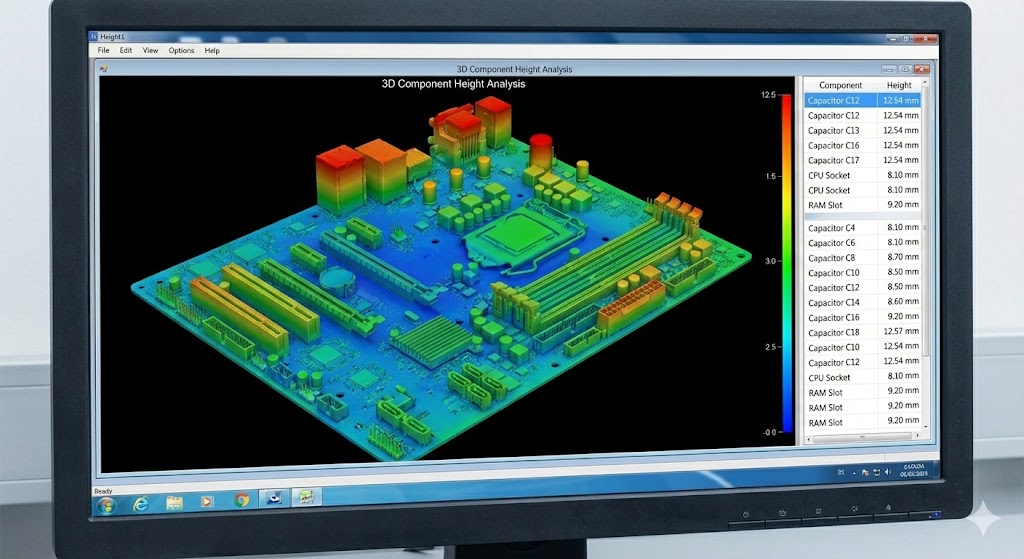
The applications for these sensors are vast and span numerous industries. In automotive manufacturing, they are used for gap and flush measurement on vehicle body panels, thickness inspection of brake pads, and vibration analysis. In electronics, they ensure the coplanarity of semiconductor packages and measure solder paste height on PCBs. The precision metalworking industry relies on them for dimensional inspection of machined parts, warp detection, and thickness monitoring of rolling processes. Furthermore, their ability to measure delicate, hot, or fast-moving objects without physical contact makes them perfect for monitoring rubber extrusion profiles, inspecting transparent films, or controlling the fill level in packaging lines.
Selecting the right cylindrical laser displacement sensor requires careful consideration of several key parameters. First, define the measurement range and stand-off distance—the distance from the sensor head to the midpoint of its measurement range. Resolution and linearity are critical for accuracy; high-end models can achieve resolutions down to 0.1 µm. The spot size of the laser is another crucial factor, as a smaller spot allows for measurement on edges or small features but may be affected by surface texture. Sampling speed, often in the kHz range, must match the application's dynamics for high-speed production lines. Environmental factors cannot be overlooked. Consider the sensor's tolerance to ambient light, its operating temperature range, and the characteristics of the target surface (color, material, reflectivity, transparency). Many modern sensors feature built-in teach functions, analog and digital outputs (4-20mA, 0-10V, RS-485, Ethernet/IP), and sophisticated software for data analysis and logging, which streamline integration and system setup.
When integrating these sensors, proper mounting and alignment are paramount to achieve specified performance. Vibration isolation may be necessary in harsh plant environments. Regular calibration against known standards ensures long-term measurement integrity. It is also advisable to consult with application engineers from sensor manufacturers, as they can provide valuable insights into model selection, optical filter options for specific materials, and custom configurations for unique challenges.
In conclusion, cylindrical laser displacement sensors represent a mature yet continuously evolving technology. Their combination of rugged design, non-contact operation, and high precision solves complex measurement problems across manufacturing and research. By understanding their operating principles, application potential, and selection criteria, engineers and technicians can effectively harness their capabilities to enhance quality control, optimize processes, and drive innovation in an increasingly automated world. As Industry 4.0 advances, the role of such precise metrology tools will only grow in importance, forming the sensory foundation for smart, data-driven factories.