Eddy current sensors, as a type of non-contact displacement and proximity sensing technology, have established themselves as indispensable tools in modern industrial automation and machinery monitoring. Their operational principle is elegantly rooted in electromagnetic induction. At the heart of the sensor lies a coil energized by a high-frequency alternating current. This current generates a high-frequency alternating magnetic field that extends from the sensor's active face. When a conductive target object enters this magnetic field, circular currents, known as eddy currents, are induced on the surface of the target. These eddy currents, in turn, generate their own magnetic field, which opposes the original field from the sensor coil according to Lenz's Law. This interaction alters the impedance of the sensor coil. The sensor's integrated electronics precisely measure this change in impedance, which is directly correlated to the distance between the sensor and the target. For proximity switching applications, this analog distance measurement is compared against a predefined threshold. When the target comes within this set range, the sensor's output switches state, typically from "off" to "on" or vice versa, providing a clear digital signal.
The choice of target material is a critical factor influencing performance. Eddy current sensors exhibit the highest sensitivity and longest sensing ranges with ferromagnetic materials like iron and steel, due to their high permeability which concentrates the magnetic field. They also work effectively with non-ferrous conductive metals such as aluminum, copper, and brass, though the sensing distance is typically reduced. Crucially, they are entirely insensitive to non-conductive materials like plastics, wood, ceramics, and liquids, making them ideal for applications where only metallic objects should be detected, even if obscured by non-conductive contaminants like oil, dust, or water. This immunity is a key advantage over optical or capacitive sensors.
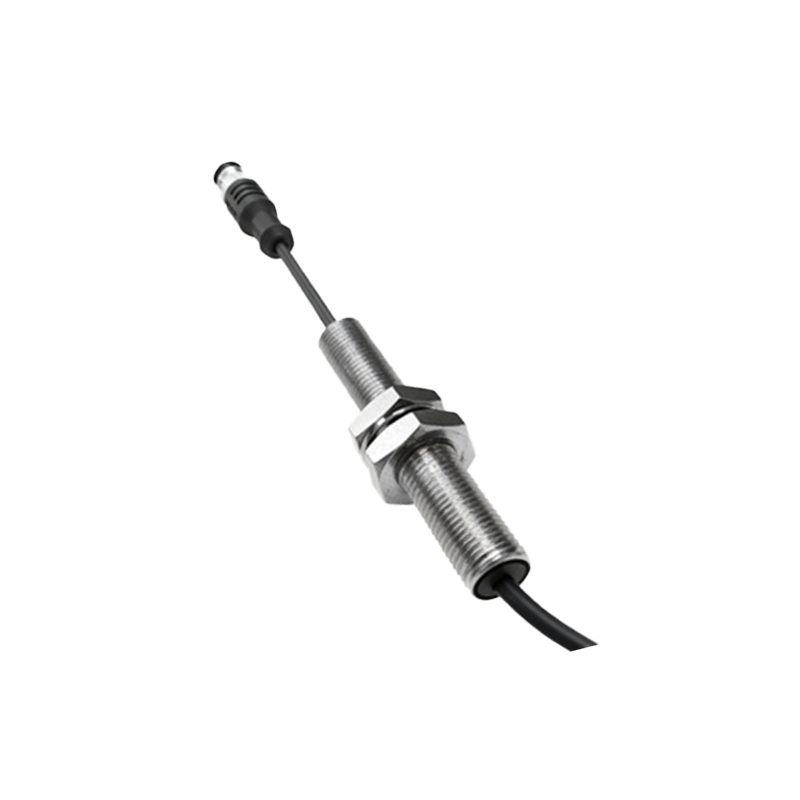
The deployment of eddy current sensors as proximity switches offers a compelling array of benefits. Their non-contact nature eliminates mechanical wear, ensuring exceptionally long service life and maintenance-free operation. They provide extremely high repeatability and resolution, capable of detecting minute positional changes, which is vital for precision automation. Their robust design allows them to thrive in harsh industrial environments, resistant to pressures, temperatures, and the presence of contaminants that would compromise other sensor types. With response frequencies often in the kilohertz range, they are perfectly suited for high-speed counting, sorting, and position verification tasks on production lines.
Typical industrial applications are vast and varied. In metal machining, they are used for tool wear monitoring, tool breakage detection, and part presence verification. On assembly lines, they count metallic parts, confirm the presence of bearings or screws, and control sorting gates. In rotary machinery, they serve as keyphasors or speed sensors by detecting gear teeth or shaft keyways. They monitor vibration and axial position in turbines, compressors, and pumps. In automated stamping and punching presses, they ensure the blank metal sheet is in the correct position before the cycle initiates, preventing catastrophic damage.
When selecting an eddy current proximity sensor, engineers must consider several parameters. The nominal sensing distance (Sn) is specified for a standard mild steel target. For other materials, a reduction factor must be applied. The switching frequency defines how quickly the output can toggle, limiting the maximum detectable object speed. The housing style—threaded cylindrical, rectangular, or ring-shaped—must suit the mounting constraints. Output types include NPN, PNP, or push-pull configurations, and analog outputs (0-10V, 4-20mA) are often available alongside the switching signal for diagnostic purposes. Environmental ratings for temperature, pressure, and ingress protection (IP67/IP69K) are essential for demanding installations.
In summary, eddy current proximity sensors represent a robust, precise, and reliable solution for metallic object detection. Their fundamental physics grants them unique advantages in challenging conditions, solidifying their role as a cornerstone technology for enhancing safety, quality, and efficiency in automated industrial systems. Their continued evolution in miniaturization, embedded intelligence, and connectivity promises to further expand their utility in the smart factories of the future.