In the realm of industrial automation and precision engineering, the integration of laser sensors with servo motors represents a significant leap forward in motion control technology. Servo motors, known for their high torque, efficiency, and precise positioning capabilities, are fundamental components in applications ranging from robotics and CNC machining to semiconductor manufacturing and medical devices. However, achieving and maintaining the highest levels of accuracy and repeatability often requires more than just a high-quality motor and drive system. This is where laser sensor technology becomes indispensable.
Laser sensors operate on the principle of emitting a focused beam of light and measuring the reflection from a target surface. By calculating the time-of-flight, phase shift, or triangulation of the returned signal, these sensors can determine distance, displacement, or position with micron-level resolution. When paired with a servo motor system, this real-time positional data is fed back to the motor controller, creating a closed-loop control system of exceptional fidelity. Unlike traditional rotary encoders mounted on the motor shaft, which measure the motor's rotation, non-contact laser sensors can measure the actual position of the load or end-effector itself. This capability is crucial in systems where mechanical backlash, thermal expansion, or structural flexure in couplings, gears, or linear guides can introduce errors between the motor's movement and the final tool position.
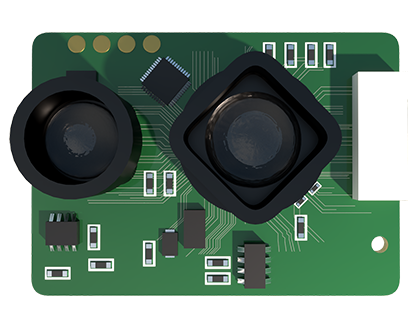
The synergy between laser feedback and servo control algorithms enables several advanced functionalities. For instance, in high-speed pick-and-place operations, a laser sensor can continuously monitor the position of a component on a conveyor belt. This data allows the servo-driven robotic arm to dynamically adjust its trajectory in real-time, compensating for any variations in belt speed or component placement, thereby ensuring perfect alignment and placement accuracy. In precision grinding or milling applications, a laser displacement sensor can measure the surface profile of a workpiece. The servo controller can then use this profile data to adjust the cutting path instantaneously, achieving tolerances that are unattainable with pre-programmed paths alone. This adaptive control is key to manufacturing complex geometries and maintaining consistent quality.
Furthermore, the non-contact nature of laser sensing eliminates issues related to wear and mechanical hysteresis associated with physical probes or touch-triggers. It allows for measurements on delicate, hot, or fast-moving surfaces without risk of damage or interference. Modern laser sensors for industrial use are designed to be robust, capable of operating in challenging environments with varying ambient light, dust, or vibration. Their high sampling rates, often in the kilohertz range, match the demanding bandwidth requirements of modern servo drives, ensuring that the control loop remains stable and responsive.
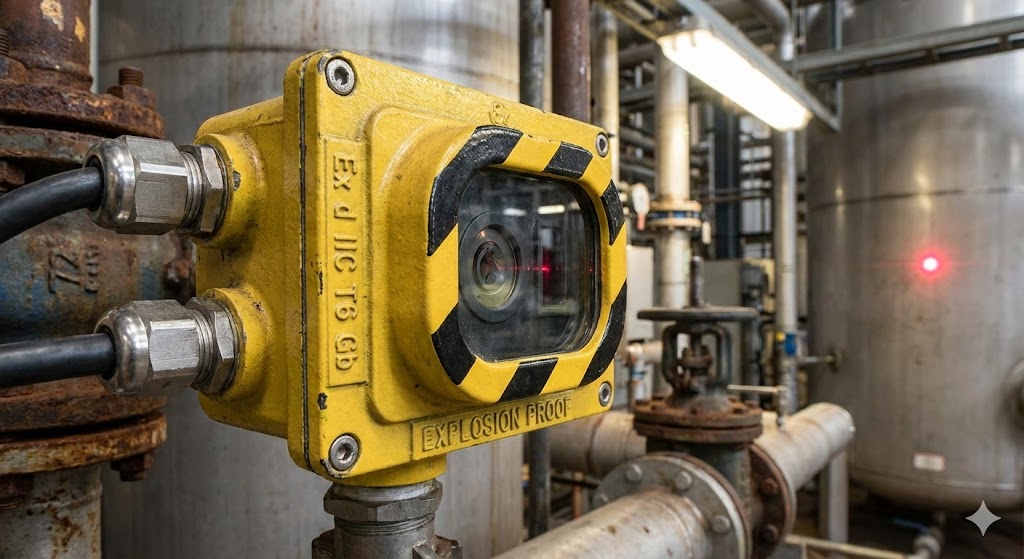
Implementing a laser-sensor-enhanced servo system does require careful consideration. Engineers must select a sensor with the appropriate range, resolution, spot size, and response time for the specific application. The integration of the sensor's analog or digital output into the servo controller's feedback loop must be meticulously configured. Calibration procedures are essential to align the sensor's coordinate system with the machine's axes of motion. Despite these steps, the return on investment is clear: reduced scrap rates, higher throughput, improved product quality, and the ability to undertake more complex and precise manufacturing tasks.
As Industry 4.0 and smart manufacturing initiatives advance, the role of laser-sensor-servo systems is expanding. These systems are becoming integral nodes in interconnected networks, providing valuable process data for predictive maintenance, quality analytics, and continuous optimization. The pursuit of greater precision is relentless, and the fusion of optoelectronic sensing with electromechanical actuation stands as a cornerstone of modern precision motion control, driving innovation across countless industries.