The laser displacement sensor, a cornerstone of non-contact precision measurement, continues to evolve, driven by the relentless demands of modern automation and quality control. Its fundamental principle, utilizing triangulation or time-of-flight methods to gauge distance with a focused laser beam, remains unchanged. However, the current landscape is defined by significant advancements in performance, integration, and application breadth, solidifying its indispensable role across diverse sectors.
A primary trend is the push towards higher specifications across the board. Resolution has entered the sub-micron realm for triangulation sensors, enabling inspection of ultra-fine surface textures and micro-components in electronics manufacturing. Sampling speed has seen dramatic increases, with high-end models now capable of over 300,000 measurements per second. This allows for real-time, in-line inspection on high-speed production lines, such as monitoring the thickness of extruded materials or the vibration of rotating machinery, without becoming a bottleneck. Simultaneously, the operational range has expanded. Modern sensors offer both ultra-short-range models for confined spaces and long-range variants (exceeding several meters) based on time-of-flight principles, used in applications like vehicle dimensioning and large-scale structural monitoring.
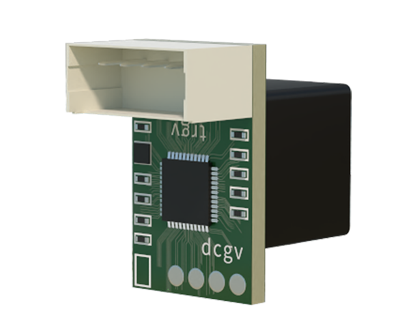
The integration of advanced functionalities is another hallmark of the current state. Traditional analog and digital I/O outputs are now complemented by sophisticated industrial communication protocols like EtherCAT, PROFINET, and IO-Link as standard features. This enables seamless integration into Industry 4.0 and smart factory ecosystems, allowing for centralized data acquisition, remote parameter configuration, and predictive maintenance. Furthermore, built-in computing power has increased. Many sensors now incorporate processors capable of performing basic data analysis—such as calculating peak-to-valley, step height, or width—directly within the sensor head. This edge computing capability reduces the load on central PLCs and simplifies system architecture.
Application-wise, laser displacement sensors have moved far beyond basic height detection. In the automotive industry, they are pivotal for 100% inspection of critical components like brake discs, piston protrusion, and body panel gaps. In semiconductor and electronics, they measure solder paste height, component coplanarity, and wafer warpage with extreme accuracy. Robotics increasingly relies on them for precise guidance in bin-picking, assembly verification, and weld seam tracking. A growing application is in the renewable energy sector, for inspecting solar wafer thickness and wind turbine blade profiles.
The market also sees a diversification in sensor design to meet specific environmental and mechanical challenges. Models are now available with enhanced resistance to challenging ambient light, steam, dust, and oil mist. Robust housings with high IP ratings (e.g., IP67, IP69K) are common for harsh washdown environments in food and pharmaceutical processing. Furthermore, the development of compact, lightweight sensor heads facilitates integration into space-constrained robotic end-effectors and machinery.
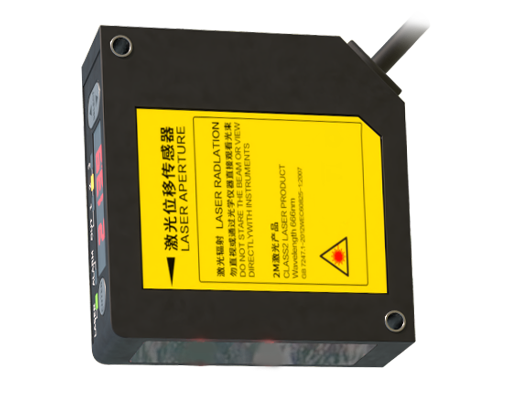
Looking ahead, the trajectory points towards even greater intelligence and miniaturization. The convergence of laser sensing with AI and machine vision algorithms is nascent but promising, enabling sensors not just to measure but to classify defects and make autonomous decisions. Research continues into reducing power consumption and physical size while maintaining performance, opening doors for use in portable devices and more delicate automation systems. Another area of development is multi-point and profile measurement using laser lines, effectively creating low-cost, high-speed alternatives to traditional vision systems for 2D contour inspection.
In conclusion, the laser displacement sensor is far from a mature, static technology. It is a dynamic field responding to industrial needs with continuous innovation. The current state is characterized by unprecedented speed, accuracy, connectivity, and robustness, making it a critical enabler for precision manufacturing, automated logistics, and advanced robotics. As industries pursue ever-higher levels of quality, efficiency, and data-driven operation, the evolution of the laser displacement sensor will undoubtedly remain at the forefront of metrology solutions.