Proximity sensors are fundamental components in modern industrial automation and electrical control systems. As a non-contact detection device, a proximity sensor can detect the presence or absence of an object within its sensing range without any physical contact. This article delves into the operational principles and defining characteristics of these essential sensors from an electrical engineering perspective.
The core principle of a proximity sensor is based on the disturbance of an electromagnetic field, acoustic field, or light beam. The most common types are inductive, capacitive, ultrasonic, and photoelectric sensors. Inductive proximity sensors are widely used for detecting metallic objects. They contain an oscillator circuit that generates a high-frequency electromagnetic field at the sensing face. When a metallic target enters this field, eddy currents are induced on the target's surface. These eddy currents draw energy from the oscillator, causing a reduction in its amplitude. This amplitude change is detected by a threshold circuit, which subsequently switches the sensor's output state (e.g., from OFF to ON). The sensing distance depends on the actuator material, size, and the sensor's own design.
Capacitive proximity sensors operate on a different principle. They can detect both metallic and non-metallic materials such as liquids, plastics, or wood. These sensors generate an electrostatic field. When any object with a dielectric constant different from air enters this field, it changes the capacitance of the sensor's circuit. This change in capacitance is measured, and when it exceeds a preset threshold, the output switches. This makes them versatile for level detection or material presence applications.
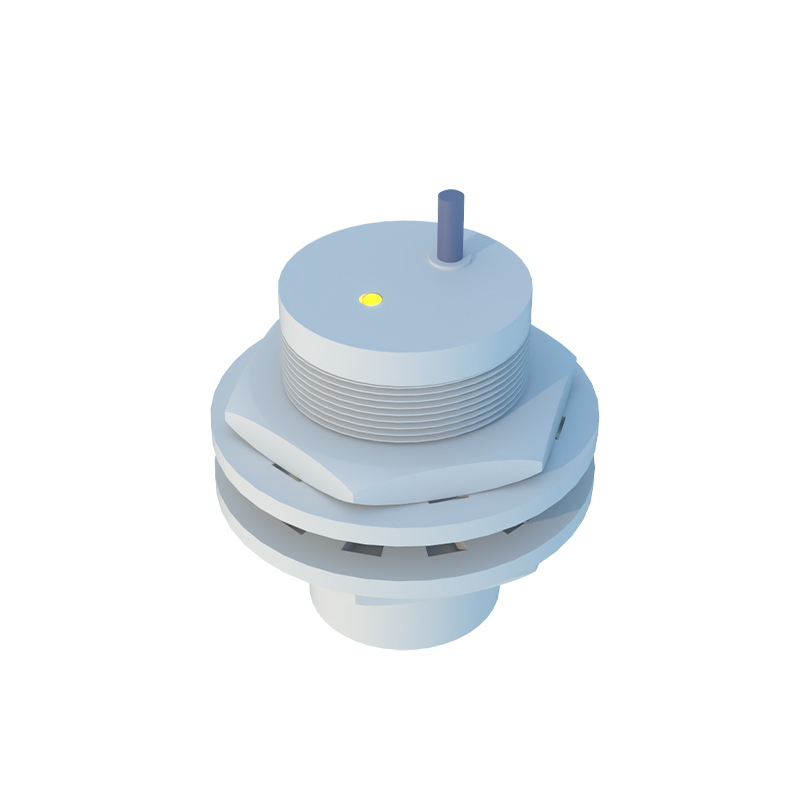
Ultrasonic sensors emit high-frequency sound waves and evaluate the echo received back. The time interval between sending the signal and receiving the echo is calculated to determine the distance to an object. Photoelectric sensors, on the other hand, use a light transmitter (often LED or laser) and a receiver. They detect objects by the interruption or reflection of the light beam.
The characteristics of proximity sensors make them indispensable. A primary advantage is their non-contact operation, which eliminates mechanical wear and tear on both the sensor and the target, ensuring exceptional longevity and reliability. They offer high switching rates, capable of detecting objects at very high speeds, which is crucial for fast-paced production lines. Most proximity sensors are solid-state devices with no moving parts, making them highly resistant to vibration, shock, and harsh environmental conditions like dust, moisture, and oils when properly housed. They provide precise and repeatable detection, with minimal hysteresis. Furthermore, unlike mechanical limit switches, their output signal can be easily interfaced with programmable logic controllers (PLCs) and other digital systems.
Key selection parameters include the sensing range, which is typically nominal and can be influenced by the target material and size. The output configuration is another critical factor, with options including NPN (sinking), PNP (sourcing), analog (4-20mA, 0-10V), or IO-Link for digital communication. Engineers must also consider the housing material (often nickel-plated brass or stainless steel), connection type (pre-wired or connector), and protection ratings (IP67, IP69K) for the application environment.
In summary, proximity sensors are sophisticated devices that convert the physical presence of an object into an electrical signal through various field-based principles. Their non-contact nature, durability, speed, and compatibility with control systems form the cornerstone of their widespread application in manufacturing, packaging, automotive, and material handling industries. Understanding their underlying principles and specific characteristics is vital for electrical engineers to design robust, efficient, and reliable automated systems.