Laser sensor circuits represent a cornerstone of modern industrial automation, robotics, and precision measurement. At their core, these systems utilize the unique properties of coherent light to detect, measure, or identify objects with exceptional accuracy and speed. The fundamental principle involves emitting a focused laser beam towards a target. The interaction of this beam with the target—whether through reflection, interruption, or modulation—is then captured and converted into a usable electrical signal by the sensor's receiver circuit. This process enables non-contact sensing, a critical advantage in applications involving delicate materials or high-speed processes.
A typical laser sensor circuit is composed of several key subsystems. The first is the laser diode driver circuit. This is not a simple power supply; it is a precision current source designed to provide stable, regulated current to the laser diode. Stability is paramount, as fluctuations in drive current directly affect the laser's output power and wavelength, leading to measurement inaccuracies. Driver circuits often incorporate feedback mechanisms and temperature compensation to maintain consistent performance. The laser diode itself, commonly a semiconductor type like a Vertical-Cavity Surface-Emitting Laser (VCSEL), emits the low-power, visible or infrared beam.
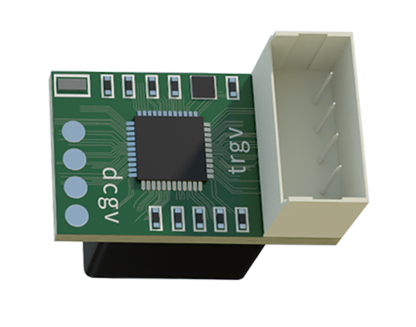
The second critical subsystem is the optical receiver. This typically consists of a photodiode or a position-sensitive device (PSD). When the emitted laser light reflects off a target and returns, it strikes the photosensitive element. The photodiode converts the incident light photons into a proportional photocurrent. This current is extremely weak and requires immediate amplification. This is where the transimpedance amplifier (TIA) circuit becomes essential. The TIA converts the tiny photocurrent into a measurable voltage signal while minimizing noise, which is a significant challenge given the low signal levels involved.

Following signal amplification, conditioning circuits come into play. These may include filters to remove ambient light interference (like 50/60 Hz noise from room lighting), comparators to create clean digital on/off signals for presence detection, or sophisticated analog-to-digital converters for precise distance or displacement measurement. For time-of-flight (ToF) sensors, which measure distance by calculating the round-trip time of a laser pulse, the circuit requires an ultra-high-speed timer or phase-detection circuitry. For triangulation-based sensors, the position of the reflected spot on the PSD is analyzed by subsequent signal processing circuits to determine distance.
Designing these circuits presents distinct challenges. Electrical noise is a primary enemy. Careful printed circuit board (PCB) layout is crucial, involving strategies like separating high-current driver sections from sensitive analog receiver sections, using ground planes effectively, and employing shielding. Power supply decoupling is mandatory to prevent switching noise from corrupting the analog signals. Furthermore, dealing with varying target reflectivity—a shiny metal surface versus a dark matte surface—requires circuits with automatic gain control or adaptive threshold settings to maintain reliable operation.
The applications of laser sensor circuits are vast and growing. In manufacturing, they are used for precise positioning, part inspection, and thickness measurement. Laser triangulation sensors scan object profiles on conveyor belts. In consumer electronics, they enable autofocus in smartphones and gesture recognition. LiDAR systems in autonomous vehicles rely on complex arrays of laser emitter and receiver circuits to map the environment in three dimensions. Even in everyday devices like barcode scanners and laser printers, compact laser sensor circuits perform essential functions.
Looking forward, advancements in integrated circuit technology are making laser sensor systems smaller, more power-efficient, and smarter. The integration of the analog front-end (photodiode, TIA, filter) with digital signal processors on a single chip is a clear trend. This miniaturization, coupled with the development of new semiconductor materials for laser diodes and detectors, continues to push the boundaries of what laser sensing can achieve. Understanding the circuitry behind these sensors is key to innovating and applying this versatile technology effectively across countless fields, from factory floors to scientific laboratories and beyond.