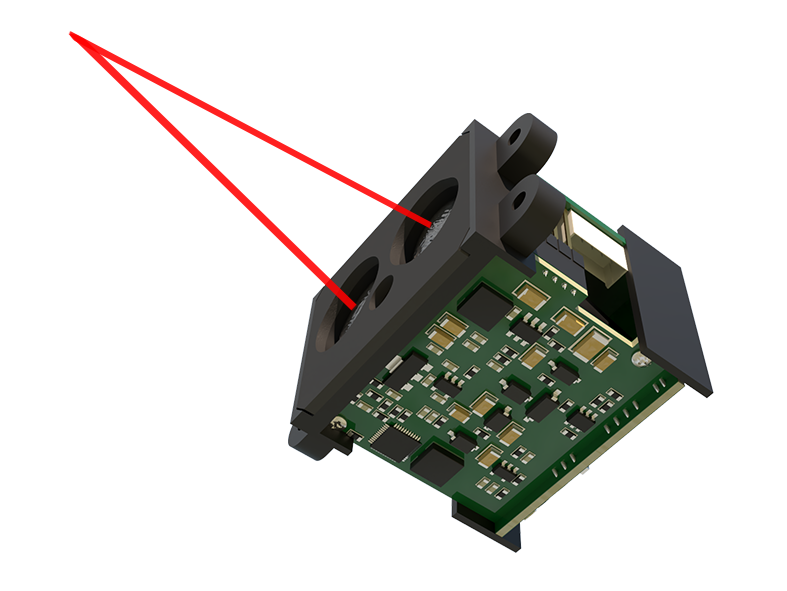
In the realm of structural health monitoring and construction engineering, house displacement laser sensors have emerged as a pivotal technology for ensuring safety, stability, and longevity. These sophisticated devices offer unparalleled precision in measuring minute movements, shifts, or settlements in residential structures, providing critical data long before visible signs of damage appear. Unlike traditional mechanical or manual surveying methods, laser displacement sensors operate on non-contact principles, typically utilizing laser triangulation or time-of-flight measurement. A laser diode projects a focused beam onto a target point on the building's surface, and a receiving lens captures the reflected light. Any movement of the target alters the position of the reflected beam on the sensor's detector array. Advanced signal processing electronics then calculate the exact displacement with micron-level accuracy. This real-time, high-resolution data is invaluable for diagnosing potential structural issues.
The applications for house displacement laser sensors are extensive and vital. They are routinely deployed for monitoring foundation settlement, especially in areas with unstable soil or after seismic events. Continuous monitoring can detect differential settlement between different sections of a house, which is a primary cause of cracks in walls and foundations. During renovation projects or nearby construction activities, these sensors safeguard the existing structure by tracking vibrations or unintended shifts. They are also essential for assessing the impact of environmental factors like soil moisture changes, freeze-thaw cycles, or the growth of tree roots. For historic preservation, laser sensors provide a non-invasive means to monitor the delicate movement of aged structures without physical contact that could cause further damage.
Choosing the right laser sensor involves several technical considerations. Measurement range is paramount; sensors must cover the expected movement distance, from a few millimeters for fine crack monitoring to several meters for overall tilt or lean. Resolution and accuracy determine the smallest detectable movement, often required to be in the micrometer range for early warning systems. The sampling rate must be high enough to capture dynamic movements if monitoring vibration. Environmental robustness is non-negotiable; sensors installed outdoors or in basements require high Ingress Protection (IP) ratings against dust and water, and wide operating temperature ranges. Furthermore, the choice between a one-dimensional sensor for linear movement and a two-dimensional or even 3D system for complex planar displacement depends on the specific monitoring objective.
Integration into a comprehensive monitoring system amplifies the sensor's utility. Modern laser displacement sensors are typically networked, transmitting data via wired protocols like 4-20mA, RS-485, or Ethernet, or wirelessly via LoRaWAN, Zigbee, or cellular networks. This data feeds into a central software platform that performs continuous analysis, visualizing trends through graphs and dashboards. The system can be programmed with alarm thresholds; if displacement exceeds a predefined safe limit, automated alerts are sent via SMS or email to engineers or homeowners, enabling immediate intervention. This shift from periodic manual inspection to continuous, automated monitoring represents a paradigm shift in preventive structural maintenance.
Despite their advantages, practical deployment faces challenges. Ensuring a stable, unmoving reference point for the sensor is critical, as any movement of the sensor itself would corrupt the data. This often requires mounting the sensor on a deeply founded pole or a separate stable structure. The target surface must provide adequate laser reflection; dark, absorbent, or transparent surfaces may require a applied reflective tape or target plate. Long-term exposure to direct sunlight, heavy rain, or vandalism also necessitates careful housing and placement. Cost can be a factor for residential use, though the price of reliable sensors has decreased, making them more accessible for critical monitoring applications.
In conclusion, house displacement laser sensors are a cornerstone of modern structural integrity management. They deliver objective, high-frequency data that empowers homeowners, structural engineers, and insurance assessors to make informed, proactive decisions. By enabling the early detection of movement, these sensors help prevent minor issues from escalating into major, costly failures, ultimately protecting both the financial investment in a property and, more importantly, the safety of its occupants. As sensor technology continues to advance, becoming more compact, energy-efficient, and intelligent, their adoption in residential monitoring is poised to become as standard as smoke detectors, fundamentally changing how we care for our built environment.