Inductive proximity sensors are fundamental components in modern industrial automation, playing a critical role in non-contact detection of metallic objects. Among the various sensing ranges available, the 15mm inductive proximity sensor represents a highly versatile and widely adopted standard. This article delves into the technology, selection criteria, and application best practices for these essential devices.
Technology and Operating Principle
At its core, a 15mm inductive proximity sensor operates on the principle of electromagnetic induction. The sensor contains an oscillator circuit that generates a high-frequency electromagnetic field emanating from its active face. When a metallic target enters this field within the specified 15mm nominal sensing distance (Sn), eddy currents are induced on the target's surface. This causes a change in the oscillation amplitude within the sensor, which is detected by a threshold circuit. This change triggers the sensor's solid-state output switch (typically PNP or NPN), sending a signal to a programmable logic controller (PLC) or other control system. The "15mm" specification refers to the standard nominal sensing distance for a defined standard target, usually a square of mild steel (Fe360) with a side length equal to the sensor's diameter or 3xSn, whichever is greater.
Key Features and Advantages
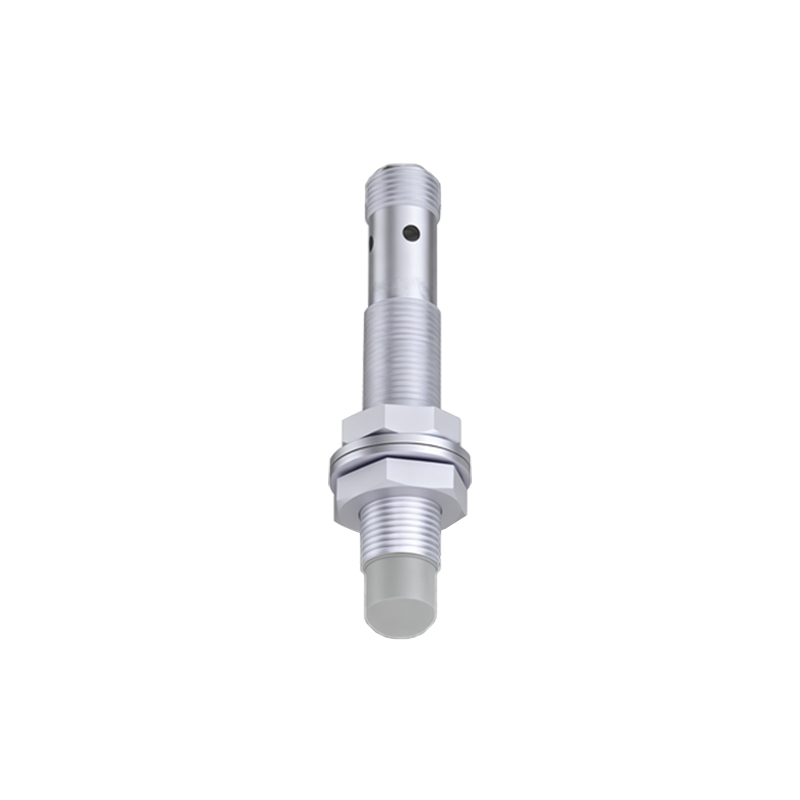
The 15mm sensing range offers an optimal balance between detection capability and physical size. These sensors are renowned for their robustness and reliability. Key advantages include:
Non-Contact Operation: Eliminates mechanical wear and tear, ensuring a long operational life.
High Switching Frequency: Capable of detecting fast-moving objects, making them suitable for high-speed counting and positioning tasks.
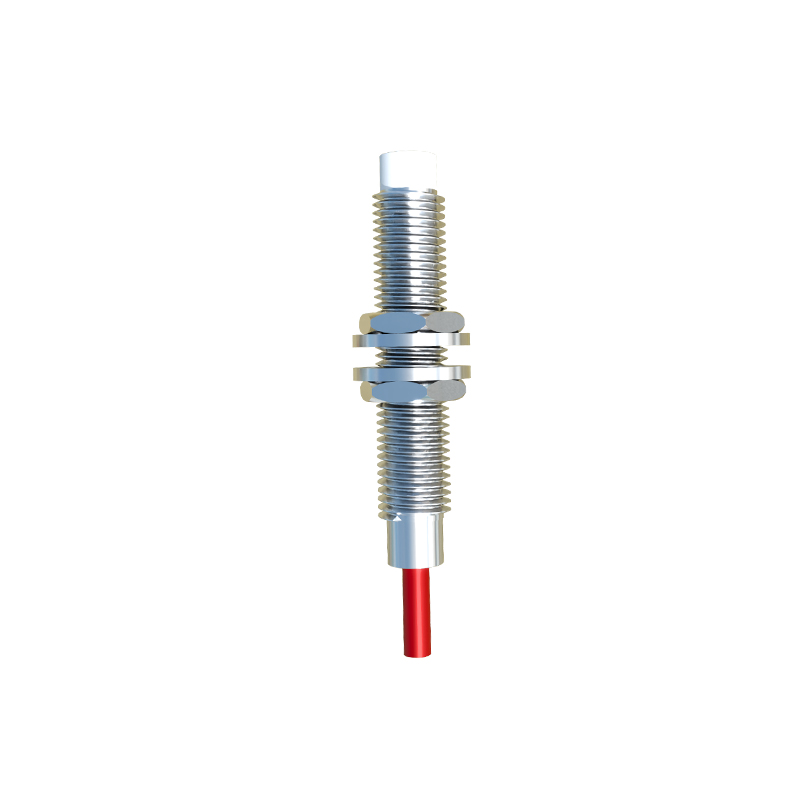
Environmental Resilience: Typically housed in robust metal (often stainless steel) or high-grade plastic bodies with IP67, IP68, or IP69K ratings, making them resistant to dust, water, oils, and coolants.
Insensitivity to Non-Metals: They detect only metallic objects, ignoring plastics, wood, or liquids, which prevents false triggers in complex environments.
Variety of Outputs and Form Factors: Available in tubular (e.g., M12, M18, M30 threaded barrels) or rectangular shapes, with 2-wire, 3-wire, or 4-wire configurations, and analog or IO-Link versions for smart factory integration.
Selection Criteria
Choosing the right 15mm inductive sensor requires careful consideration of several factors:
1. Target Material: The effective sensing distance (Sr) varies with metal type. For a 15mm sensor calibrated for mild steel, the reduction factor is approximately 1.0. For stainless steel, it is about 0.8 (so Sr ≈ 12mm), for aluminum about 0.4 (Sr ≈ 6mm), and for copper about 0.3 (Sr ≈ 4.5mm).
2. Output Type: PNP (sourcing) or NPN (sinking) outputs must match the input card of the controller. DC versions are most common (10-30V DC).
3. Housing and Connection: The installation environment dictates the housing material (e.g., nickel-plated brass for general use, stainless steel for harsh conditions) and connection type (pre-wired cable, quick-disconnect M12 connector).
4. Embeddable vs. Non-Embeddable: Embeddable (shielded) sensors can be flush-mounted in metal without affecting their sensing field, while non-embeddable (unshielded) types offer a longer sensing range but require clearance around the active face.
5. Special Functions: Options include weld-field immunity (for robotic welding), temperature resistance, and short-circuit protection.
Typical Industrial Applications
The 15mm inductive proximity sensor finds use in virtually every sector of manufacturing and automation:
Position Verification: Confirming the presence or end-position of cylinders, slides, or clamps.
Object Counting: Counting metallic parts on conveyors, in packaging machines, or assembly lines.
Speed Monitoring: Detecting gear teeth or encoder pulses to monitor rotational speed.
Machine Safety: Used as part of interlock systems to confirm guard doors are closed.
Material Handling: Detecting metal pallets, racks, or containers in automated storage and retrieval systems (AS/RS).
Installation and Maintenance Tips
For optimal performance, ensure correct installation. Maintain the recommended lateral and axial spacing between multiple sensors to prevent mutual interference. Always respect the temperature and voltage specifications. While largely maintenance-free, periodic checks for physical damage, buildup of metallic swarf on the active face, and signal integrity are recommended. In dirty environments, a small air gap can be maintained to prevent material buildup from causing a permanent "target present