In the realm of industrial automation and control systems, proximity sensors stand as fundamental components, enabling machines to "sense" the presence or absence of an object without physical contact. Their principle of operation is elegantly simple yet highly effective, forming the backbone of countless applications from assembly lines to robotics. This article delves into the core working principles of the most common types of proximity sensors, explaining how they detect objects and convert this detection into a usable electrical signal.
The fundamental concept behind all proximity sensors is the detection of a change in a physical field or wave caused by the approach of a target object. This change is then transduced into an electrical output signal, typically a switch-like on/off signal. The most prevalent technologies are inductive, capacitive, and photoelectric sensors, each based on a distinct physical principle.
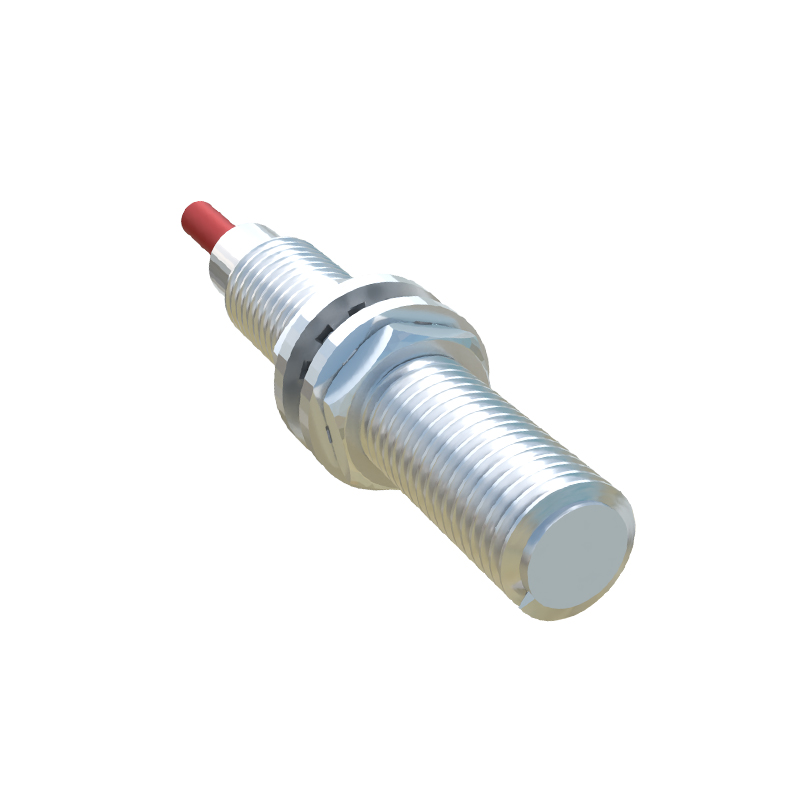
Inductive Proximity Sensors are the workhorses for detecting metallic objects. Their operation is based on the principle of electromagnetic induction. The sensor contains a coil wound around a ferrite core, which is part of an oscillator circuit. When an alternating current flows through this coil, it generates an oscillating electromagnetic field at the sensor's active face. When a conductive metal target enters this field, eddy currents are induced on the surface of the target. These eddy currents draw energy from the oscillator, causing a reduction in the oscillation amplitude. An evaluation circuit monitors this amplitude change. Once the amplitude drops below a certain threshold (indicating the target is within the specified sensing range), the circuit triggers, switching the sensor's output state. It's crucial to note that different metals affect the sensing range; ferrous metals like steel typically allow for the longest range, while non-ferrous metals like aluminum or copper reduce the effective sensing distance. Inductive sensors are robust, immune to environmental factors like dust or oil (unless conductive), and are ideal for counting metal parts, detecting piston position in cylinders, or as limit switches.
Capacitive Proximity Sensors can detect both metallic and non-metallic materials, including liquids, plastics, wood, and granules. They operate on the principle of capacitance change. The sensor's active face acts as one plate of a capacitor, with the target object acting as the other plate, and the air gap as the dielectric. The sensor's internal oscillator circuit is designed to detect changes in the capacitance of this system. As a target object approaches the sensor face, the capacitance increases because the dielectric constant of the target material (and its distance) alters the electrical field. When the capacitance reaches a preset level, the oscillator begins to oscillate. This oscillation is detected by the evaluation circuit, which then switches the output. A sensitivity adjustment is often provided to tune the sensor for different materials, preventing false triggers from background objects or container walls. This makes capacitive sensors perfect for applications like liquid level detection in tanks, monitoring presence of plastic bottles, or detecting powdered materials.
Photoelectric Sensors use light to detect objects. They consist of a light emitter (usually an LED producing visible red, infrared, or laser light) and a receiver. There are three main operating modes: through-beam, retro-reflective, and diffuse reflective. In the through-beam mode, the emitter and receiver are separate units facing each other. Detection occurs when the target object breaks the light beam. This mode offers the longest sensing range and highest reliability. The retro-reflective mode uses a single housing containing both emitter and receiver, along with a reflector. The light beam is sent to the reflector and bounced back to the receiver. An object is detected when it interrupts this return beam. The diffuse reflective (or proximity) mode also has the emitter and receiver in one unit, but it detects light reflected directly off the target object itself. The detection is based on the intensity of the reflected light. Photoelectric sensors are extremely versatile for detecting objects of almost any material, color, or shape, but they can be affected by ambient light, dust, fog, or the color and reflectivity of the target.
Beyond these, other types include Ultrasonic Sensors, which measure the time-of-flight of a sound wave to detect distance and presence, and Magnetic Sensors (Reed switches or Hall effect sensors), which detect permanent magnets, commonly used for cylinder position sensing.
Understanding the underlying principle of each sensor type is critical for correct selection and application. Key parameters to consider include the sensing distance, target material, environmental conditions (temperature, contaminants), output type (PNP/NPN, analog), and electrical requirements. A well-chosen proximity sensor, based on a sound understanding of its operating principle, ensures reliable, maintenance-free operation, enhancing the efficiency and safety of automated systems. Their non-contact nature eliminates mechanical wear, providing a significant advantage over traditional mechanical limit switches, solidifying their indispensable role in modern industrial automation.