In the realm of industrial automation and control systems, proximity sensors are indispensable components for non-contact object detection. Among the various types, the NPN 3-wire proximity sensor stands out for its widespread use, reliability, and straightforward interface with programmable logic controllers (PLCs). This article delves into the operational principles, standard wiring configurations, and key application considerations for this fundamental sensor type.
At its core, an NPN 3-wire inductive proximity sensor is designed to detect metallic objects without physical contact. It operates on the principle of electromagnetic induction. The sensor contains an oscillator circuit that generates a high-frequency electromagnetic field at its active face. When a metallic target enters this field, eddy currents are induced in the target, causing a change in the oscillation amplitude. This change is detected by a threshold circuit, which subsequently triggers a switching action in the sensor's output stage.
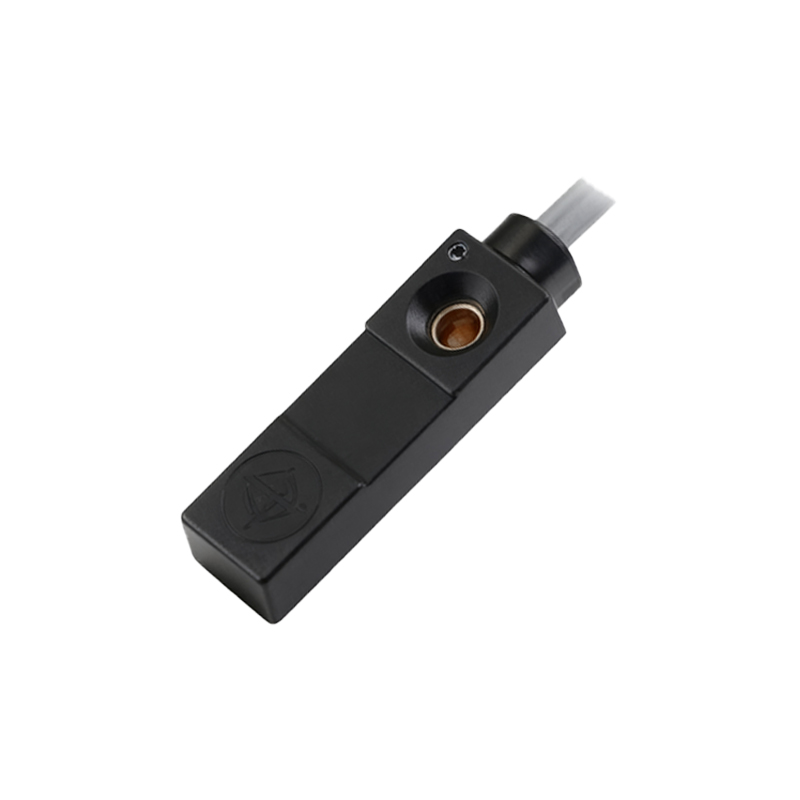
The "NPN" designation refers to the type of transistor used in the output switching circuit. An NPN transistor functions as a switching device that sinks current to common (ground). The "3-wire" specification indicates the number of connection leads: typically brown for positive supply voltage (V+), blue for common (0V), and black for the switched output signal. This configuration is distinct from 2-wire sensors, which are wired in series with the load, and PNP sensors, which source current from the positive supply.
Understanding the wiring is critical for correct operation and system integration. The standard wiring for an NPN 3-wire sensor is as follows:
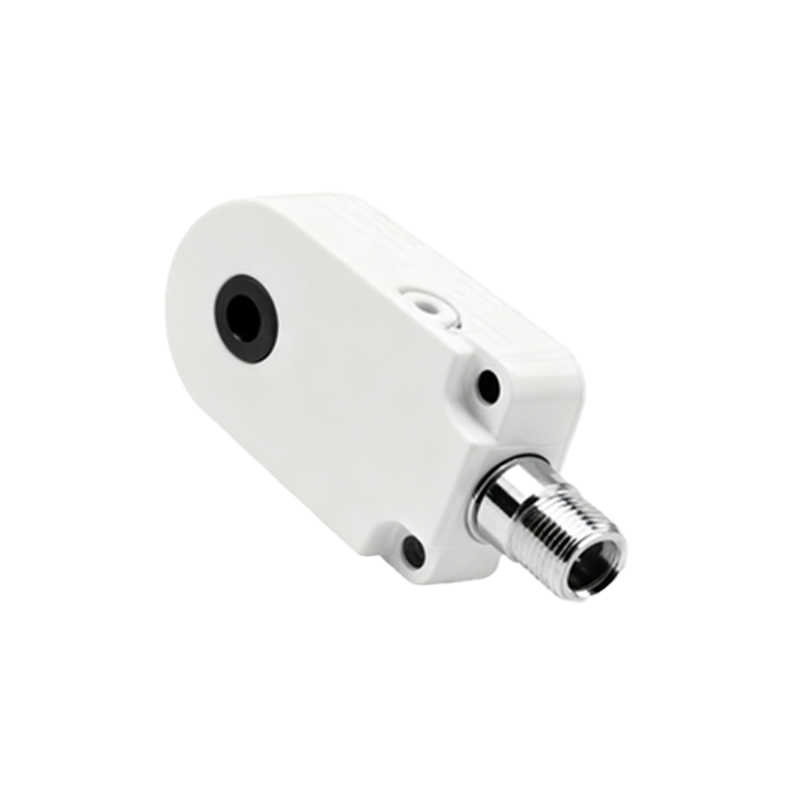
Brown Wire: Connect to the positive terminal of the DC power supply (commonly 10-30V DC).
Blue Wire: Connect to the negative terminal (0V) of the DC power supply and the common (COM) of the load (e.g., PLC input module).
Black Wire: This is the switched output. For an NPN sensor, this output acts as a switch to ground. It is connected to the load (the PLC input). When a target is detected, the NPN transistor turns on, effectively connecting the black wire to the blue wire (0V). This completes the circuit to the PLC input, signaling a detection event.
A crucial concept is the "load" connection. The load (PLC input) must be connected between the positive supply (V+) and the sensor's black output wire. When the sensor is inactive (no target), the output transistor is off, and the black wire is floating. The PLC input, pulled high through an internal or external resistor, sees a high signal. Upon detection, the NPN transistor sinks current, pulling the PLC input low to common (0V), indicating an active state. This is known as a "sinking" output or "NPN Normally Open" configuration. It is essential to verify the input circuit requirements of your controller, as some are designed specifically for sinking (NPN) or sourcing (PNP) inputs.
Key advantages of NPN 3-wire sensors include their compatibility with many PLCs that use sinking input cards, good electrical noise immunity due to the separate supply and output wires, and the ability to handle higher switching currents compared to 2-wire versions. They also allow for diagnostic monitoring of the supply line in some advanced systems.
When selecting and applying an NPN 3-wire proximity sensor, several factors must be considered:
1. Sensing Distance: The rated operating distance (Sn) is specified for a standard target. Always account for temperature, target material, and size effects.
2. Output Configuration: Ensure it matches the controller's input type. Confusing NPN (sinking) with PNP (sourcing) is a common wiring error.
3. Electrical Ratings: Adhere to the voltage (typically 10-30V DC) and current limits. The maximum load current the black wire can handle is a critical parameter.
4. Environmental Factors: Consider IP (Ingress Protection) ratings for dust and water resistance, temperature ranges, and resistance to chemicals or welding spatter in harsh industrial environments.
5. Mounting: Inductive sensors require non-metallic surroundings for proper operation. Flush-mounted sensors can be embedded in metal, while non-flush types require a clear metallic-free zone around the sensing face.
Typical applications are vast, ranging from simple part presence detection on conveyor lines and counting objects, to determining the position of machine elements like cylinders (via a metallic flag), and in automated assembly systems for robotic guidance. Their robustness makes them ideal for demanding environments in packaging, automotive manufacturing, and material handling.
In summary, the NPN 3-wire proximity sensor is a versatile and reliable workhorse in factory automation. A solid grasp of its NPN sinking operation