In the realm of industrial automation and precision measurement, laser sensors have become indispensable tools. Their reliability is a critical factor for engineers and system integrators who depend on consistent, accurate data for process control, quality assurance, and safety. This article delves into the factors that determine laser sensor reliability, addressing common concerns and providing insights based on engineering principles and field experience.
Fundamentally, the reliability of a laser sensor hinges on its design, construction, and operating environment. Modern laser sensors utilize solid-state laser diodes, which have no moving parts. This inherently enhances their durability compared to mechanical sensing methods. The mean time between failures (MTBF) for a quality industrial laser sensor often exceeds 50,000 to 100,000 hours. Key components such as the laser emitter, photodetector, and signal processing circuitry are engineered for long-term stability. Manufacturers subject these components to rigorous testing under various stress conditions—including thermal cycling, vibration, and electrical surges—to ensure they meet industry standards like IEC 60947-5-2 and IEC 60068.
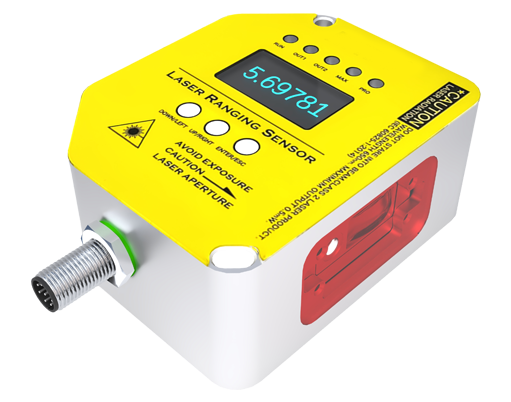
Environmental factors pose the most significant challenge to reliability. Contaminants like dust, oil mist, or coolant can obscure the optical lens, leading to signal degradation or failure. However, many industrial-grade sensors are equipped with robust housings (typically IP67 or IP69K ratings) and features like air purge ports or protective windows to mitigate this. Temperature fluctuations can affect the wavelength and output power of the laser diode. High-quality sensors incorporate temperature compensation algorithms within their electronics to maintain accuracy across their specified range, commonly from -10°C to 60°C or wider.
Electrical noise and interference in industrial settings are another concern. Reliable laser sensors employ shielded cabling, filtered inputs, and noise-resistant circuitry to prevent erroneous readings from nearby motors, variable frequency drives, or welding equipment. The choice of output type also matters. Analog outputs (4-20mA, 0-10V) are susceptible to noise over long distances, whereas digital interfaces (IO-Link, Ethernet/IP) often include error-checking protocols that enhance data integrity.

Application-specific demands further test reliability. In high-speed sorting or inspection lines, the sensor's response time must be fast and consistent. In metrology applications, long-term measurement drift must be negligible. Engineers must select a sensor whose specifications—including resolution, repeatability, and linearity—not only meet but exceed the application's requirements to build in a safety margin. Regular calibration and maintenance, as per the manufacturer's guidelines, are essential to sustain rated performance over years of service.

Case studies from automotive manufacturing and semiconductor fabrication illustrate high reliability in action. In these sectors, thousands of laser sensors operate continuously in harsh conditions, performing critical tasks like gap measurement, presence detection, and wafer alignment. Their failure rates are remarkably low, directly contributing to high overall equipment effectiveness (OEE).
In conclusion, when properly selected for the application, installed correctly, and maintained, laser sensors are exceptionally reliable devices. Their solid-state nature, environmental protections, and advanced electronics make them a trustworthy choice for modern industry. The key to unlocking their reliability lies in understanding the operational environment, adhering to specifications, and implementing a proactive maintenance regimen. For engineers, the question is not simply "Are laser sensors reliable?" but rather "How do I ensure the reliability of my laser sensor system?" through diligent design and practice.