In the realm of high-performance computing and competitive gaming, the mouse sensor stands as a critical interface between human intent and digital execution. Among the various sensor technologies, laser sensors have long been celebrated for their exceptional precision and versatility. Today, we delve into the engineering marvel that represents the strongest mouse laser sensor currently available, examining its technical specifications, operational advantages, and real-world applications.
At the core of this advanced sensor lies a high-resolution laser emitter capable of tracking surface details with microscopic accuracy. Unlike traditional optical sensors that rely on LED illumination, laser sensors utilize a coherent light source to detect minute textures on a wide array of surfaces, including glass, glossy finishes, and uneven mats. This sensor boasts a staggering resolution, often exceeding 20,000 DPI (dots per inch), with zero hardware acceleration or smoothing, ensuring that every movement is translated directly and faithfully. The sensor's tracking speed, measured in inches per second (IPS), reaches remarkable levels, allowing for swift, flick-of-the-wrist motions without any loss of tracking. Coupled with an ultra-high polling rate of 8,000 Hz, the sensor minimizes latency to imperceptible levels, providing instantaneous feedback that is crucial for fast-paced scenarios.
One of the standout features of this premier laser sensor is its surface calibration capability. Advanced firmware allows users to calibrate the sensor to specific mouse pads or surfaces, optimizing tracking performance and eliminating any potential jitter or drift. This is particularly beneficial for professionals in graphic design, CAD engineering, and esports athletes who demand absolute consistency. The sensor's lift-off distance (LOD) is precisely adjustable, enabling users to set the exact height at which the sensor stops tracking, facilitating seamless repositions during gameplay or detailed work.
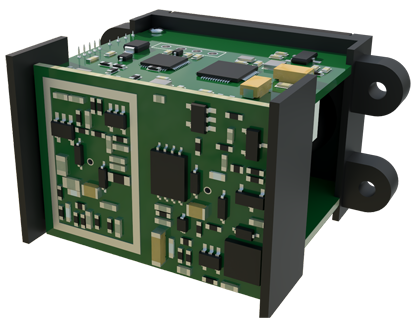
Moreover, the sensor integrates intelligent power management systems. Despite its high performance, it maintains energy efficiency, making it suitable for wireless mice without compromising battery life. The implementation of state-of-the-art noise reduction algorithms ensures that external interference, such as electromagnetic fields from other devices, does not affect tracking stability. This robustness is essential in competitive environments where reliability can determine victory or defeat.
In practical terms, the superiority of this laser sensor manifests in various domains. For gamers, it translates to pixel-perfect aiming in first-person shooters, fluid cursor control in real-time strategy games, and enhanced responsiveness in MOBA titles. For creative professionals, it offers the precision needed for intricate photo editing, vector illustration, and 3D modeling, where even a slight deviation can impact the final output. The sensor's adaptability across different surfaces also means that users are not constrained to specific mouse pads, offering unparalleled flexibility in diverse setups.
Looking ahead, the evolution of mouse laser sensor technology continues to push boundaries. Innovations in sensor fusion, where laser data is combined with other inputs like gyroscopes for even finer control, are on the horizon. However, the current apex sensor we discuss here sets a benchmark, embodying the culmination of years of research and development in optoelectronics and micro-engineering. It is not merely a component but a testament to how precision engineering can elevate user experience to unprecedented levels.

In conclusion, the strongest mouse laser sensor today represents a synergy of high resolution, rapid response, and adaptive intelligence. It caters to the most demanding users, bridging the gap between physical movement and digital accuracy. As technology advances, this sensor stands as a pinnacle achievement, redefining what is possible in peripheral performance and setting a new standard for the industry.