In the realm of industrial automation and precision measurement, laser tachometer sensors have become indispensable tools. These non-contact devices provide accurate rotational speed measurement by directing a focused laser beam onto a rotating surface and analyzing the reflected light. For engineers, maintenance professionals, and system integrators, selecting a reliable manufacturer is paramount to ensuring system uptime, data accuracy, and operational safety. This article delves into the key players in the laser tachometer sensor manufacturing landscape, highlighting their technological strengths and typical applications.
A leading name in this specialized field is often Keyence Corporation. Renowned for its high-precision sensors and visionary approach, Keyence offers laser tachometers known for exceptional accuracy and long measurement distances. Their sensors frequently incorporate advanced features like easy alignment indicators and robust data output interfaces, making them ideal for integration into complex automated production lines, especially in the semiconductor and electronics assembly industries. The build quality and support infrastructure provided by such global entities set a high industry benchmark.
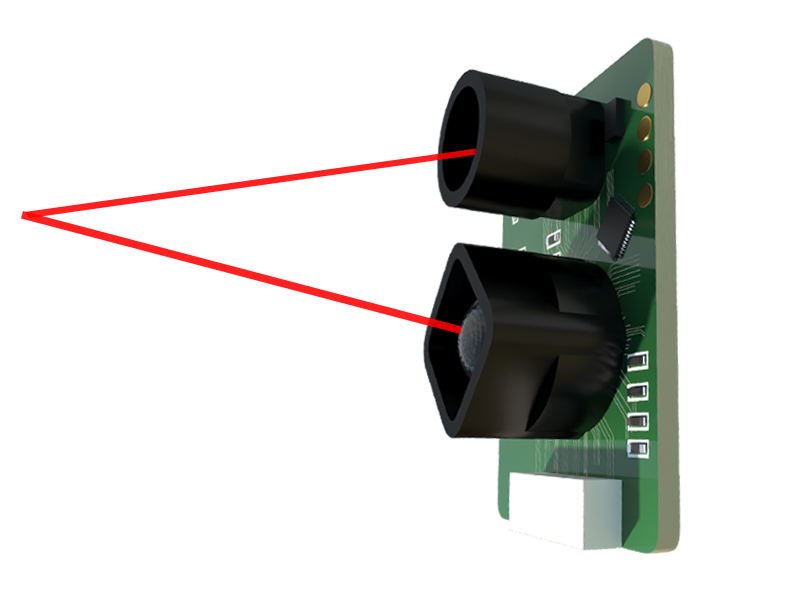
Another major contender is OMRON Corporation. With a deep heritage in industrial automation, OMRON's sensor division produces reliable laser tachometers designed for durability in harsh environments. Their products often emphasize ease of use, with simple setup procedures and clear status feedback. This makes them a preferred choice for general manufacturing, packaging machinery, and conveyor system monitoring where consistent, maintenance-free operation is required over extended periods.
For applications demanding extreme precision in research and development or high-end manufacturing, companies like Polytec GmbH stand out. Originally focusing on laser vibrometry, Polytec's expertise translates into tachometers capable of ultra-high-resolution speed measurement and analysis. Their sensors are commonly found in laboratories, aerospace testing facilities, and precision engineering workshops where understanding minute rotational dynamics is critical.
Beyond these giants, several specialized manufacturers excel in niche areas. IFM Electronic GmbH, for instance, is celebrated for its robust and compact sensor designs suitable for mobile equipment and heavy machinery. Their laser tachometers are built to withstand significant vibration, dust, and temperature variations, making them staples in the automotive, agricultural, and construction sectors. Similarly, SICK AG leverages its extensive background in sensor technology to offer versatile laser tachometers that seamlessly integrate into broader Industry 4.0 and IoT frameworks, providing not just speed data but also connectivity for predictive maintenance analytics.
When evaluating a laser tachometer sensor manufacturer, several technical factors must be considered. Measurement range is fundamental; a sensor must cover the minimum and maximum RPM (Revolutions Per Minute) of the target application. Accuracy and resolution determine the quality of data, vital for process control or quality assurance. The working distance—how far the sensor can be placed from the target—affects installation flexibility. Output signals (e.g., analog voltage/current, pulse, or digital protocols like IO-Link) must be compatible with the existing control system. Finally, environmental ratings (IP codes for ingress protection, temperature ranges) ensure the sensor's longevity in its intended operating conditions.
The choice of manufacturer ultimately hinges on the specific application. For high-speed bottling lines, a sensor with fast response time and high immunity to ambient light from a company like Banner Engineering might be optimal. For monitoring turbine blades in a power generation plant, a ruggedized, long-distance sensor from a provider like Pepperl+Fuchs could be necessary. It is always advisable to consult directly with application engineers from these manufacturers, as they can provide valuable insights into selecting the correct model and configuring it for optimal performance.
In conclusion, the market for laser tachometer sensors is served by a mix of large, diversified automation suppliers and focused, high-precision specialists. Manufacturers like Keyence, OMRON, Polytec, IFM, and SICK represent the forefront of this technology, each bringing distinct advantages to different industrial challenges. A thorough assessment of technical specifications, coupled with an understanding of the manufacturer's core competencies and support network, is the best strategy for sourcing a laser tachometer sensor that delivers reliability, precision, and value over its entire service life.