Proximity sensors with oscillating sensing mechanisms represent a sophisticated class of non-contact detection devices widely employed in industrial automation, robotics, and safety systems. Their core function is to detect the presence or absence of a target object without physical contact, relying on the principle of electromagnetic induction or capacitive coupling, depending on the sensor type. The defining feature of this sensor category is the incorporation of an oscillating or vibrating actuator within the sensing head, which fundamentally enhances sensitivity, stability, and resistance to environmental interference.
The sensing mechanism begins with an internal oscillator circuit that generates a high-frequency electromagnetic field. In inductive proximity sensors, this field emanates from a coil wound around a ferrite core. When a metallic target enters this oscillating field, eddy currents are induced on the target's surface. These eddy currents draw energy from the oscillator, causing a measurable change in its amplitude or frequency. The sensor's detection circuit is precisely tuned to monitor this change. The oscillating actuator—often a tiny, precisely balanced mechanical component or a driven electromagnetic element—serves a critical role. Its continuous, controlled vibration helps to modulate the emitted field. This oscillation can mechanically "scan" the field or, more commonly, electrically modulate it, making the sensor exceptionally adept at filtering out static background noise, such as that from adjacent stationary metal structures or gradual temperature drifts.
For capacitive variants, the principle shifts to detecting changes in capacitance. The sensor face and the target act as two plates of a capacitor. The oscillating actuator modulates the sensing field, allowing the device to detect non-metallic materials like plastics, liquids, or wood by sensing the change in the dielectric constant. The oscillation here is crucial for achieving a stable baseline and high sensitivity to minute capacitive changes, which are often overshadowed by parasitic capacitances in static systems.

The advantages of this oscillatory approach are manifold. Firstly, it significantly improves signal-to-noise ratio. By operating at a specific, known frequency, the sensor's electronics can lock onto this frequency, effectively ignoring disturbances at other frequencies common in electrically noisy industrial environments. Secondly, it allows for very precise sensing distances and improved repeatability. The modulated signal provides a clearer threshold for detection compared to a static field. Thirdly, these sensors often exhibit superior performance in detecting small or thin targets, as the oscillating mechanism can create a more focused and reactive field.
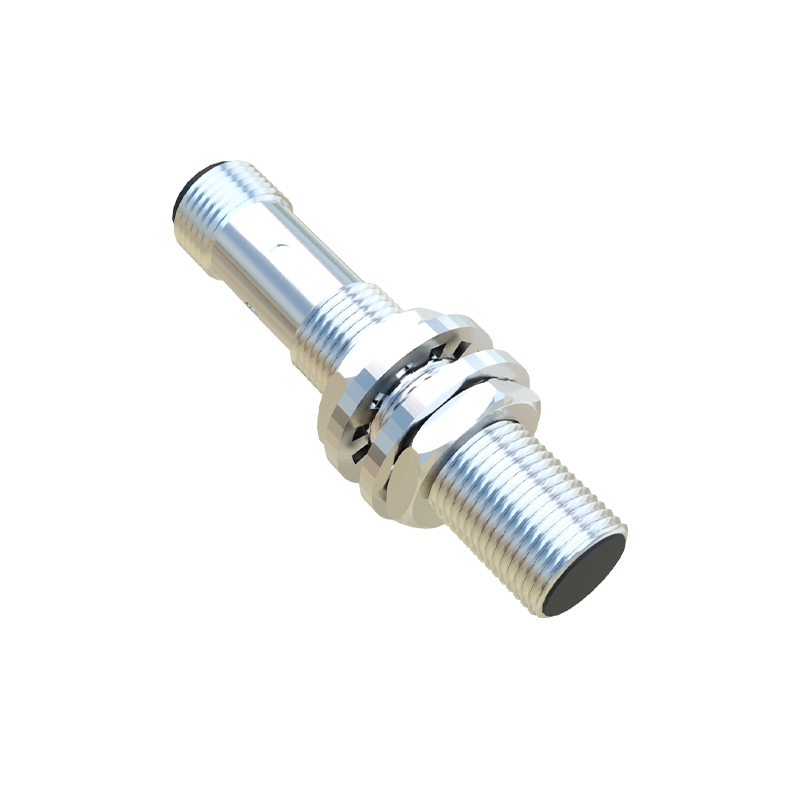
Design considerations for these sensors are rigorous. Engineers must carefully select the oscillation frequency to balance penetration power, sensing range, and energy consumption. The physical design of the oscillating element and the sensing coil must ensure long-term reliability despite constant micro-movements. Furthermore, housing design is critical to protect the delicate internal mechanism from shock, vibration, and contaminants like dust or oil, which could dampen the oscillation or cause false triggers.
Applications are diverse. In automated assembly lines, they precisely detect the position of metal components. In packaging machinery, capacitive oscillating sensors verify the presence of liquid in non-metallic bottles. Safety systems use them as non-contact interlocks on guarding doors. Their robustness and reliability make them indispensable in harsh environments where optical sensors might fail due to dirt or fog.
In conclusion, the integration of an oscillating actuator within a proximity sensor is a pivotal engineering solution that transforms a basic detection principle into a highly reliable and versatile industrial tool. By actively modulating the sensing field, it overcomes key limitations of static-field sensors, delivering enhanced accuracy, stability, and noise immunity. As industrial demands for precision and reliability grow, the evolution of these oscillating sensing mechanisms continues to be a key focus area in sensor technology development.