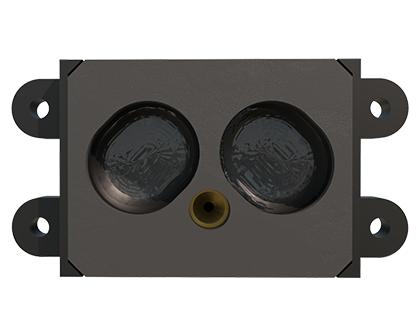
In the realm of industrial automation and quality control, precision is paramount. Laser displacement sensors have emerged as a cornerstone technology for non-contact measurement, offering unparalleled accuracy, speed, and reliability. These sophisticated devices project a focused laser beam onto a target surface and analyze the reflected light to determine distance or displacement with micron-level precision. Unlike traditional contact probes, they eliminate the risk of surface damage or measurement error caused by physical force, making them ideal for delicate materials, high-speed production lines, and harsh environments.
The core operating principle of most industrial laser displacement sensors is triangulation. The sensor emits a laser spot onto the target. The reflected light is then focused onto a position-sensitive detector, such as a CCD or PSD array. As the target's distance changes, the position of the reflected light spot on the detector shifts. This shift is precisely calculated by the sensor's internal processor to output a highly accurate distance value. This method allows for measurements on a vast array of surfaces, from shiny metals to dark, absorbent materials, though specialized models or settings are often required for optimal performance on challenging surfaces.
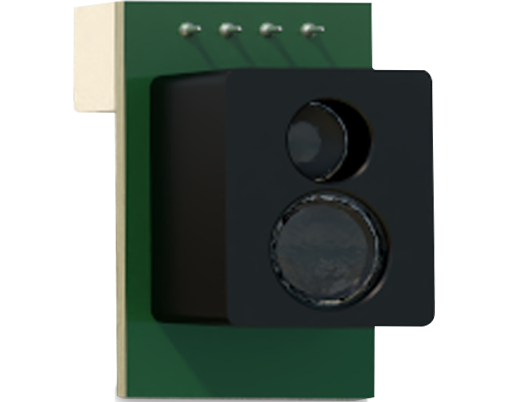
The applications for laser displacement sensors are vast and transformative. In automotive manufacturing, they are used to measure critical gaps and flushness between body panels, ensuring quality and aerodynamic efficiency. In electronics, they verify the coplanarity of semiconductor leads and the thickness of circuit boards. Within the steel and glass industries, they perform continuous thickness profiling during production. Furthermore, they are indispensable for vibration analysis, warp detection, and online inspection systems where real-time feedback is crucial for process control. Their ability to provide continuous, high-speed data makes them a key enabler of Industry 4.0 initiatives, feeding information directly into control systems for adaptive manufacturing.
Selecting the right laser displacement sensor requires careful consideration of several key specifications. Measurement range defines the minimum and maximum distances over which the sensor can operate accurately. Spot size affects resolution and suitability for small features. Linearity indicates the deviation from a perfect straight-line output across the range. Sampling speed, often in the kilohertz range, determines how quickly measurements can be taken, which is vital for dynamic applications. Environmental factors like ambient light, temperature fluctuations, and the presence of dust or steam must also be accounted for, with many sensors featuring robust housings and filters to ensure stable operation.
Modern advancements continue to push the boundaries of this technology. High-speed models now capture data for rapidly moving objects, while blue laser models offer superior performance on transparent materials like glass or clear plastics by reducing penetration and providing a sharper surface reflection. Confocal chromatic sensors offer another level of precision for multi-layer or highly reflective surfaces. Integration has also become simpler, with sensors offering various digital and analog output protocols, such as EtherCAT, PROFINET, or IO-Link, allowing for seamless connectivity within smart factory networks.

In conclusion, laser displacement sensors are not merely measurement tools; they are fundamental components for achieving quality, efficiency, and intelligence in modern industrial processes. By providing exact, non-contact dimensional data, they empower engineers to control processes with unprecedented accuracy, reduce waste, and ensure product consistency. As manufacturing demands for higher precision and greater automation intensify, the role of the laser displacement sensor will only become more central, driving innovation and quality across countless sectors.