In the realm of industrial automation and precision measurement, laser sensors stand as pivotal components, and their performance is fundamentally dictated by the characteristics of their light sources. The evolution of laser sensor technology is, in many ways, a chronicle of advancements in laser diode and solid-state laser development. This article delves into the core light source technologies, their operational principles, and selection criteria for optimal sensor design and application.
The most prevalent light source in modern laser sensors is the semiconductor laser diode. Emitting coherent light through stimulated emission within a semiconductor junction, these diodes offer significant advantages: compact size, high electrical-to-optical efficiency, low operating voltage, and direct modulation capability. Common wavelengths include 650nm (visible red), 850nm, and 1550nm (infrared). The visible red lasers are often used for alignment and simple presence detection where the beam spot needs to be visually located. Infrared lasers, being invisible to the human eye, are preferred for applications requiring high power or where visible light would be a distraction or safety hazard. The beam profile from a standard edge-emitting laser diode is typically elliptical and divergent, necessitating precision collimating optics to shape it into a usable, focused spot for sensing.
For applications demanding higher spatial coherence, superior beam quality (near-perfect Gaussian profile), and very fine focusability, Distributed Feedback (DFB) lasers and Vertical-Cavity Surface-Emitting Lasers (VCSELs) are employed. DFB lasers incorporate a grating structure within the laser cavity, enabling single longitudinal mode operation with a very narrow spectral linewidth. This makes them ideal for high-precision interferometric sensors and spectroscopic applications. VCSELs, emitting light perpendicular to the wafer surface, produce a symmetric, circular beam with low divergence, simplifying optical design. Their two-dimensional array capability is revolutionizing areas like 3D LiDAR and structured light sensing.
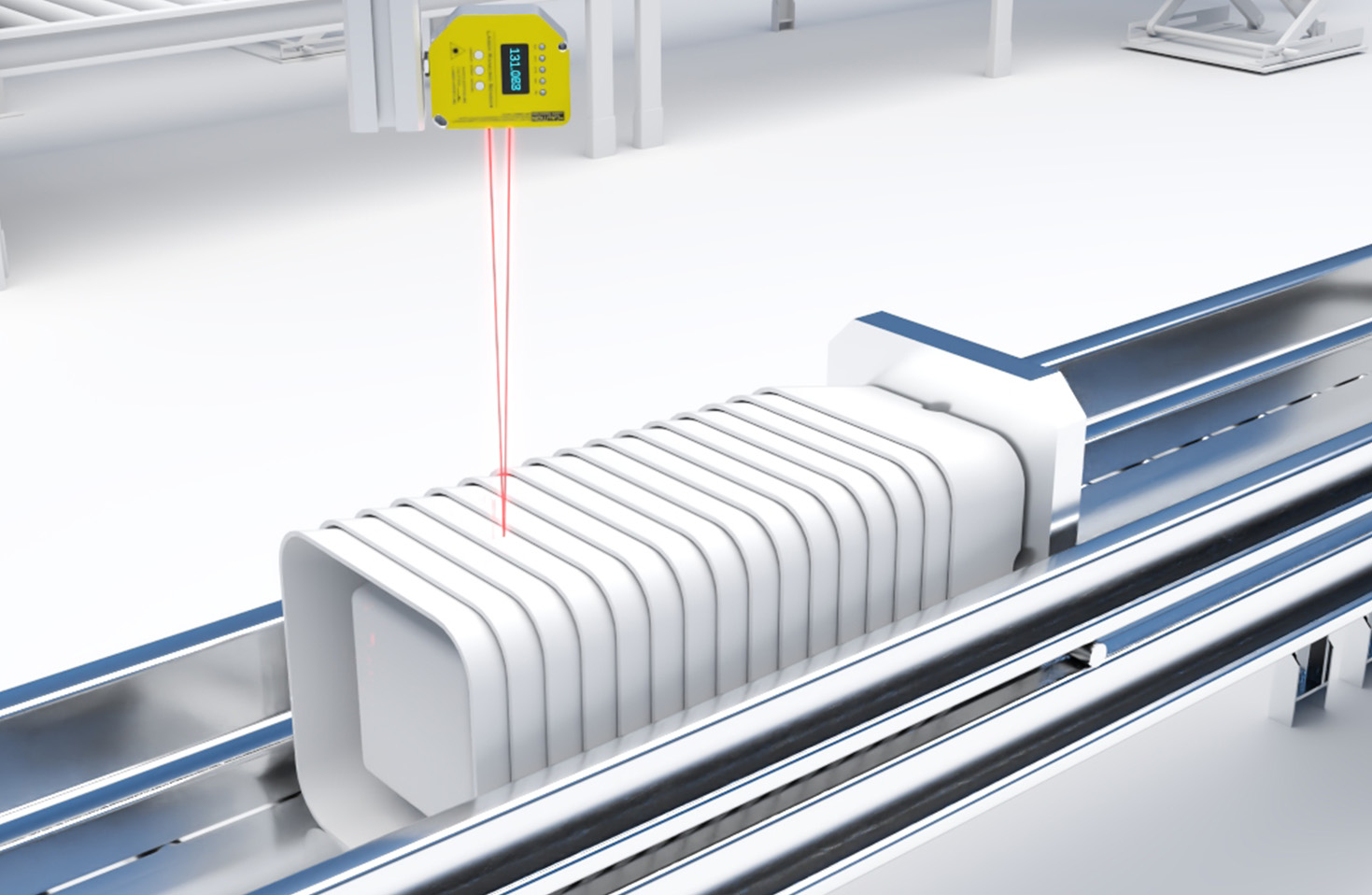
Beyond laser diodes, solid-state lasers remain crucial for specialized high-power or unique wavelength requirements. Diode-Pumped Solid-State (DPSS) lasers, where a laser diode pumps a crystal like Nd:YAG or Nd:YVO4, generate high-quality beams at wavelengths such as 532nm (green) or 1064nm. These are indispensable in sensors for long-range measurement, harsh environments, or where specific material interactions are needed (e.g., certain plastics are more transparent to 1064nm light). Fiber lasers, another solid-state variant, offer exceptional beam quality and stability, often used in high-end metrology and defense-related sensing systems.
The choice of light source is governed by the sensor's application. Key parameters include:
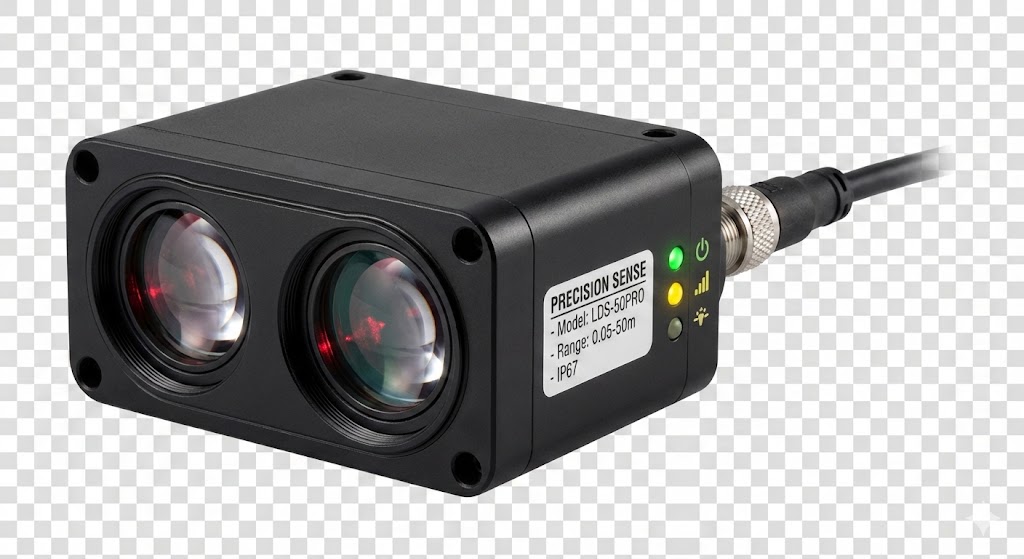
* Wavelength: Determines beam visibility, atmospheric transmission, and material interaction (absorption, reflection).
* Output Power & Class: Impacts measurement range and signal-to-noise ratio. Safety classifications (Class 1, 2, 3R, 3B, 4) are legally mandated based on accessible emission limits.
* Beam Characteristics: Spot size, divergence, and profile shape (Gaussian vs. top-hat) affect spatial resolution and measurement accuracy.
* Modulation Capability: The ability to quickly modulate intensity or pulse the laser is critical for time-of-flight (ToF) distance measurement and noise immunity in ambient light.
* Coherence Length: Vital for interferometric sensors measuring minute displacements or surface profiles.
* Lifetime & Reliability: Laser diodes are rated for tens of thousands of hours, but operating temperature and drive current significantly influence longevity.
Recent trends focus on enhancing performance and integration. The development of blue and violet laser diodes (around 405-450nm) has opened new possibilities for sensing finer details and different materials. The miniaturization of VCSEL arrays is accelerating the adoption of 3D sensing in consumer electronics and robotics. Furthermore, integrated photonics promises future sensor light sources that are smaller, more robust, and monolithically combined with detectors and waveguides on a single chip.
In conclusion, selecting the appropriate laser light source is a critical first step in sensor design. Engineers must balance technical specifications—wavelength, power, beam quality—with practical constraints of cost, size, power consumption, and safety. A deep understanding of the interplay between the light source's physics and the target application's requirements is essential for developing laser sensors that deliver reliable, accurate, and efficient performance in the field. Continuous innovation in semiconductor and laser technology will undoubtedly unlock new sensing capabilities, pushing the boundaries of precision and automation further.