Proximity switch sensors, particularly the compact 6mm diameter variants with three-wire configurations, represent a cornerstone of modern industrial automation. These non-contact sensing devices offer unparalleled reliability in detecting the presence or absence of metallic objects, making them indispensable in high-speed, repetitive, or harsh environmental applications where mechanical limit switches would fail. The 6mm form factor provides an optimal balance between sensing range, physical robustness, and space-saving design, allowing for installation in tightly packed machinery and equipment.
The three-wire system is the industry standard for DC-powered proximity sensors, providing a straightforward and reliable interface with Programmable Logic Controllers (PLCs) and other control systems. The wiring typically consists of a brown wire for the positive DC supply voltage (often 10-30V DC), a blue wire for the common negative or 0V connection, and a black wire as the switched output signal. This output can be either normally open (NO) or normally closed (NC), and sourcing (PNP) or sinking (NPN) depending on the specific model. The PNP type, where the black wire switches the positive voltage to the load, is prevalent in European and many international standards, while NPN types are common in some Asian markets. Understanding this specification is critical for correct integration and avoiding potential damage to the sensor or controller.
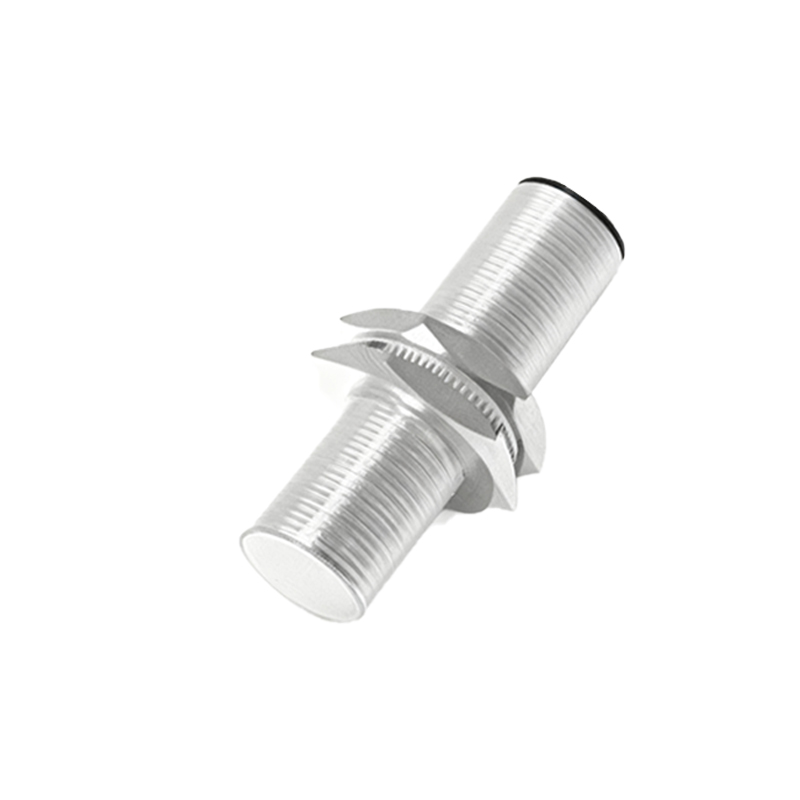
The operational principle of an inductive 6mm proximity switch is based on electromagnetic induction. The sensor head contains an oscillator circuit that generates a high-frequency electromagnetic field. When a ferrous or non-ferrous metal target enters this field, eddy currents are induced in the target, causing a change in the oscillation amplitude. This change is detected by the sensor's circuitry, which then triggers a solid-state switch to change the state of the output signal. The typical sensing range (Sn) for a 6mm diameter inductive sensor is up to 2mm, though this is standardized and can vary slightly by manufacturer and target material. Factors such as target size, shape, and material (steel, aluminum, brass) significantly affect the effective sensing distance, necessitating consultation of the manufacturer's reduction factor charts for non-standard applications.
Key technical advantages of the 6mm three-wire design include their solid-state construction, which guarantees a long operational life with hundreds of millions of switching cycles, as there are no moving parts to wear out. They feature high switching frequencies, often exceeding 1 kHz, enabling detection in very high-speed processes. Their sealed housings, usually made of nickel-plated brass or stainless steel, provide high ingress protection ratings (e.g., IP67, IP69K), making them resistant to dust, coolants, oils, and high-pressure washdowns common in automotive, packaging, and food & beverage industries.
Installation and application require careful consideration. While their compact size is a benefit, it necessitates precise mounting, typically in a threaded barrel style (e.g., M6 x 1 or M8 x 1 thread). Proper flush or non-flush mounting conditions must be observed as specified in the datasheet to ensure the rated sensing distance is achieved. Surrounding metal (like the mounting nut or machine frame) can influence performance if not accounted for. These sensors are ubiquitously used for position verification of cylinders, part counting on conveyors, end-of-travel detection, rotary speed monitoring, and as safety interlock components.
When selecting a 6mm three-wire proximity sensor, engineers must define several parameters: required sensing distance, supply voltage, output type (PNP/NPN, NO/NC), switching current capacity, housing material, connection method (cable or connector), and any special requirements like weld-field immunity or extended temperature ranges. Regular maintenance is minimal but should involve periodic cleaning of the sensing face to remove debris and verification of the electrical signal under load. In summary, the 6mm diameter three-wire proximity sensor is a robust, precise, and versatile component whose correct selection and application are fundamental to creating resilient and efficient automated systems.