In today's rapidly evolving technological landscape, laser sensors have become indispensable components across a vast array of industries. From precision manufacturing and robotics to autonomous vehicles and smart infrastructure, these devices provide the critical data needed for accurate measurement, detection, and control. As demand surges, identifying reliable and innovative laser sensor suppliers is paramount for businesses seeking to enhance efficiency, safety, and product quality. This article explores the key players and considerations when sourcing from a laser sensor company.
The core function of a laser sensor is to emit a focused beam of light and analyze the reflected signal to determine distance, presence, or profile of an object. Unlike traditional mechanical or ultrasonic sensors, laser sensors offer unparalleled accuracy, high speed, and the ability to operate over long ranges and in challenging environments. This makes them ideal for applications requiring micron-level precision or consistent performance despite dust, varying light conditions, or complex target surfaces.
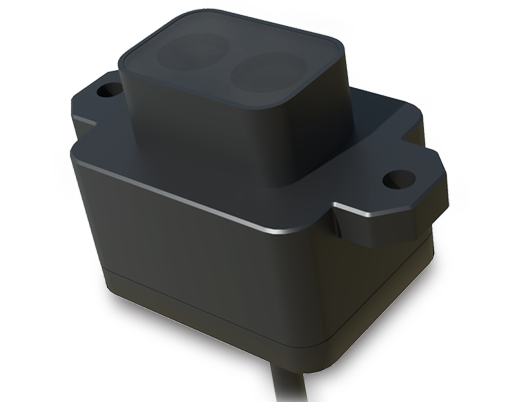
When evaluating a laser sensor supplier, several critical factors come into play. First and foremost is technological expertise and product range. A leading company will typically offer a diverse portfolio, including time-of-flight sensors, triangulation sensors, confocal displacement sensors, and laser line profilers. Each type serves specific purposes, from simple object detection on a conveyor belt to 3D contour scanning of intricate parts. The ability of a supplier to provide tailored solutions and application-specific support is a significant differentiator.
Another crucial aspect is reliability and durability. Industrial environments are often harsh, with exposure to vibrations, temperature extremes, and contaminants. Premium suppliers design their sensors with robust housings, often meeting IP67 or higher ingress protection ratings, and ensure stable performance over extended periods. Consistency in output and minimal drift are non-negotiable for quality control processes in sectors like semiconductor fabrication or automotive assembly.
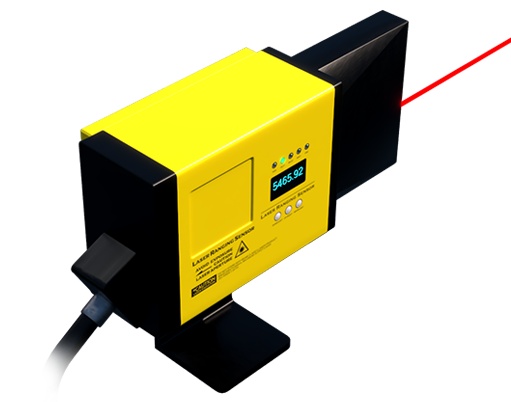
Integration capability is also a key consideration. Modern manufacturing lines and systems are deeply interconnected. A forward-thinking laser sensor company provides products with versatile interfaces—such as IO-Link, Ethernet/IP, PROFINET, or analog outputs—and comprehensive software tools for easy setup, configuration, and data analysis. This simplifies integration into existing PLCs, SCADA systems, and Industry 4.0 frameworks, enabling seamless data flow for predictive maintenance and process optimization.
Innovation remains the lifeblood of this sector. Top suppliers invest heavily in research and development to push the boundaries of what's possible. This includes developing sensors with higher resolutions, faster response times, smaller form factors, and enhanced intelligence through embedded algorithms. For instance, advancements in multi-echo technology allow sensors to ignore background interference, while blue laser technology offers better performance on shiny or transparent surfaces compared to traditional red lasers.
The application spectrum for laser sensors is continually expanding. In logistics, they enable automated guided vehicles (AGVs) to navigate warehouses safely and assist in dimensioning packages. In agriculture, they are used for crop monitoring and guidance of autonomous machinery. In consumer electronics, they facilitate precise assembly of miniature components. A supplier with a proven track record across multiple industries demonstrates adaptability and a deep understanding of diverse operational challenges.
Ultimately, partnering with a reputable laser sensor company is a strategic decision. It involves assessing not just the product specifications on a datasheet, but also the supplier's global support network, technical service, warranty terms, and commitment to long-term partnerships. As automation and smart technology become ubiquitous, the role of precise, reliable sensing will only grow in importance. Choosing the right supplier ensures access to cutting-edge technology that can drive innovation, reduce downtime, and provide a tangible competitive advantage in an increasingly automated world.