In the realm of industrial automation, logistics, and security, the ability to detect objects and measure distances with high precision over long ranges is paramount. The advent of long-range laser sensors, particularly those capable of reliable operation at distances up to 300 meters, has revolutionized numerous applications. Unlike traditional ultrasonic or photoelectric sensors with limited range, these advanced laser-based devices offer unparalleled accuracy and stability in challenging environments.
The core technology enabling 300-meter laser sensing is typically based on time-of-flight (ToF) or phase-shift measurement principles. A laser diode emits a focused, coherent beam of light towards a target. The sensor then precisely measures the time it takes for the reflected light to return. Given the constant speed of light, the distance to the target is calculated with extreme accuracy, often within millimeter or centimeter tolerances even at 300 meters. This performance is sustained through sophisticated optics that maintain a tight, visible laser spot over long distances and advanced signal processing algorithms that filter out ambient light interference.
Key advantages of a 300-meter laser sensor include its exceptional range, which far surpasses most conventional sensors. The visible laser beam also allows for easy alignment and setup, a significant practical benefit. Furthermore, these sensors are largely immune to environmental factors like wind, temperature fluctuations, and background noise that plague other technologies. Their non-contact nature ensures no wear and tear on the sensor or the target, leading to high reliability and minimal maintenance.

The applications for such powerful sensing technology are vast and growing. In industrial settings, they are deployed for large-scale warehouse inventory management, monitoring stock levels in high-bay racks, and controlling crane positioning in shipping ports and steel mills. The 300-meter range allows for monitoring an entire facility from a single, strategically placed unit. In the agricultural sector, these sensors assist in monitoring silo levels and managing large-scale irrigation systems.
Traffic management and vehicle detection represent another critical application area. Laser sensors can monitor multiple lanes of highway traffic from an overhead gantry, accurately detecting vehicle presence, speed, and classification over long stretches of road, contributing to smarter traffic flow systems and toll collection. For security and perimeter protection, a 300-meter laser sensor can create an invisible, precise tripwire over open areas, construction sites, or critical infrastructure, triggering alarms for any unauthorized intrusion with pinpoint location data.

When selecting a 300-meter laser sensor, several specifications are crucial. The measuring range, naturally, is the primary feature, but resolution (the smallest detectable distance change), linearity (accuracy across the entire range), and response time are equally important for dynamic applications. The laser safety class (typically Class 2) is vital for ensuring safe operation around personnel. Robust housing with high Ingress Protection (IP) ratings is necessary for sensors installed outdoors, resisting dust and water. Connectivity options, such as analog outputs (4-20 mA, 0-10 V), digital interfaces (IO-Link, RS-485), or Ethernet protocols, determine how easily the sensor integrates into existing control systems.
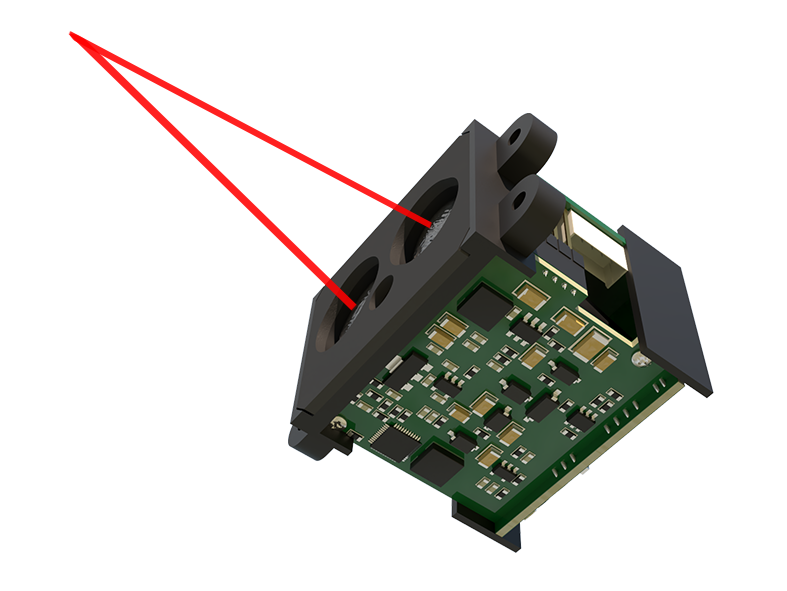
Installation and alignment, while simplified by the visible beam, require careful consideration. Ensuring a clear line of sight is essential, and the sensor must be mounted securely to prevent vibration from affecting measurements. For outdoor use, protective housings or sunshades may be needed to prevent lens contamination and mitigate the effects of extreme direct sunlight, which can sometimes impact performance.
Looking ahead, the integration of 300-meter laser sensors with the Internet of Things (IoT) and industrial Ethernet networks is a clear trend. This enables centralized data collection, remote configuration, and predictive maintenance analytics. Furthermore, advancements in laser efficiency and signal processing are continually pushing the boundaries, potentially offering even longer ranges or higher accuracy in more compact and cost-effective packages.
In conclusion, the 300-meter laser sensor stands as a critical tool for modern automation and monitoring tasks that demand long-range, precise, and reliable distance measurement. Its ability to perform consistently in diverse and demanding environments makes it an indispensable component for industries seeking to enhance efficiency, safety, and data-driven decision-making across large operational scales.