In the realm of industrial automation, the reliable supply of inductive proximity sensors is a cornerstone of operational efficiency and system integrity. As non-contact devices that detect the presence of metallic objects, these sensors are ubiquitous, found in applications ranging from assembly line part counting and machine tool positioning to robotic guidance and safety interlocking. The supply chain for these critical components, however, is not merely about procurement; it involves a nuanced understanding of technical specifications, environmental demands, and long-term support.
At the core of an inductive proximity sensor's function is an oscillator circuit that generates a high-frequency electromagnetic field. When a metallic target enters this field, eddy currents are induced within the target, causing a change in the oscillator's amplitude. This change is detected by the sensor's circuitry, which then switches its output state. The fundamental supply considerations begin with the sensor's specifications. Key parameters include sensing distance, which is typically standardized (e.g., 2mm, 5mm, 10mm) and rated for mild steel. For other metals like aluminum or copper, a correction factor must be applied, reducing the effective range. The housing material, be it nickel-plated brass, stainless steel, or PBT plastic, must be specified based on the application's mechanical stress and chemical exposure. Output configuration is another critical decision point; suppliers must offer a range including NPN (sinking), PNP (sourcing), normally open (NO), and normally closed (NC) configurations to interface correctly with various PLCs (Programmable Logic Controllers) and control systems.
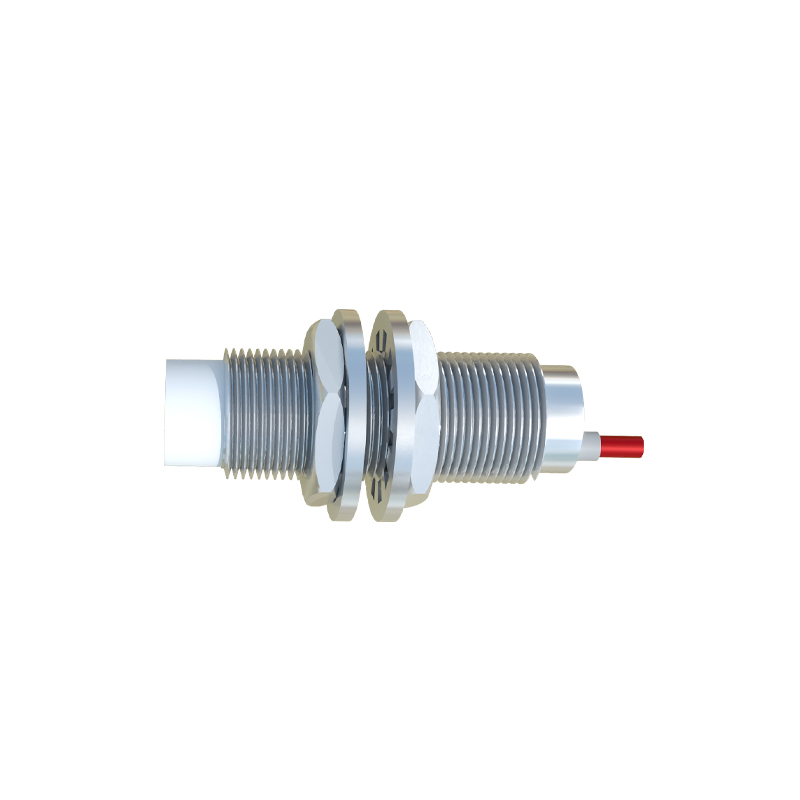
Beyond the base unit, the supply ecosystem encompasses mounting accessories, cables, and connectors. A robust supplier provides not just the sensor but also the requisite mounting brackets, nuts, and protective shrouds for flush or non-flush installation. The availability of pre-wired versions with varying cable lengths and connector types (e.g., M8, M12) is essential for reducing installation time and ensuring reliability. In harsh industrial environments, sensors with high IP (Ingress Protection) ratings, such as IP67 or IP69K, are necessary to withstand dust, high-pressure washdowns, and temporary immersion. Suppliers must guarantee these ratings through rigorous testing.
The global nature of modern manufacturing places significant emphasis on supply chain resilience and lead times. A dependable supplier maintains adequate inventory of standard models and has transparent processes for custom or high-volume orders. Technical support is an invaluable part of the supply package. This includes providing detailed datasheets, 2D/3D models for CAD integration, and application engineering assistance to help select the optimal sensor for challenging conditions, such as extreme temperatures or strong electromagnetic interference.
Furthermore, the trend towards Industry 4.0 and IIoT (Industrial Internet of Things) is influencing sensor supply. There is growing demand for sensors with IO-Link capability, a point-to-point serial communication protocol that enables the transmission of detailed process data (like switchpoint drift or temperature) beyond a simple on/off signal. Suppliers at the forefront are integrating these smart features, allowing for predictive maintenance and enhanced process monitoring. This digital transformation adds a layer of complexity to supply, requiring vendors to also provide software tools and communication expertise.
Finally, compliance with international standards (e.g., IEC 60947-5-2, UL, CE) is non-negotiable for safety and market access. A credible supplier ensures all products are certified, with documentation readily available. In conclusion, securing a supply of inductive proximity sensors is a strategic decision. It requires partnering with suppliers who offer not just a product catalog, but deep technical knowledge, consistent quality, logistical reliability, and forward-looking technology to ensure the seamless and intelligent operation of automated systems.