In the realm of industrial automation and control systems, two-wire normally closed (NC) inductive proximity sensors represent a fundamental and widely utilized component for metal detection. These sensors operate on the principle of electromagnetic induction, generating an oscillating electromagnetic field from a coil within the sensor head. When a metallic target—typically ferrous metals like steel or iron, though non-ferrous metals also affect the field—enters this active field, eddy currents are induced in the target. This causes a change in the oscillation amplitude or frequency within the sensor. For a normally closed configuration, this detection event triggers the switching action: the electrical circuit, which is closed in the sensor's idle state (no target present), opens upon target detection.
The two-wire design is a key feature, distinguishing it from three-wire or four-wire counterparts. It simplifies installation and reduces wiring costs, as the same two wires are used for both power supply and load switching. The sensor is connected in series with the load (e.g., a PLC input, relay coil, or indicator lamp) and the power supply. In the NC state with no target, current flows freely through the sensor to the load, keeping it energized. When a metal target is sensed, the internal switching element opens, interrupting the current flow and de-energizing the load. This "de-energize to operate" logic is a critical safety consideration in many applications, such as emergency stop monitoring or guard door interlocking, where a wire break or loss of power inherently causes a safe state (circuit open).
Selecting and applying a two-wire NC inductive sensor requires careful attention to several parameters. The operating voltage range (commonly 10-30V DC or 20-250V AC) must be compatible with the control system. The load current must not exceed the sensor's maximum switching capacity, and a minimum quiescent current is often required to keep the sensor operational even when "off." This is a crucial detail; if the load draws less than this minimum current, the sensor may not function correctly. Another vital specification is the switching distance, which is typically rated for mild steel. Factors like target material, size, shape, and installation conditions (flush or non-flush) can affect the actual sensing range. For instance, sensing aluminum or copper requires a reduction factor, as these materials induce weaker eddy currents.
Installation practices are paramount for reliable operation. Sensors should be mounted securely to minimize vibration effects. Adequate clearance from surrounding metal (lateral and frontal) must be maintained as per manufacturer guidelines to prevent false triggering. In harsh industrial environments, sensors with high IP (Ingress Protection) ratings (e.g., IP67, IP69K) are essential to withstand dust, coolants, and high-pressure washdowns. The normally closed configuration offers inherent diagnostic capability: a continuous circuit indicates health, while an open circuit indicates either a target present or a fault (sensor failure, wire break). This simplicity aids in troubleshooting.
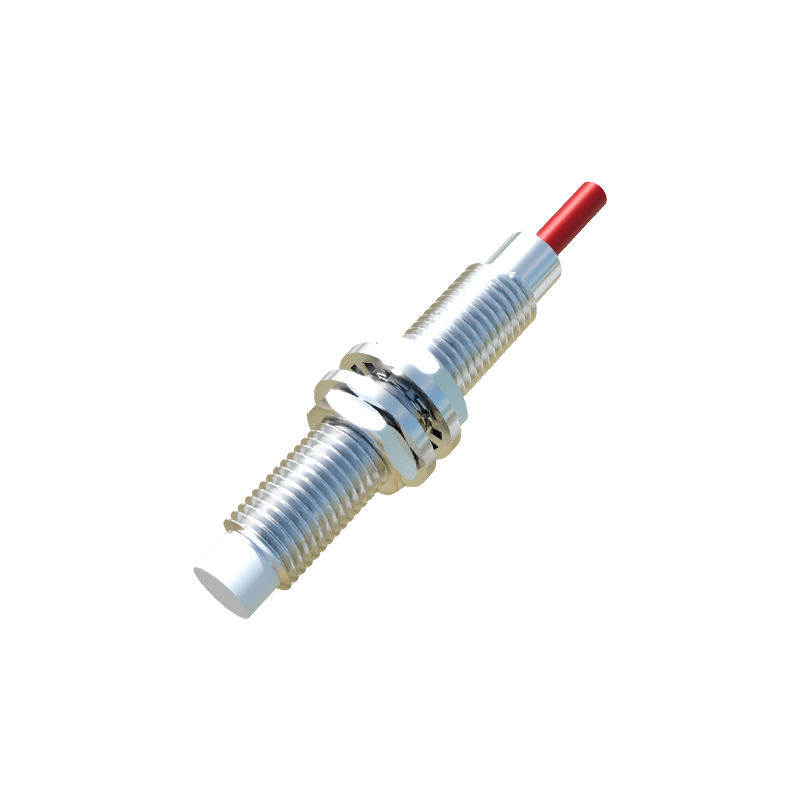
Common applications span across diverse industries. In material handling, they are used for end-of-travel detection on actuators or position verification of metal parts on conveyors. In machine tools, they serve as limit switches or tool presence detectors. Their fail-safe nature makes them ideal for safety curtains and door position monitoring. The robustness, simplicity, and cost-effectiveness of two-wire NC inductive proximity sensors ensure their continued dominance in providing reliable, non-contact metal detection for countless automation tasks, forming an invisible yet critical layer of control and safety in modern manufacturing.