Proximity sensors are essential components in modern industrial automation, enabling non-contact detection of objects with high precision and reliability. Understanding the structural composition of these sensors is crucial for engineers and technicians involved in system design, installation, and maintenance. This article delves into the key structural parts of a typical proximity sensor, explaining their roles and how they contribute to overall performance.
The core of a proximity sensor is the sensing element, which varies depending on the detection technology employed. Inductive proximity sensors utilize a coil wound around a ferrite core, generating an electromagnetic field. When a metallic object enters this field, eddy currents are induced, altering the oscillation amplitude and triggering a detection signal. Capacitive sensors, on the other hand, feature electrode plates that form an electrostatic field. The presence of any object, metallic or non-metallic, changes the capacitance, leading to detection. Photoelectric sensors incorporate an emitter (usually an LED or laser diode) and a receiver (phototransistor or photodiode) to detect interruptions or reflections of a light beam.
Surrounding the sensing element is the oscillator circuit, a critical electronic component. In inductive sensors, it generates a high-frequency electromagnetic field. The oscillator's stability directly influences the sensor's sensitivity and switching frequency. For capacitive types, the oscillator circuit manages the charge and discharge cycles of the capacitor formed by the electrodes. Advanced sensors integrate microcontrollers or application-specific integrated circuits (ASICs) to process signals, implement timing functions, and provide programmability for parameters like hysteresis and response time.
The housing or body provides mechanical protection and environmental sealing. Typically constructed from materials like nickel-plated brass, stainless steel, or engineering plastics such as PBT, the housing safeguards internal electronics from physical impact, dust, moisture, and chemicals. Many industrial sensors comply with IP67 or IP69K ratings, ensuring reliable operation in harsh conditions. The housing design also includes mounting features, such as threaded barrels or bracket slots, for easy installation.
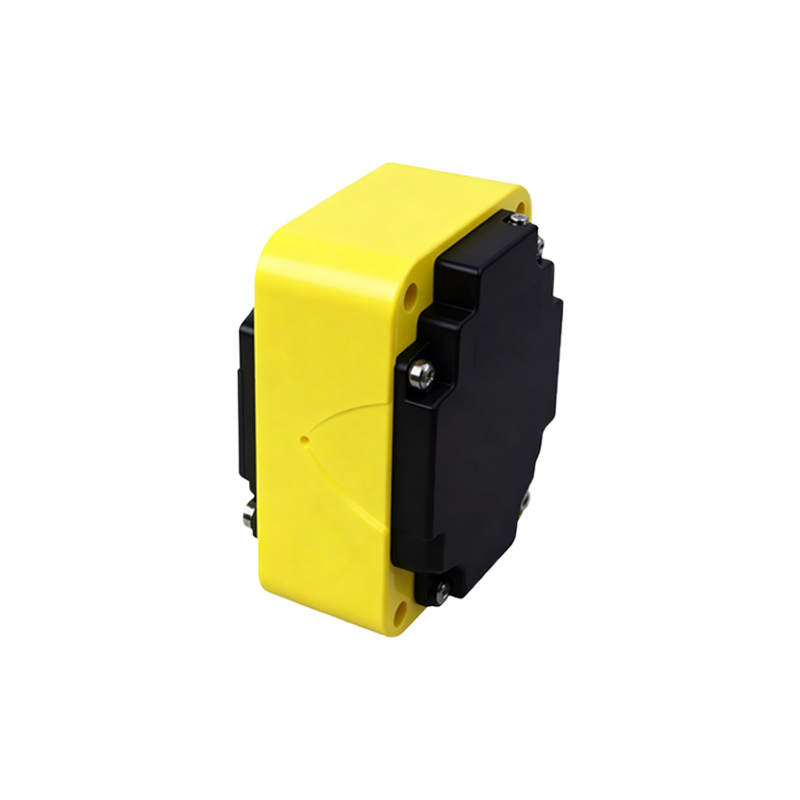
Electrical connections are facilitated by the cable or connector assembly. Sensors may have integrated cables with PUR or PVC sheathing for flexibility and oil resistance, or quick-disconnect M8/M12 connectors conforming to IEC 61076-2 standards. The cable typically contains multiple conductors for power supply (usually 10-30V DC), output signal (PNP/NPN switching, analog, or IO-Link), and sometimes a shield for electromagnetic compatibility (EMC). Proper wiring and grounding are vital to prevent electrical noise interference.
The face or sensing surface is the front part of the sensor where the detection field emanates. In inductive sensors, this is often a wear-resistant polymer cap that protects the coil while allowing magnetic fields to pass. Some models feature flush-mountable designs, allowing installation without a lateral clearance, while non-flush types require a surrounding free space for their extended sensing range. The material and shape of the face affect the sensing characteristics and must be selected based on the application.
Output stage components, including transistors or relays, switch the load based on detection events. Solid-state outputs (like MOSFETs) offer fast switching and long life, suitable for high-frequency applications. Some sensors provide complementary outputs (NO and NC) or analog outputs (4-20mA, 0-10V) for continuous distance measurement. Protection circuits, such as reverse polarity protection, short-circuit protection, and surge suppression, are integrated to enhance durability and prevent damage from wiring errors or voltage spikes.
Indicator lights, usually LEDs, offer visual status feedback. A green LED often indicates power supply, while a yellow or orange LED illuminates when an object is detected. This aids in commissioning, troubleshooting, and real-time monitoring. Some advanced sensors feature multiple LEDs or digital displays for detailed diagnostics, such as signal strength or temperature warnings.
In summary, the performance of a proximity sensor hinges on the seamless integration of its structural components: the sensing element, oscillator circuit, housing, electrical connections, sensing face, output stage, and indicators. Each part must be engineered to meet specific operational demands, including detection range, response speed, environmental resilience, and communication capabilities. As Industry 4.0 evolves, structural designs increasingly incorporate smart features like self-monitoring and network connectivity, further expanding their role in automated systems. Engineers must consider these components holistically to select and apply proximity sensors effectively, ensuring optimal reliability and efficiency in diverse industrial settings.