Lidar sensor chips represent a pivotal advancement in modern sensing technology, fundamentally transforming how machines perceive and interact with the world. Unlike traditional cameras or radar, lidar (Light Detection and Ranging) systems emit pulsed laser light and measure the time it takes for the reflections to return, creating precise, three-dimensional point cloud maps of the environment. At the heart of this sophisticated system lies the lidar sensor chip, a highly integrated semiconductor device that orchestrates the emission, detection, and initial processing of light signals.
The architecture of a typical lidar sensor chip is a marvel of miniaturization and integration. It typically incorporates several key components onto a single silicon substrate. The most critical are the laser diode drivers, which control the precise firing of microscopic laser emitters. These emitters, often based on Vertical-Cavity Surface-Emitting Laser (VCSEL) technology, are integrated directly onto the chip for compactness and reliability. Opposite these emitters are the photodetectors, usually avalanche photodiodes (APDs) or single-photon avalanche diodes (SPADs), which are exquisitely sensitive to the returning photons. The analog front-end (AFE) circuitry amplifies and shapes these tiny electrical signals, while onboard analog-to-digital converters (ADCs) and digital signal processors (DSP) begin the crucial task of calculating time-of-flight and filtering noise. This level of integration, moving from discrete components to a single System-on-Chip (SoC), is what enables the dramatic reduction in size, cost, and power consumption seen in modern lidar units.
The driving force behind the rapid evolution of lidar chips is the relentless demand from the automotive industry for autonomous driving. For a vehicle to navigate safely, it requires a real-time, high-resolution, 360-degree understanding of its surroundings in all weather and lighting conditions. Lidar provides this by accurately measuring distances to objects, distinguishing between a pedestrian, a cyclist, and a stationary pole at ranges exceeding 200 meters. Chip-scale lidar, known as solid-state lidar, is particularly crucial as it eliminates the bulky, spinning mechanical parts of earlier systems, leading to more reliable, automotive-grade sensors that can be seamlessly embedded into a vehicle's design.
However, the applications extend far beyond self-driving cars. In robotics, from warehouse logistics automatons to domestic assistants, lidar chips provide essential navigation and obstacle avoidance capabilities. In industrial settings, they enable precise measurement, quality control, and the safe operation of collaborative robots alongside human workers. The consumer electronics market is also seeing early adoption, with potential uses in smartphones for advanced augmented reality (AR) experiences and in smart home devices for gesture recognition and spatial mapping. Each application imposes different requirements on the chip, balancing factors like range, resolution, field of view, and frame rate.

The development path for lidar sensor chips faces significant technical hurdles. A primary challenge is achieving longer detection ranges and higher resolution while maintaining eye safety standards, which limit laser power. This pushes innovation in detector sensitivity (like SPAD arrays) and advanced signal processing algorithms hardwired into the chip's logic. Furthermore, for mass-market adoption, especially in automotive, the cost must be driven down exponentially. This is a classic semiconductor challenge, addressed through design innovation, larger wafer-scale manufacturing, and higher levels of integration to reduce component count. Reliability over a vehicle's 10-15 year lifespan under harsh environmental conditions—extreme temperatures, vibration, and moisture—is another non-negotiable design criterion for chip engineers.
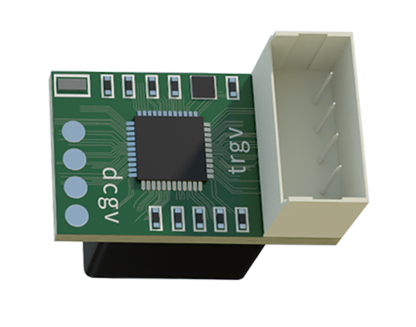
Looking forward, the trajectory of lidar chip technology points toward even greater integration and intelligence. The next generation of chips will move beyond simply capturing point clouds to performing more onboard feature extraction and object classification, effectively acting as an "intelligent perception engine." This sensor fusion at the chip level, where lidar data is pre-processed and combined with inputs from correlated cameras or radar on a single package, will reduce data bandwidth and latency for the central processing unit. Furthermore, the exploration of new semiconductor materials, like silicon photonics, promises to create even more efficient and compact optical pathways directly on the chip, blurring the line between electronic and photonic integrated circuits.
In conclusion, the lidar sensor chip is far more than a simple component; it is the enabling core that has transitioned lidar from a bulky, expensive tool to a scalable, integrable sensing modality. Its continued evolution through semiconductor scaling and innovative design will directly determine the pace at which autonomous systems, from vehicles to robots, can safely and effectively integrate into the fabric of daily life. The race to perfect this technology is not just about building a better sensor, but about defining the eyes of the intelligent machines of the future.
