In today's increasingly automated and interconnected world, the ability to detect the presence or absence of objects without physical contact is fundamental. This capability, provided by proximity sensors, becomes exponentially more valuable when operations occur in challenging conditions. Waterproof proximity sensors are specialized devices engineered to deliver reliable, non-contact detection in environments where moisture, dust, chemicals, or extreme temperatures would cripple standard sensors. Their robust design and precise functionality make them indispensable across a diverse range of industries, from manufacturing and food processing to marine applications and outdoor infrastructure.
The core principle behind a waterproof proximity sensor remains the same as its standard counterpart: it emits a field or beam of electromagnetic radiation (commonly inductive, capacitive, or photoelectric) and detects changes in the return signal caused by a target object entering its sensing range. The critical differentiator lies in its construction. These sensors are housed in enclosures with high Ingress Protection (IP) ratings, such as IP67, IP68, or IP69K. An IP67 rating, for example, guarantees protection against temporary immersion in water, while IP68 and IP69K indicate protection against prolonged immersion under pressure and high-pressure, high-temperature jet sprays, respectively. This sealing prevents internal electronic components from corrosion and short-circuiting, ensuring long-term operational integrity.
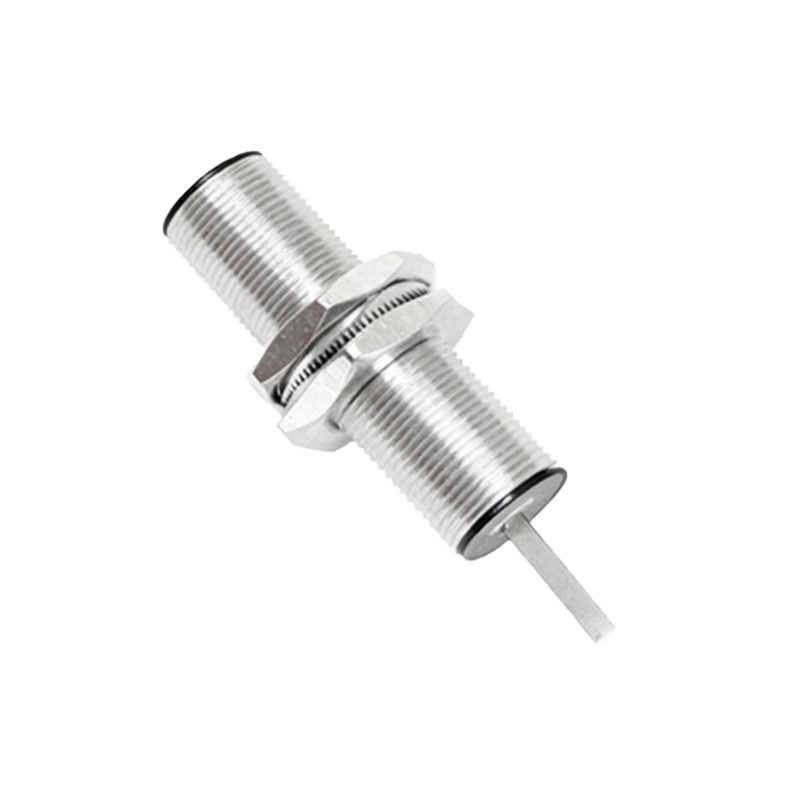
The applications for waterproof proximity sensors are vast and critical. In industrial automation and manufacturing, they are deployed on assembly lines where coolants, lubricants, or wash-down procedures are routine, such as in CNC machining or food and beverage packaging. They reliably detect parts, control robotic arms, and monitor positions without failure. In the agricultural and construction sectors, these sensors endure mud, rain, and dust, performing tasks like vehicle detection, level sensing in tanks, and equipment positioning. The marine industry relies on them for navigation aids, docking systems, and onboard machinery monitoring, where constant exposure to saltwater spray is a given. Even in public utilities and smart city applications, waterproof sensors play a role in flood detection, wastewater management, and outdoor lighting control.
Selecting the appropriate waterproof proximity sensor requires careful consideration of several factors beyond just the IP rating. The sensing technology must match the application: inductive sensors for detecting metals, capacitive sensors for non-metals like liquids or plastics, and photoelectric sensors for longer ranges or specific material properties. The sensing distance, output type (e.g., NPN/PNP, analog, IO-Link), housing material (often stainless steel or ruggedized plastics), and electrical connection (pre-wired or quick-disconnect with sealed glands) are all crucial specifications. Furthermore, certifications for specific industries, such as FDA-compliant materials for food contact or ATEX/IECEx for hazardous explosive atmospheres, may be necessary.
The integration of advanced features is becoming increasingly common. Modern waterproof proximity sensors may include built-in diagnostics via LED indicators or through industrial network protocols, allowing for predictive maintenance. Some offer adjustable sensing ranges or teach-in functions for easy setup. The trend towards miniaturization also continues, allowing these robust sensors to fit into increasingly compact machinery without sacrificing performance.
In conclusion, waterproof proximity sensors are not merely optional upgrades but essential components for reliable automation in non-ideal environments. Their design represents a perfect synergy of precision sensing and rugged environmental defense. By providing unwavering accuracy in the presence of water, contaminants, and physical stress, they form the silent, reliable backbone of countless systems, ensuring safety, efficiency, and continuity in operations where failure is not an option. As industries push into more extreme and automated frontiers, the role of these durable detectors will only grow in significance.