In industrial processes involving bulk solids, from food and pharmaceuticals to plastics and chemicals, accurately monitoring the level of powder or granular materials in silos, bins, and hoppers is critical. This is the domain of the powder level sensor, also known as a bulk solids level sensor or powder level indicator. These devices ensure operational efficiency, prevent overfilling or emptying, and contribute to inventory management and process automation. Unlike liquid level measurement, powder level detection presents unique challenges due to material characteristics like varying density, dust, angle of repose, and potential for bridging or rat-holing.
The working principle of a powder level sensor depends largely on its technology. The most common types can be categorized into point-level and continuous-level sensors. Point-level sensors detect whether the material is present or absent at a specific height, typically used for high or low-level alarms. Continuous-level sensors provide a real-time measurement of the material level throughout the entire height of the vessel, offering precise volume or mass data.
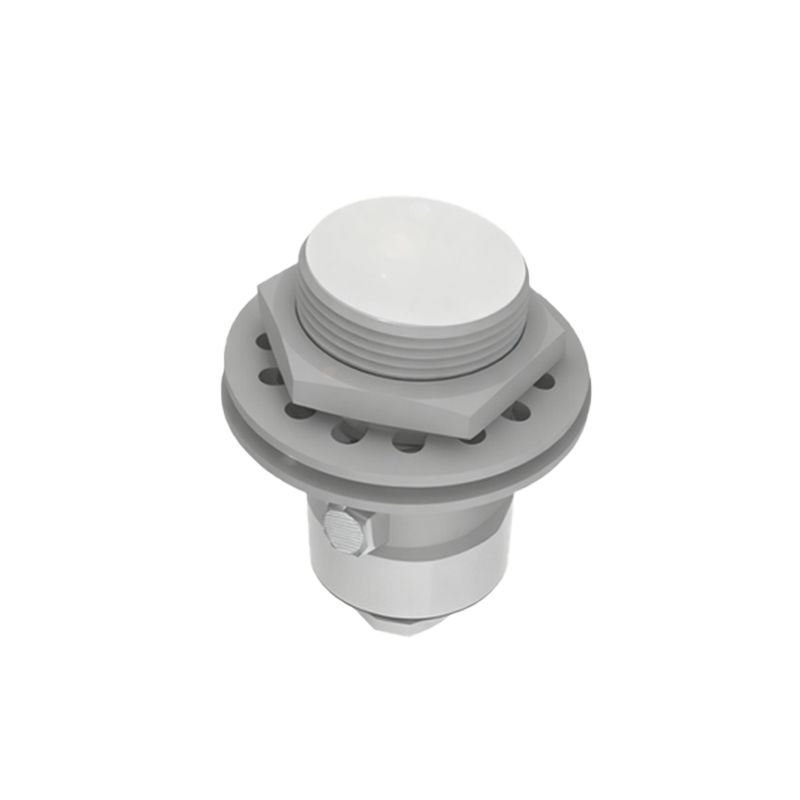
Several technologies dominate the market. Capacitance level sensors operate by detecting changes in capacitance between a probe and the vessel wall caused by the presence of the powder. They are versatile and cost-effective for many non-conductive materials. Vibrating fork or paddle switches are robust point-level devices where a vibrating element is dampened by the presence of material, triggering a switch. They are highly reliable for many powders and resistant to material buildup.
For challenging applications involving very fine powders, dust, or aggressive materials, non-contact technologies are preferred. Radar level sensors, particularly those with higher frequency (e.g., 80 GHz), emit microwave pulses that reflect off the material surface. They are excellent for long range, dust, and varying material properties. Ultrasonic sensors work on a similar echo principle using sound waves but can be less effective in heavy dust or with very low-density materials. A highly effective technology for powders is the guided wave radar (GWR) sensor, which uses a probe to guide the radar pulse, making it less susceptible to dust and ideal for silos with internal obstructions.
Radio Frequency (RF) or admittance sensors are an advanced form of capacitance technology that can overcome issues like coating and build-up on the probe, making them suitable for sticky or moist powders. For inventory management of entire silos, load cells or weighing systems measure the total weight of the vessel and its contents, providing highly accurate mass data independent of material properties.
Selecting the right powder level sensor requires a careful analysis of the application. Key factors include the material characteristics (particle size, dielectric constant, abrasiveness, hygroscopic nature), process conditions (pressure, temperature, presence of dust or vapor), vessel size and construction, and the required output (simple alarm vs. continuous data for PLC systems). Installation point and method are also crucial; a sensor placed incorrectly, such as in a potential rat-hole or above a filling stream, will not provide reliable data.
Proper installation and maintenance are paramount for long-term reliability. For probe-based sensors, correct mounting length and orientation prevent mechanical stress. Regular checks for probe coating or damage are necessary. For non-contact sensors, ensuring a clear "view" to the material surface and avoiding false echoes from beams or ladders is essential. Many modern sensors feature self-diagnostics and advanced signal processing to filter out noise and improve reliability.
The integration of powder level sensors into Plant Asset Management (PAM) or Industrial Internet of Things (IIoT) systems represents a significant trend. Smart sensors with digital communication protocols like HART, Profibus, or WirelessHART enable predictive maintenance, detailed diagnostics, and centralized monitoring, moving beyond simple level control to contribute to overall plant efficiency and smart manufacturing goals.
In conclusion, powder level sensors are indispensable tools for modern bulk material handling. Understanding the strengths and limitations of each technology in the context of the specific powder and process environment is the key to selecting a sensor that delivers accurate, reliable data. This ensures smooth operations, reduces waste, prevents costly downtime, and supports automated, data-driven process management.