Proximity sensors are ubiquitous in modern technology, silently enabling functionalities in smartphones, industrial automation, vehicles, and consumer appliances. At their core, these devices detect the presence or absence of an object within a defined range without physical contact. While off-the-shelf sensors serve many purposes, specific challenges in unique applications often necessitate a deep dive into the underlying principles for effective customization. This process involves tailoring the sensor's operational fundamentals—its sensing principle, range, output, and physical form—to meet precise operational demands.
The journey of customization begins with a thorough understanding of the primary sensing technologies. Inductive sensors generate an electromagnetic field to detect metallic objects, making them ideal for harsh industrial environments. Capacitive sensors can detect both metallic and non-metallic materials by sensing changes in capacitance, useful for liquid level detection or plastic object sensing. Photoelectric sensors use light beams (visible, infrared, or laser) and are excellent for long-range or precise positioning. Ultrasonic sensors emit sound waves and measure their reflection, suitable for detecting objects regardless of material or color, even in dusty conditions. Magnetic sensors, like Hall effect or reed switches, detect magnetic fields. The choice of principle is the first and most critical customization step, dictated entirely by the target object's material, the required detection distance, and the environmental conditions (e.g., dirt, moisture, temperature).
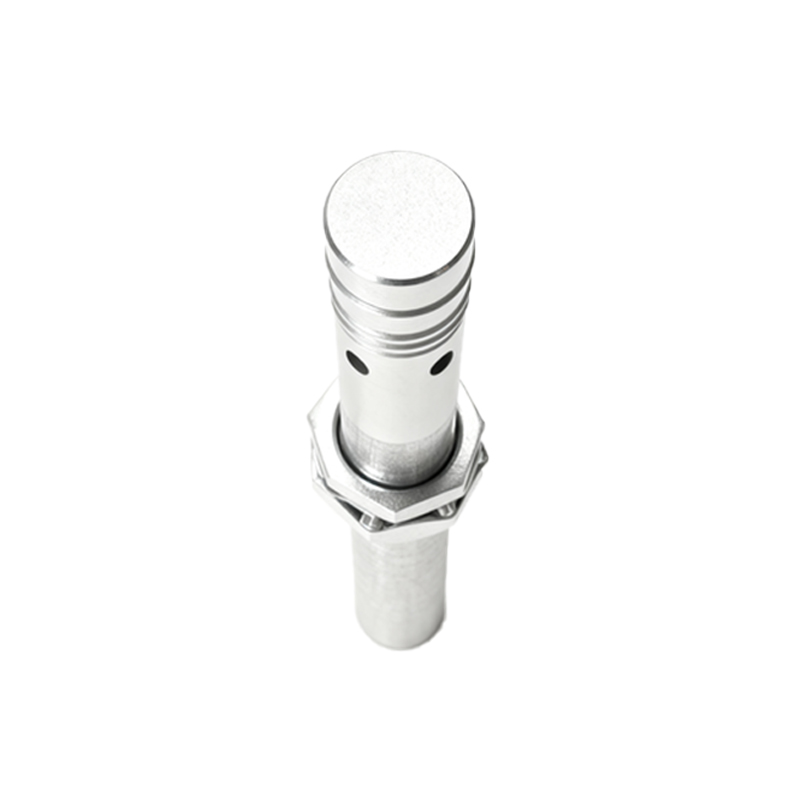
Once the foundational technology is selected, engineers focus on tailoring its parameters. Detection range is a primary variable. For instance, an inductive sensor's range can be adjusted by modifying the coil size and oscillator circuit, but it is inherently limited for non-ferrous metals. A photoelectric sensor's range can be extended by using a focused laser diode instead of a standard LED, but this increases cost and power consumption. The required sensing precision also dictates the choice; a diffuse photoelectric sensor might be customized with a background suppression feature to ignore objects beyond a specific focal point, crucial for precise robotic picking.
Output signal customization is equally vital. Does the application require a simple digital on/off signal, a proportional analog voltage (0-10V), a current loop (4-20mA), or a digital bus communication like IO-Link? An analog output, for example, can provide continuous distance information, enabling process control rather than mere detection. Customizing the output interface ensures seamless integration with the existing PLC, microcontroller, or data acquisition system.
The physical and environmental design forms the next layer of customization. This includes designing housings from specific materials like stainless steel for washdown environments in food processing or PVDF for extreme chemical resistance. The sensor's shape and size may need to be minimized to fit into a compact medical device or streamlined for a specific mounting configuration on an assembly line. Environmental factors such as extreme temperatures, high pressure, or exposure to intense vibration (e.g., in automotive or aerospace applications) require careful selection of internal components, potting materials, and sealing techniques (often IP67 or IP69K ratings).
Furthermore, advanced customization may involve embedding intelligence. This includes adding programmable logic directly into the sensor, such as setting multiple switching points, implementing time delays, or enabling self-diagnostic features that predict maintenance needs. For example, a customized ultrasonic sensor in a tank level monitoring system might be programmed with temperature compensation algorithms to maintain accuracy as the ambient temperature fluctuates.
The process of customization is inherently collaborative. It starts with a detailed specification from the client: What is the target object? What is the exact detection distance? What are the environmental contaminants? What is the required response time and switching frequency? What are the power constraints? With these parameters, sensor specialists can model the behavior, often using simulation software for electromagnetic or optical fields, before prototyping. Prototypes are then rigorously tested in conditions that mimic or exceed the real-world application to validate performance.
In conclusion, moving from a standard proximity sensor to a customized solution is a strategic engineering endeavor. It leverages fundamental physical principles—electromagnetism, capacitance, light, and sound—and sculpts them to solve a unique problem. This tailored approach optimizes performance, enhances system reliability, and can lead to significant long-term savings by reducing false triggers, downtime, and integration complexity. Whether enabling the precise autofocus in a miniature camera module, ensuring worker safety around heavy machinery, or managing fluid levels in a complex chemical process, customized proximity sensors are pivotal components where generic solutions fall short, proving that in sensing, one size rarely fits all.