In the realm of industrial automation and machinery, the reliable detection of objects without physical contact is paramount. Among the diverse array of sensing technologies, the spring-return proximity sensor stands out for its unique mechanical design and dependable operation. This device, often simply called a spring-return sensor, is a specialized type of proximity switch that integrates a spring mechanism to ensure positive retraction of its sensing element.
The core principle of a spring-return proximity sensor is elegantly straightforward. It typically consists of a sensor body housing the electronic sensing circuitry—which can be inductive, capacitive, or photoelectric—and an external actuator or plunger. This plunger is mechanically linked to an internal spring. In its default, non-actuated state, the spring holds the plunger in an extended position. When an object approaches and physically depresses the plunger against the spring's force, the movement triggers the internal sensor. The critical function of the spring comes into play upon the removal of the object. The stored energy in the compressed spring automatically and forcefully returns the plunger to its original extended position, readying the sensor for the next detection cycle. This positive return action is the defining characteristic, distinguishing it from non-spring-loaded variants that might rely on gravity or external forces for reset.
This design confers several significant advantages in demanding environments. First and foremost is reliability. The positive mechanical return ensures consistent resetting, eliminating failures that could occur from sticking or sluggish movement due to contamination, minor misalignment, or lack of external force. This makes them exceptionally resistant to failure modes common in dirty, dusty, or vibratory settings. Secondly, they offer enhanced durability. The spring mechanism absorbs some of the impact energy from the actuating object, reducing wear and tear on the internal electronic components and extending the operational lifespan of the sensor. Furthermore, they provide a clear, tactile indication of operation, which can be beneficial for manual setup and troubleshooting.
The applications for spring-return proximity sensors are vast and varied across industries. They are frequently employed as limit switches in automated machinery. For instance, on a robotic arm or a linear slide, these sensors accurately detect the end-of-travel position, with the spring ensuring the arm can reliably move away without the sensor holding it in place. In material handling systems, such as conveyor lines or palletizers, they are used to detect the presence of boxes, products, or pallets. The spring return allows the object to pass by smoothly without dragging or catching on the sensor tip. Another critical application is in safety interlocks and guard door monitoring on industrial equipment. The positive return action guarantees that the safety circuit is only completed when the guard is fully and securely closed, providing a high level of safety integrity. They are also found in automotive assembly lines, packaging machinery, and woodworking equipment, wherever robust and fail-safe position detection is required.
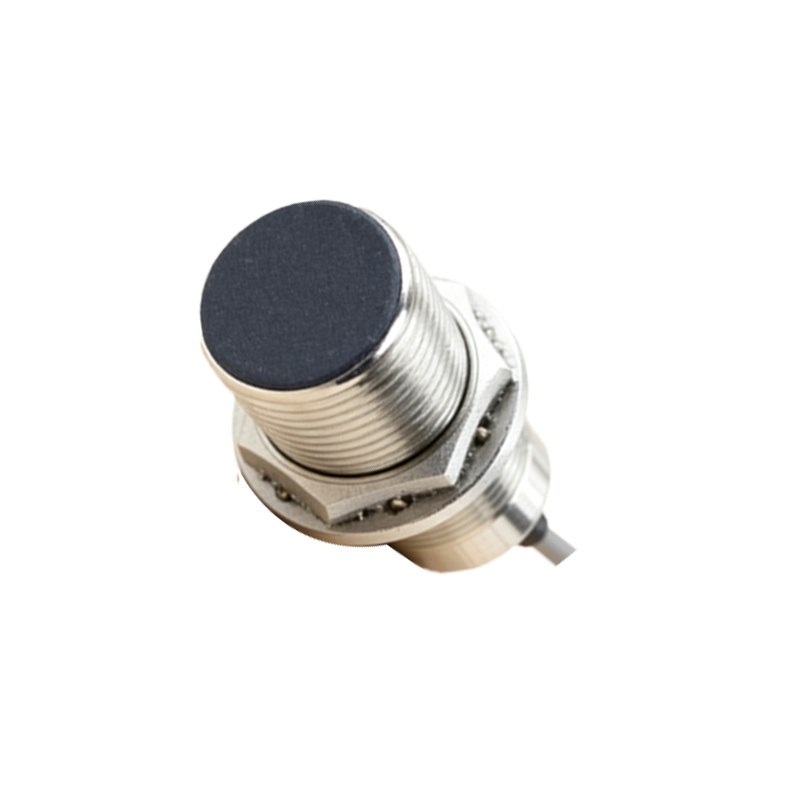
When selecting a spring-return proximity sensor, engineers must consider several key parameters. The sensing technology (inductive for metals, capacitive for various materials, photoelectric for long-range) must match the application. The mechanical specifications are equally crucial: spring force, plunger stroke length, repeat accuracy, and the housing material's ingress protection (IP) rating for environmental resistance. Electrical output types, such as PNP/NPN or relay contacts, must be compatible with the control system. Proper mounting and alignment are also essential to ensure the object actuates the plunger squarely and within its specified stroke to prevent binding and premature wear.
In conclusion, the spring-return proximity sensor is a workhorse component in industrial automation. Its ingenious incorporation of a simple spring mechanism transforms a standard non-contact sensor into a device of remarkable resilience and operational certainty. By guaranteeing positive reset action, it addresses common points of failure in harsh industrial environments, ensuring consistent machine cycles, enhancing safety systems, and contributing to overall production line uptime. For applications demanding unwavering reliability in position sensing, the spring-return design remains a preferred and trusted engineering solution.