In the world of industrial automation, robotics, and smart devices, the ability to detect the presence or absence of an object without physical contact is fundamental. Among the various non-contact sensing technologies, diffuse reflection proximity sensors stand out for their versatility, reliability, and cost-effectiveness. Unlike through-beam sensors that require a separate emitter and receiver, or retro-reflective sensors that rely on a reflector, diffuse sensors house both the light source and the photoelectric receiver in a single unit. They operate on a simple yet powerful principle: the sensor emits a beam of light, typically from an LED or laser diode, and the built-in receiver detects the portion of that light that is scattered or "diffusely reflected" back from the surface of a target object.
The core working principle hinges on the nature of light interaction with surfaces. When the emitted light strikes an object, it scatters in many directions. A fraction of this scattered light travels back towards the sensor. The receiver, often a phototransistor or photodiode, converts this received light intensity into an electrical signal. This signal is then processed by the sensor's internal circuitry. When the reflected light intensity exceeds a pre-set threshold—indicating an object is within the defined sensing range—the sensor's output switch (PNP, NPN, or analog) changes state, signaling detection. This sensing range is not fixed; it depends critically on the object's size, color, surface texture, and material. Light-colored, matte-finished objects reflect more light and can be detected at greater distances than dark, shiny, or absorbent objects. This characteristic is crucial for application design.
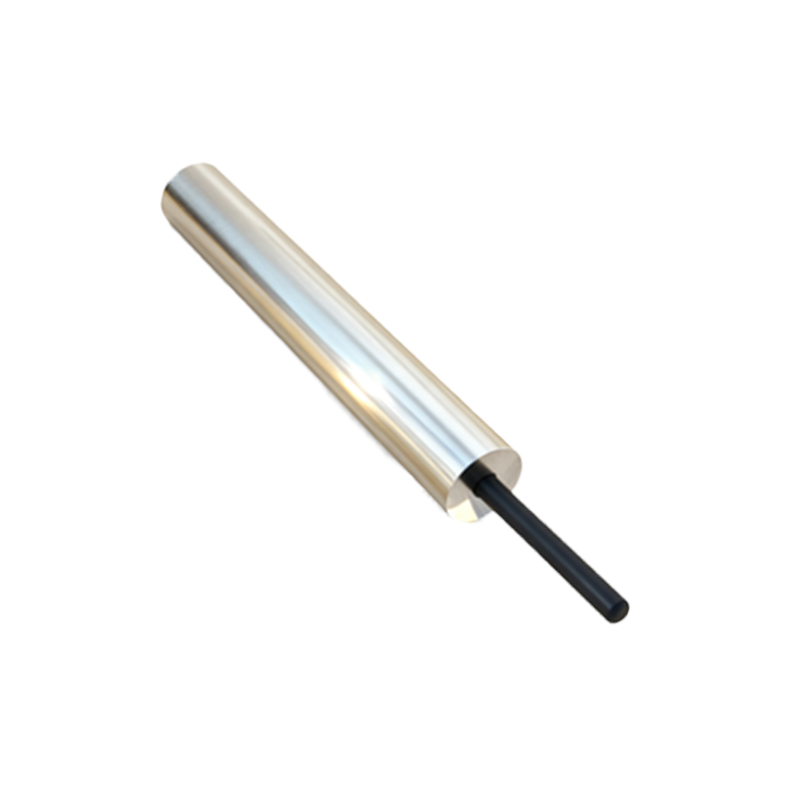
The advantages of diffuse reflection sensors are numerous. Their single-unit design simplifies installation, reduces wiring, and lowers hardware costs compared to through-beam setups. They are ideal for applications where mounting a reflector opposite the sensor is impractical due to space constraints, mounting difficulties, or potential contamination. Modern diffuse sensors incorporate advanced features to overcome common challenges. For instance, background suppression technology, often using triangulation principles, allows the sensor to ignore objects beyond a certain fixed distance, preventing false triggers from distant walls or machinery. Contrast sensors, a specialized variant, are tuned to detect differences in reflectivity between a target and its background, essential in packaging and labeling.
The applications for diffuse reflection proximity sensors are vast and cross-industrial. In manufacturing and packaging lines, they count bottles, detect missing caps, or verify the presence of a product on a conveyor. In material handling, they monitor fill levels in bins or detect the leading edge of a cardboard box. Automated guided vehicles (AGVs) use them for collision avoidance and docking. In the consumer electronics sector, they enable features like screen blanking when a smartphone is held to the ear. They are also found in printers for paper jam detection, in vending machines for product dispensing verification, and in security systems for occupancy sensing.
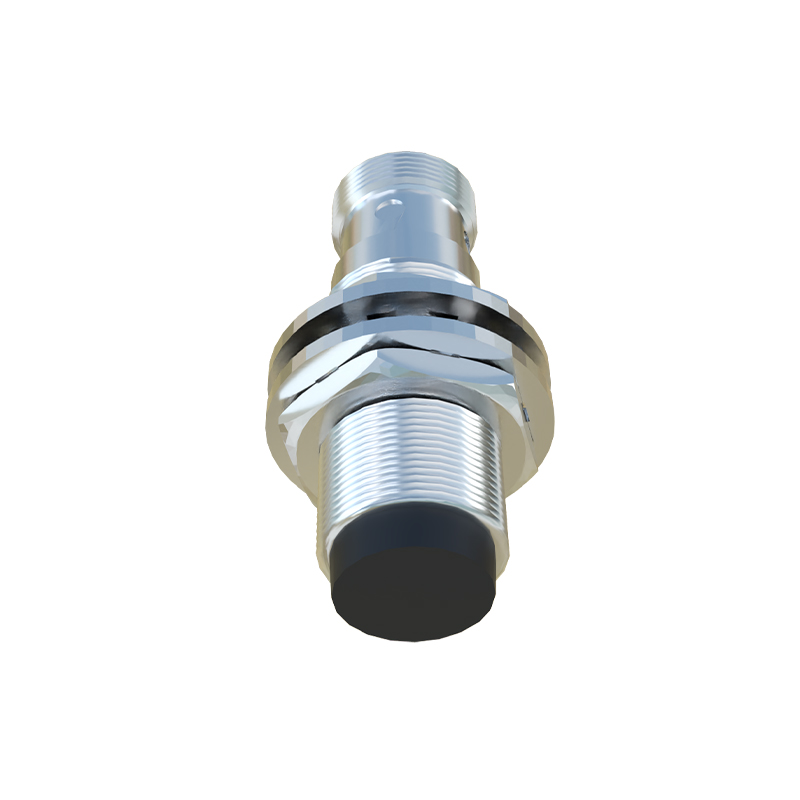
Selecting the right diffuse sensor requires careful consideration of several parameters. The sensing distance must be chosen with the target's properties in mind, often derating the catalog specification for dark objects. The light source is key: red LED light is common and cost-effective; laser versions offer precise, small-spot detection for tiny objects; infrared LEDs are used for stealth or to reduce ambient light interference. Output type must match the control system: discrete DC outputs (3-wire PNP/NPN) for simple on/off control, or analog outputs (4-20 mA, 0-10V) for distance-proportional signaling. Response time is critical for high-speed applications. Housing material (metal or plastic) and Ingress Protection (IP) rating determine suitability for harsh environments with dust, moisture, or washdowns. Features like programmable teach-in functions, which allow easy setting of the sensitivity threshold by pressing a button, greatly enhance flexibility.
Despite their robustness, diffuse sensors have limitations. Their dependence on target reflectivity means consistent detection of varied objects may require careful tuning or a different sensor type. Highly glossy surfaces can act like mirrors, reflecting light away from the receiver and causing unreliable operation. Ambient light from strong sources like sunlight or welding arcs can saturate the receiver, though many models include modulation techniques to mitigate this. For these challenging scenarios, ultrasonic or capacitive proximity sensors might be better alternatives.
In conclusion, diffuse reflection proximity sensors are a cornerstone of modern automation. Their simple operation, compact design, and adaptability make them a first-choice solution for countless object detection tasks. By understanding their operating principle—especially the relationship between target properties and effective sensing range—and carefully matching sensor specifications to the application's environmental and performance requirements, engineers can reliably integrate these powerful components to enhance system efficiency, safety, and intelligence.