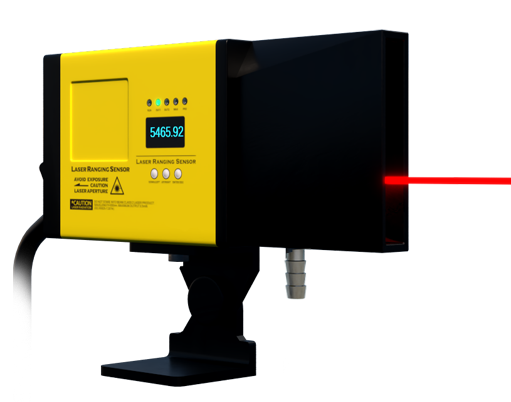
In the rapidly evolving landscape of industrial automation, laser sensor panels have emerged as a critical component for precision measurement, object detection, and quality control. These advanced devices utilize laser technology to deliver unparalleled accuracy and reliability in various applications, from manufacturing lines to robotic systems. Unlike traditional sensors, laser sensors operate by emitting a focused beam of light and analyzing the reflected signal to determine distance, presence, or characteristics of an object. This non-contact method minimizes wear and tear, ensuring long-term performance in harsh environments.
A typical laser sensor panel consists of key elements such as a laser diode, optical lens, receiver, and signal processing unit. The laser diode generates a coherent light beam, which is directed through the lens onto a target. The receiver captures the reflected light, and the processing unit interprets the data to provide real-time feedback. This setup allows for high-speed detection with resolutions down to micrometers, making it ideal for tasks like alignment, sorting, and inspection. For instance, in automotive assembly, laser sensors verify part dimensions, while in packaging, they ensure correct labeling and fill levels.

One of the significant advantages of laser sensor panels is their adaptability to diverse conditions. They can be configured for different sensing modes, including through-beam, retro-reflective, and diffuse reflective, each suited to specific operational needs. Through-beam sensors, with separate emitter and receiver units, offer long-range detection up to several meters, ideal for large-scale setups. Retro-reflective types use a reflector to bounce light back, providing reliable performance in dusty or humid areas. Diffuse reflective sensors, which rely on direct reflection from the target, are compact and easy to install for close-range applications.
Moreover, modern laser sensors integrate smart features like programmable logic controllers (PLCs) and IoT connectivity, enabling seamless integration into Industry 4.0 frameworks. They support data logging, remote monitoring, and predictive maintenance, reducing downtime and enhancing efficiency. When selecting a laser sensor panel, engineers should consider factors such as sensing distance, response time, environmental resistance (e.g., IP ratings for dust and water), and compatibility with existing systems. Regular calibration and cleaning are essential to maintain accuracy, as contaminants can affect beam quality.
In summary, laser sensor panels represent a cornerstone of industrial innovation, driving productivity and quality across sectors. Their ability to deliver precise, non-contact sensing makes them indispensable in today's automated world, paving the way for smarter, more responsive manufacturing processes.